

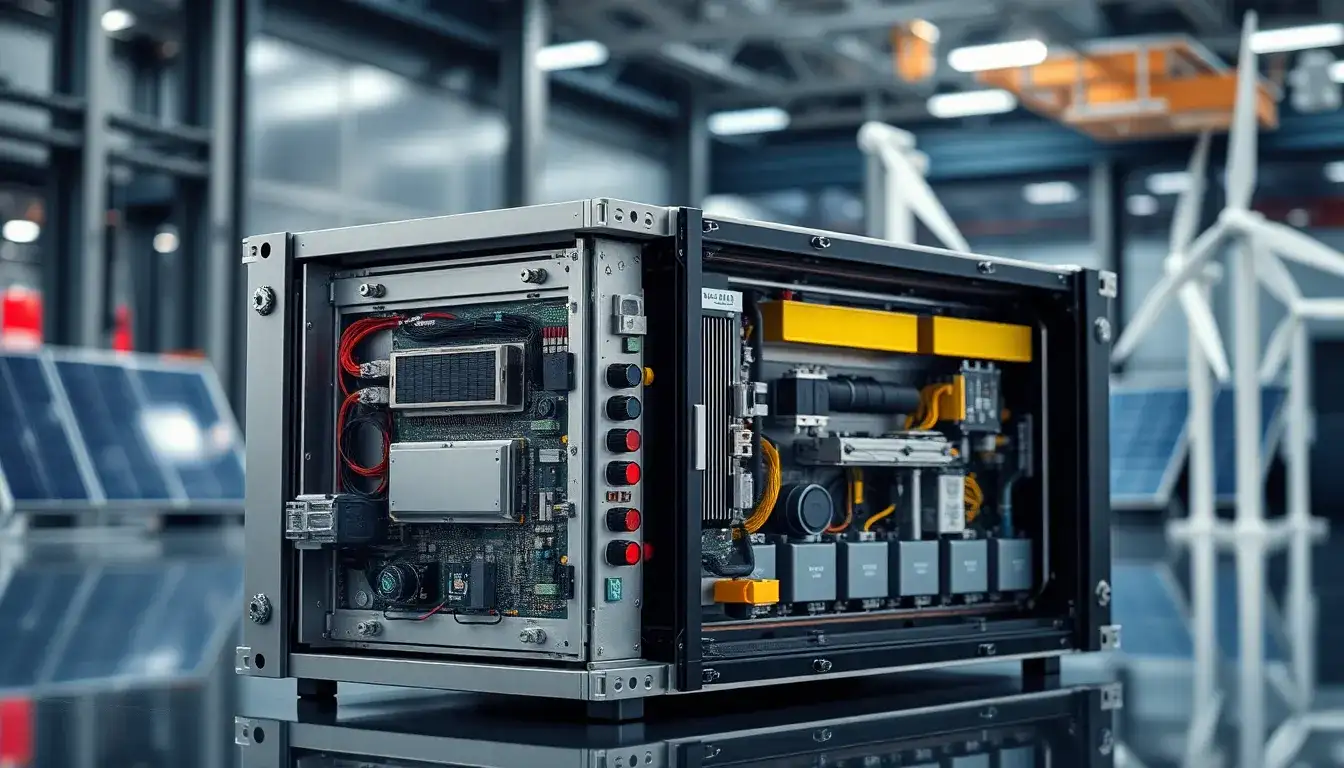
The demand for energy storage battery cells in China is experiencing strong growth, with orders extending into early next year. This surge is driven by the Chinese government’s new targets for large-scale energy storage infrastructure development.
Recently, the National Development and Reform Commission and the National Energy Administration of China announced a special action plan for large-scale energy storage construction. They aim for the installed capacity of new energy storage systems to exceed 180 million kilowatts by 2027, which is expected to stimulate direct project investments of around 250 billion RMB.
As of the end of 2024, the total installed capacity of new energy storage projects in China is only 73.76 million kilowatts. This indicates that the installed capacity is expected to grow more than 20 times between 2025 and 2027.
The action plan highlights a focus on innovative applications of energy storage across various scenarios, leveraging cutting-edge technologies such as big data, cloud computing, and artificial intelligence to foster new energy storage applications that are technically advanced, promising in terms of market potential, and replicable.
According to Zhang Jianhui, Chairman of Beijing Haibosi Technology, their company has been operating at full capacity since the second quarter, primarily due to a surge in overseas demand. This has led to a temporary shortage of high-quality production capacity. Additionally, the transition of battery cell capacity from 314 amp-hours to 500 amp-hours and 600 amp-hours is anticipated to alleviate this shortage once production lines for these larger capacity cells come online next year.
This year, the Chinese energy storage battery cell market has faced significant shortages, with many industry insiders reporting that “one cell is hard to find.” Various external factors contribute to this situation, including explosive overseas demand, driven by the U.S. Inflation Reduction Act, which provides a 30% subsidy for energy storage projects. Furthermore, the demand in Europe for household energy storage is recovering, and large-scale storage projects are being initiated in places like Australia and the Middle East. In the first half of 2025, overseas orders for Chinese energy storage battery cells exceeded 188 GWh, marking a doubling in year-on-year growth.
On the domestic front, apart from the aforementioned action plan, the rush to install systems ahead of the “531 installation rush” policy (which initiated new energy pricing on June 1, prompting many manufacturers to expedite installations) has led to rapid growth in energy storage capacity. In the first half of 2025, China added 55.2 GWh of storage capacity, a 76.6% year-on-year increase. The reform of the new energy grid pricing policy is shifting energy storage from being “policy-driven” to “market-driven.”
It is reported that in 2024, the capacity utilization rate of China’s battery industry remains below 35%, with firms showing limited willingness to invest in expansion. However, as demand unexpectedly surges in 2025, leading companies have already surpassed 90% capacity utilization. Given that expansion typically takes 6 to 12 months, it will be challenging to alleviate supply tightness in the short term.
According to He Zhuoxin, a researcher at the China Chemical and Physical Power Industry Association, the global market for energy storage battery cells is predominantly led by the top ten domestic companies. Chinese firms excel in large-capacity storage cells of 300Ah+, enhancing their competitiveness in the market.
Original article by NenPower, If reposted, please credit the source: https://nenpower.com/blog/strong-demand-for-chinas-energy-storage-battery-cells-pushes-orders-into-early-2024/

