

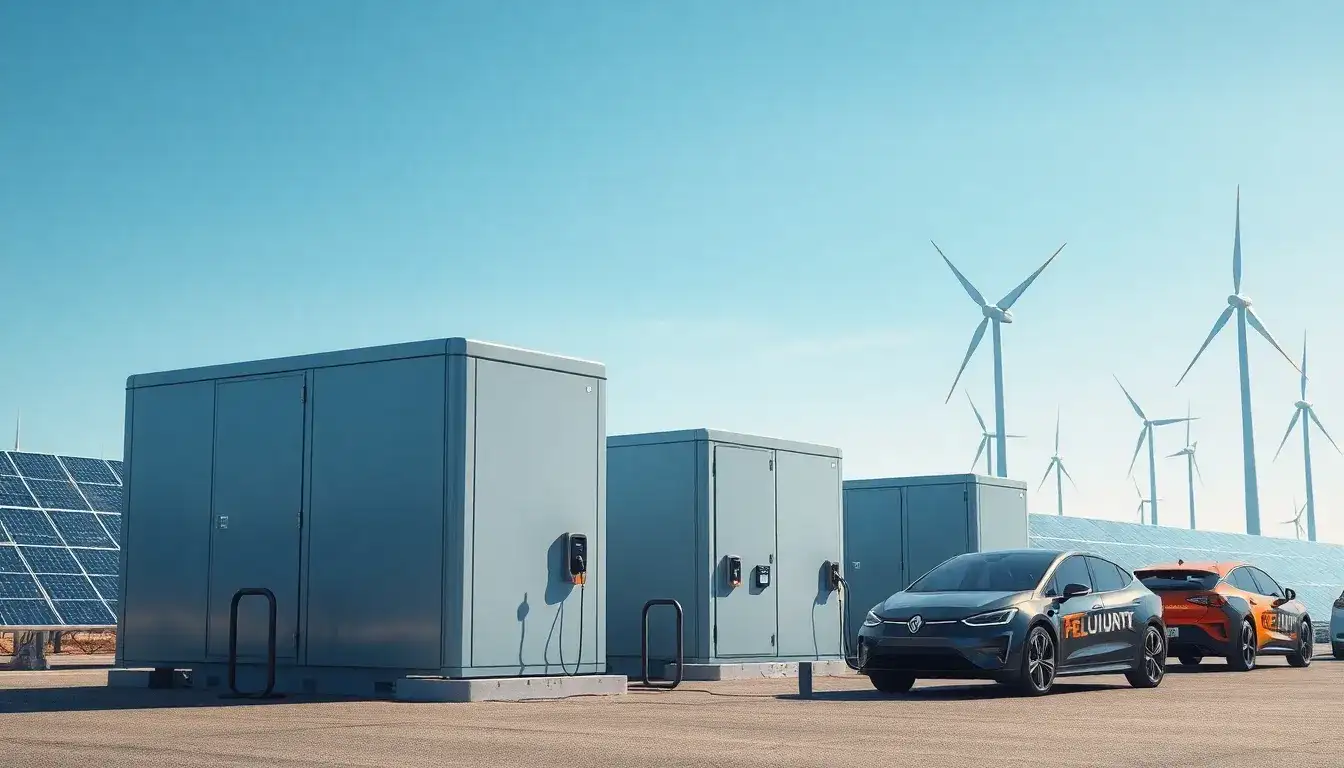
The stationary battery storage market is experiencing significant growth, driven by the integration of renewable energy, the need for grid stability, and increasing energy demand. According to a recent report by Allied Market Research, the market was valued at $89.3 billion in 2023 and is projected to reach $221.9 billion by 2033, growing at a CAGR of 9.5% from 2024 to 2033. Stationary battery storage systems are essential for balancing energy supply and demand, especially as renewable energy sources like solar and wind become more prevalent.
These systems allow for the storage of excess electricity generated during peak production times, releasing it when demand is high or production is low. This capability enhances grid reliability, improves energy efficiency, and reduces reliance on fossil fuels. Factors contributing to market growth include rising investments in smart grid infrastructure, supportive government policies, and advancements in battery technologies. The drive towards decarbonization and energy transition across various sectors is also increasing the demand for stationary battery storage.
Furthermore, declining battery costs and innovations in lithium-ion and alternative chemistries are making energy storage more accessible and cost-effective, solidifying the role of these systems in future-proofing global energy infrastructures.
### Market Dynamics
The demand for stationary battery storage is largely influenced by the growing need for energy security and grid stability. The integration of renewable energy sources necessitates effective management of power supply variability. Battery storage systems provide a dependable solution by storing excess energy during low-demand periods and releasing it during peak times, ensuring a consistent power supply and enhancing grid resilience.
Technological advancements in battery chemistries, particularly lithium-ion, are key drivers of growth. Continuous innovations have led to improvements in energy density, charge-discharge cycles, and cost-efficiency. Emerging technologies like solid-state batteries, flow batteries, and sodium-ion batteries are also gaining traction, offering enhanced safety and longer lifespans.
Government initiatives play a crucial role in shaping the stationary battery storage market. Many countries have implemented policies, incentives, and funding programs to promote battery storage as part of their clean energy strategies. Tax credits, subsidies, and mandates for energy storage deployment are encouraging investments in storage infrastructure, thus accelerating market growth.
The electrification of various sectors, including transportation and manufacturing, is further driving the need for stable and efficient power supplies, which stationary storage systems can support. In commercial and industrial settings, these systems are used for peak shaving, demand charge management, and backup power. The residential sector is increasingly adopting battery storage alongside rooftop solar systems for energy independence and cost savings.
### Challenges
Despite the positive outlook, the market faces challenges such as high initial investment costs, supply chain constraints for battery materials, and concerns regarding battery lifecycle and recycling. Additionally, limited standardization and the complexity of integrating storage systems with existing grid infrastructure can hinder progress. However, ongoing research and development, economies of scale, and growing private and public investments are expected to help overcome these hurdles.
### Segment Overview
The stationary battery storage market is segmented by battery type, application, and region. By type, lithium-ion batteries dominate due to their high energy density and decreasing costs. The market is also divided into utility-scale, commercial & industrial, and residential applications, with the utility-scale segment holding the largest share.
Geographically, North America leads the market due to strong utility-scale adoption and supportive incentives, followed by Europe, where growth is driven by ambitious decarbonization strategies. The Asia-Pacific region is the fastest-growing, fueled by rapid renewable installations, while emerging markets in Latin America, the Middle East, and Africa are beginning to adopt energy storage policies.
### Competitive Analysis
The stationary battery storage market features several key players focusing on innovation, strategic partnerships, and expansion to gain a competitive advantage. Major companies like Tesla Inc., LG Energy Solution, Samsung SDI, BYD Company Ltd., and Panasonic Holdings Corporation dominate the market through extensive research and development and integrated energy solutions. These companies are investing in advanced battery chemistries and forming strategic alliances with renewable energy developers to enhance market penetration.
### Key Findings
– The rise in renewable energy integration, particularly from wind and solar sources, is driving demand for stationary battery storage solutions.
– Lithium-ion batteries maintain market leadership due to their high energy density and declining costs; however, emerging technologies like flow and sodium-ion batteries are gaining attention.
– North America leads in utility-scale deployment, while Europe benefits from strong decarbonization incentives. Asia-Pacific is the fastest-growing region.
– Policy and regulatory support are pivotal in accelerating storage adoption across various applications.
– Challenges such as high initial costs and integration complexities remain, but ongoing research and development are crucial for overcoming these barriers.
Original article by NenPower, If reposted, please credit the source: https://nenpower.com/blog/stationary-battery-storage-market-set-to-reach-221-9-billion-driven-by-renewable-energy-integration/

