

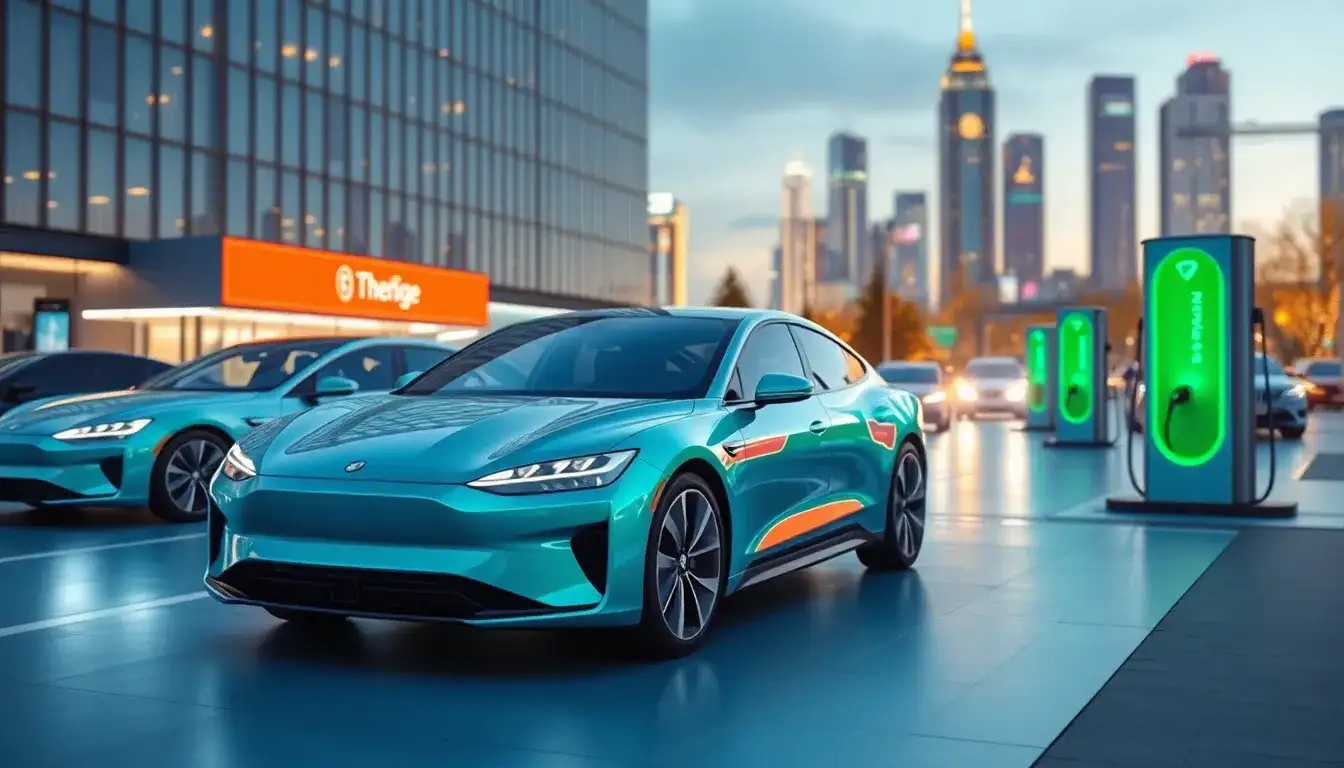
Achieving 2000 km Range is No Longer a Dream! Solid-State Battery Production Set for 2025, with Major Automakers Already Making Moves
Introduction: Solid-State Batteries – The “Ultimate Answer” to Range Anxiety
In 2025, the global electric vehicle market is poised for a pivotal transformation as solid-state battery technology accelerates its implementation. With energy density exceeding 400 Wh/kg, vehicles are expected to achieve ranges over 1000 km, with some even aiming for the remarkable 2000 km milestone. This technological revolution not only reshapes the industry landscape but also renders “range anxiety” a thing of the past. Major automakers and battery giants, including Mercedes-Benz, Toyota, BYD, and CATL, are unveiling their production schedules, signaling the onset of a “battery war” for the future.
1. Automaker Strategies: Who is Leading the Solid-State Battery Race?
1.1. International Giants: Japanese and German Automakers Seize the Initiative
- Mercedes-Benz: Plans to start road tests with all-solid-state batteries in 2025, featuring the EQS model with a high-density battery of 450 Wh/kg, achieving a range exceeding 1000 km and a 25% faster charging speed.
- Toyota: With 20 years of research and development, aims to mass-produce solid-state battery vehicles by 2027, backed by 120 billion yen from the Japanese government, targeting an energy density of 500 Wh/kg.
- Hyundai: The demonstration production line is nearly complete, with testing set to begin in 2025 and mass production expected before 2030, emphasizing high safety and fast charging capabilities.
1.2. Chinese Contenders: Racing for Technological Breakthroughs and Mass Production
- BYD: Plans to produce a 60 Ah all-solid-state battery by 2024, with demonstration vehicle deployment in 2027 and large-scale commercialization by 2030, aiming for cost parity between solid and liquid batteries.
- CATL: Leading with a sulfide route, plans for small-scale production by 2027, having established a pilot line and filed multiple patents, targeting 400 Wh/kg in energy density.
- GAC Aion/Chery/Changan: GAC’s Haobo model will feature solid-state batteries in 2026 with a range exceeding 1000 km; Chery is set for deployment in 2026, and Changan’s “Golden Bell” battery targets mass production in 2027 with a density of 400 Wh/kg.
2. Technological Breakthroughs: What Supports the 2000 km Range?
- Energy Density Surge: Solid-state batteries utilize lithium metal anodes and sulfide electrolytes, achieving energy densities more than double that of liquid batteries (450-500 Wh/kg), laying the groundwork for extended ranges.
- Revolution in Charging Efficiency: Samsung SDI has demonstrated that solid-state batteries can charge to 80% in just 9 minutes, while CATL’s AI-optimized designs enhance charging speeds by 30%, effectively eliminating “charging anxiety.”
- Safety Enhancements: Solid electrolytes are less flammable, with companies like BYD and Lantu achieving “zero spontaneous combustion” verification, significantly improving safety over traditional lithium batteries.
3. Challenges in Mass Production: The Dual Struggle of Technology and Cost
Despite the bright prospects, the commercialization of solid-state batteries faces three major hurdles:
- Interfacial Impedance: Poor contact between electrodes and electrolytes can lead to increased internal resistance. Mercedes-Benz and CATL are optimizing this with a “sandwich structure,” but production yield remains below 50%.
- Lithium Dendrite Risks: Lithium metal anodes can grow dendrites that penetrate electrolytes. BYD and Toyota are attempting to mitigate this with coating technologies, yet risks remain under extreme conditions.
- High Costs: Current material costs for solid-state batteries are around 2 RMB/Wh (compared to 0.5 RMB/Wh for liquid batteries), leading to battery packs exceeding 200,000 RMB. Automakers hope for economies of scale and AI-driven cost reductions.
4. Future Outlook: 2027 May Be the Year of Mass Production
- Timeline: Academician Ouyang Minggao from the Chinese Academy of Sciences predicts limited vehicle deployment for solid-state batteries by 2027, with widespread adoption following in 2030 once costs align with liquid batteries.
- Market Dynamics: Japan and South Korea are focusing on sulfide technology (Toyota, Samsung), while China emphasizes diversified approaches (BYD with semi-solid transitions, CATL with full solid breakthroughs). European automakers may rely on supplier partnerships.
- Ultimate Goals: Targets include energy densities surpassing 600 Wh/kg, ranges pushing 2000 km, and charging times reduced to under 10 minutes, aiming to fundamentally change the electric vehicle landscape.
Conclusion: The competition in range and cost is intensifying. From laboratory breakthroughs to the real-world range of mass-market vehicles, each advancement in solid-state battery technology is reshaping industry perceptions. Despite significant challenges, BYD’s cost parity initiative, Toyota’s government backing, and CATL’s AI cost reduction strategies indicate the inevitability of technological realization. For consumers, 2027 could mark the beginning of a new era where electric vehicles are not merely “transportation tools” but truly versatile “all-purpose vehicles.”
Interactive Topic: How long would you be willing to wait for a solid-state battery vehicle with a 2000 km range? Share your thoughts in the comments!
Original article by NenPower, If reposted, please credit the source: https://nenpower.com/blog/solid-state-battery-revolution-2000-km-range-on-the-horizon-by-2025-as-major-automakers-prepare-for-mass-production/

