

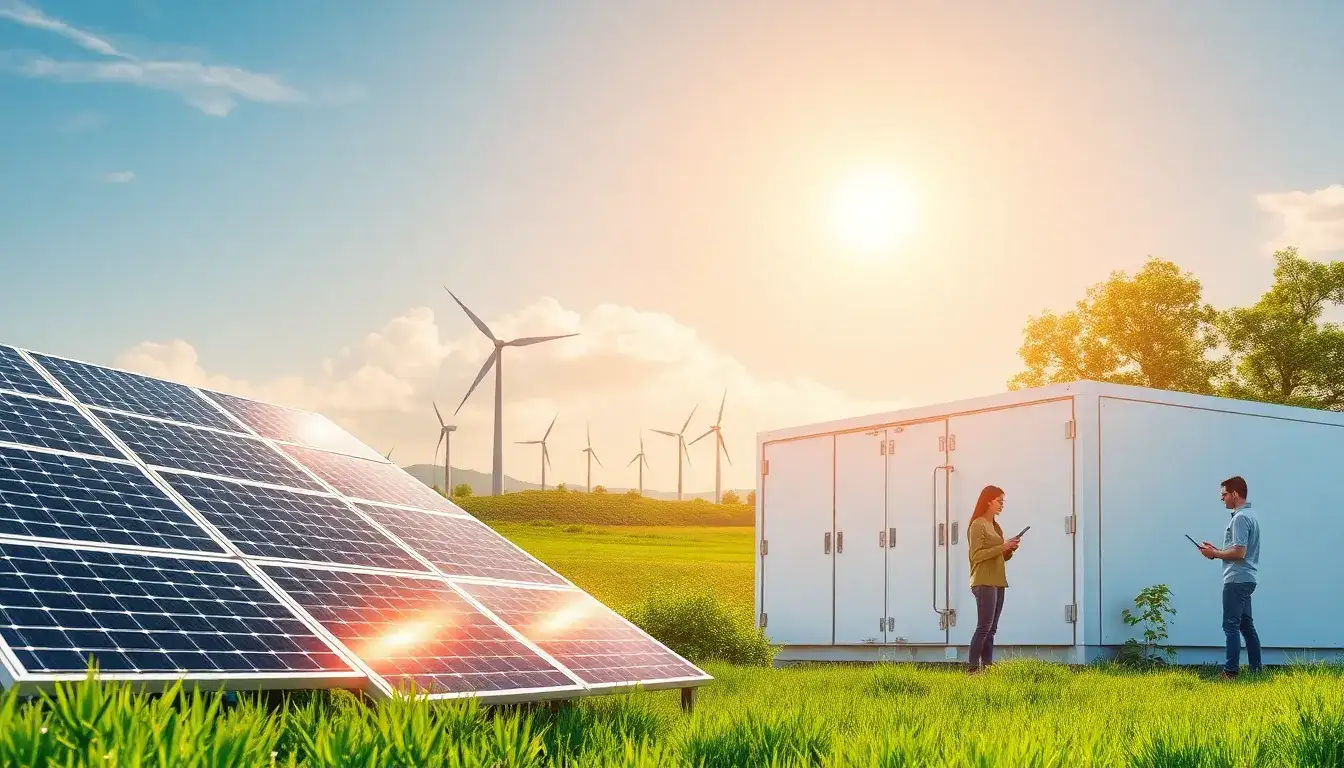
The solar energy storage market is expected to exceed $20.9 billion by 2031, driven by the increasing demand for sustainable energy solutions, advancements in lithium-ion technology, and growth in emerging economies. According to a report from Allied Market Research, the market was valued at $9.8 billion in 2021 and is projected to grow at a compound annual growth rate (CAGR) of 7.9% from 2022 to 2031.
### What Is Solar Energy Storage?
Solar energy storage involves capturing excess energy generated by solar panels and storing it in rechargeable batteries for later use. This stored power can be utilized during nighttime, cloudy weather, or power outages. The systems generally employ lithium-ion or lead-acid batteries, with lithium-ion technology being the preferred choice due to its efficiency, longer lifespan, and rapid charging capabilities.
### Market Segmentation Overview
The solar energy storage market is categorized by type, installation method, and geographical region:
#### By Battery Type:
– **Lithium-ion** (Dominant, 44% market share in 2021)
– Lead-acid
– Flow Battery
– Others
Lithium-ion batteries are anticipated to showcase the highest growth, driven by demand from industries, electric vehicle manufacturers, and residential users seeking energy independence.
#### By Installation:
– **On-Grid** (62% market share in 2021, projected highest CAGR of 8.2%)
– Off-Grid
On-grid systems are increasingly adopted in urban and semi-urban areas due to their compatibility with existing infrastructure and their ability to provide reliable energy through net metering programs.
### Regional Insights: Europe & Asia-Pacific Lead Growth
In 2021, Europe held the largest share (35%) of global solar energy storage revenue, supported by government incentives, ambitious carbon neutrality goals, and a strong commitment to renewable energy. The Asia-Pacific region is expected to record the highest CAGR during the forecast period, with countries like China, India, and South Korea actively promoting solar power to achieve zero-emission targets. This initiative has led to expanded manufacturing capacities for solar batteries and increased investments in research and development.
### Key Market Drivers
1. **Rising Demand for Sustainable Energy Solutions**: Governments worldwide are endorsing solar energy adoption to reduce carbon footprints, making solar battery systems an efficient means to store and utilize solar energy.
2. **Increase in Residential and Industrial Solar Installations**: Population growth, urbanization, and rising disposable income have fueled a surge in residential solar adoption. Industries are also leveraging solar storage to minimize reliance on fossil fuels and stabilize electricity costs.
3. **Energy Independence and Grid Reliability**: Solar energy storage systems allow users to store energy for later use, reducing dependence on grid power and providing backup during outages.
4. **Job Creation and Investment Opportunities**: The installation of solar energy systems generates jobs in engineering, installation, maintenance, and manufacturing, thereby boosting local economies and attracting new investments.
### Market Challenges
While the outlook for the solar energy storage market is positive, it faces several challenges:
– **Remote Accessibility**: Installing systems in off-grid or isolated locations can be logistically complex and costly.
– **Climate Vulnerability**: Battery systems may be adversely affected by natural disasters, temperature fluctuations, and other environmental factors.
– **Supply Chain Disruptions**: The COVID-19 pandemic highlighted the heavy reliance on imports for solar modules and battery components, resulting in significant delays in installations and manufacturing disruptions.
### Technological Advancements
Ongoing research and development in lithium-ion technology, smart grid integration, and hybrid systems are enhancing the efficiency and accessibility of solar energy storage. Innovations in flow batteries, thermal management, and battery recycling are anticipated to further reduce costs and prolong system lifespans.
### Major Applications
Key applications of solar energy storage systems include:
– Solar Charging Stations
– Off-grid Power Backup
– Grid-Tied Solar Plants
– Commercial & Residential Energy Storage
These applications are expanding in both developed and developing countries as energy security and grid stability become increasingly important.
### Leading Market Players
Prominent companies in the global solar energy storage market include:
– ADARA Power
– LG Chem
– Samsung SDI
– BASF SE
– BMW Group
– Leclanché SA
– Kokam
– EnerSys
– Primus Power
– Siemens AG
– Sumitomo Chemical
– Owens Corning
– The Lubrizol Corporation
These companies are focused on strategic partnerships, regional expansion, and product innovation to strengthen their market presence.
### Future Outlook
With an increasing interest in decentralized power generation, clean energy adoption, and grid flexibility, the solar energy storage market is set for transformative growth. Supportive policies, technological advancements, and heightened climate awareness will continue to drive adoption across various sectors.
For further insights, please refer to the complete market report.
Original article by NenPower, If reposted, please credit the source: https://nenpower.com/blog/solar-energy-storage-market-expected-to-exceed-20-9-billion-by-2031-amidst-growing-demand-for-sustainable-solutions/

