

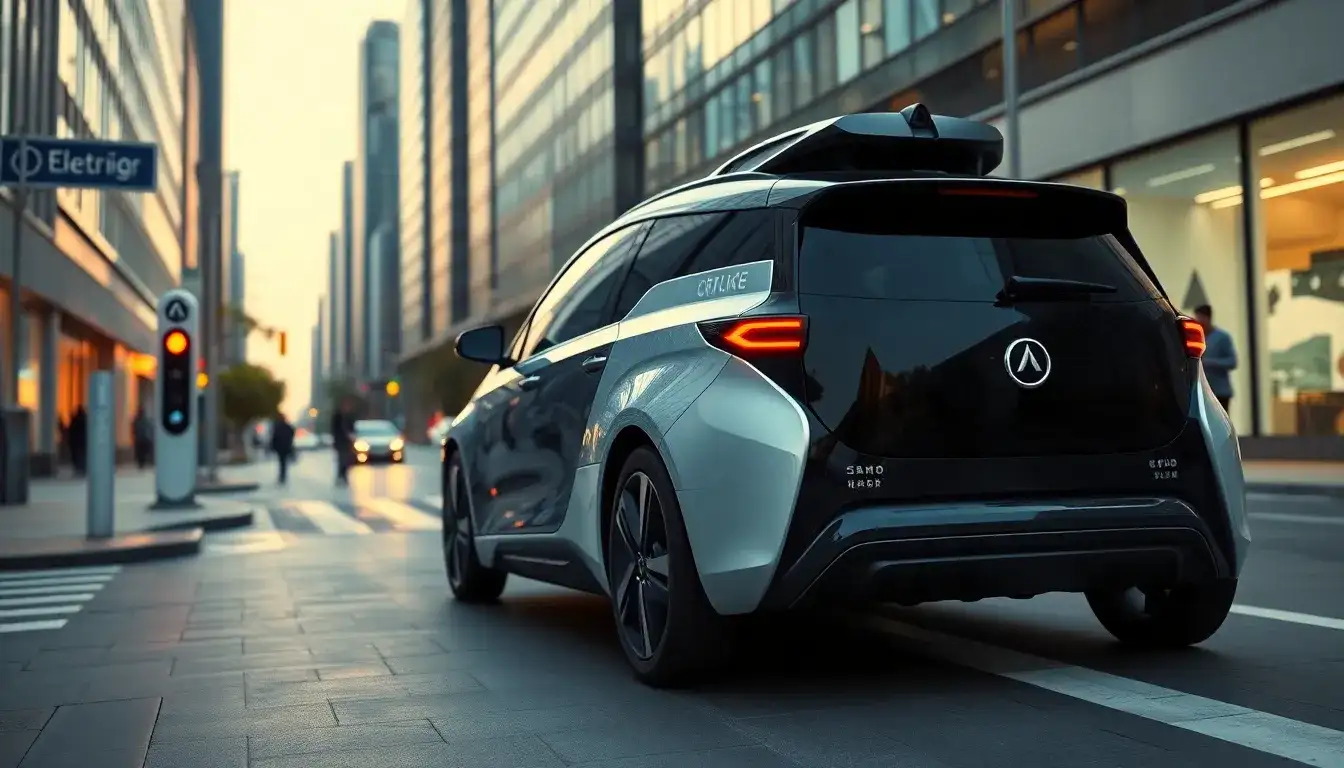
As of October 9, 2025, at 1:47 PM, the Smart Car ETF Taikang (159720) experienced an increase of 2.07%, marking a third consecutive day of gains. The index it tracks, the China Securities Index for Smart Electric Vehicles (H11052), surged by 2.22%. Notable component stocks included Chipone Technology (688521), which rose by 12.84%, Beijing Junzheng (300223), up by 9.28%, and Ganfeng Lithium (002460), which increased by 9.00%. Other stocks such as Zhongkuang Resources (002738) and Dingsheng Technology (300073) also followed suit.
As of September 30, 2025, the Smart Car ETF Taikang (159720) reached a new high in size, totaling 70.4062 million yuan, the highest in nearly a year. Over the past two weeks, the ETF’s shares grew by 2 million, reflecting significant growth.
Recent announcements from new energy vehicle manufacturers revealed that several companies, including Leap Motor, Xpeng Motors, Xiaomi Motors, NIO, Lantu Motors, Arcfox Motors, and Zhiqi Motors, reported record-high monthly sales in September.
According to Minsheng Securities, Xpeng and Huawei-affiliated automotive companies continue to iterate their smart driving technologies. Xpeng has launched the first domestic mass-produced “end-to-end” large model, highlighting a trend towards democratizing advanced driver assistance systems for the mainstream market under 200,000 yuan. With the rapid promotion of urban assisted driving features, smart driving is reaching a pivotal point in technology, user acceptance, and business model, further enhancing the differentiated advantages of autonomous car manufacturers in the field of intelligence.
The Ministry of Industry and Information Technology has published a draft for mandatory national standards concerning the safety requirements for combined driving assistance systems in intelligent connected vehicles. This draft specifies that systems must be capable of detecting hand and gaze disengagement and must be able to safely disengage if the driver does not respond to alerts. Galaxy Securities believes that these standards are likely to increase consumer trust in smart driving assistance, leading to a steady rise in the penetration rates of L2-level and above driving functions. This will also expand the market for key components such as LiDAR, high-performance smart driving chips, and DMS (Driver Monitoring Systems).
The Smart Car ETF Taikang (159720) employs a full replication stock investment strategy that closely tracks the China Securities Index for Smart Electric Vehicles. It is characterized by a large-cap growth style, with a 0.41% outperformance over the benchmark in Q2 2025 and a 0.26% outperformance in H1 2025. The top ten holdings as of Q2 2025 include CATL, BYD, Luxshare Precision, Inovance Technology, Omnivision Technologies, Great Wall Motors, iFlytek, Changan Automobile, Sanhua Intelligent Controls, and EVE Energy, all deeply resonating with the electrification and intelligence wave in the automotive industry.
The Smart Car ETF Taikang (159720) comprehensively covers the core segments of the intelligent driving industry, with the top ten weighted stocks accounting for 55.33% of the portfolio. Among these, CATL (batteries), Luxshare Precision (sensing hardware), and Inovance Technology (control systems) each have weights exceeding 40%, significantly contributing to the L4-level autonomous driving industry chain development. With the expansion of Robotaxi operations and a reduction in smart driving hardware costs, the ETF continues to benefit from a positive cycle of “technological breakthroughs, commercial realization, and scale expansion.” Investors are encouraged to pay close attention to the progress of smart driving data regulations and Robotaxi pilot operational data to seize investment opportunities in the smart driving sector.
The Smart Car ETF Taikang (159720) closely tracks the smart electric vehicle industry chain, covering key sectors such as batteries, complete vehicles, and autonomous driving, demonstrating significant allocation value. The index tracked by the ETF includes top-weighted stocks that span the entire chain of power systems, perception, decision-making, and execution, while retaining leading firms in electrification and focusing on cutting-edge areas like LiDAR and intelligent cockpits. This aligns perfectly with the dual-driving trend of “electrification and intelligence,” while also including leaders in niche sectors like in-car OS and drive-by-wire systems. The recent breakthroughs in semi-solid battery technology further strengthen the investment rationale.
With its precise coverage of industry leaders, continuous inflow of institutional funds, and high growth potential at reasonable valuations, the Smart Car ETF Taikang (159720) has become an optimal tool for investors to share in the dividends of the smart automotive industry. It is advisable to focus on opportunities for excess returns in the resonance of policy catalysts and technological iterations.
The Smart Car ETF Taikang (159720) closely follows the China Securities Index for Smart Electric Vehicles. This index selects publicly listed companies whose main business involves smart electric vehicle power systems, perception systems, decision-making systems, execution systems, communication systems, complete vehicle production, and the automotive aftermarket, thereby reflecting the overall performance of securities in the smart electric vehicle sector.
The top-weighted stocks in the China Securities Index for Smart Electric Vehicles, such as CATL and BYD, have established a competitive moat in battery technology and smart cockpits. Under favorable policies, these companies are expected to seize opportunities amidst the trend of reducing competition and further solidify their market share.
Original article by NenPower, If reposted, please credit the source: https://nenpower.com/blog/smart-car-etf-taikang-surges-over-2-as-intelligent-driving-technologies-accelerate-implementation/

