

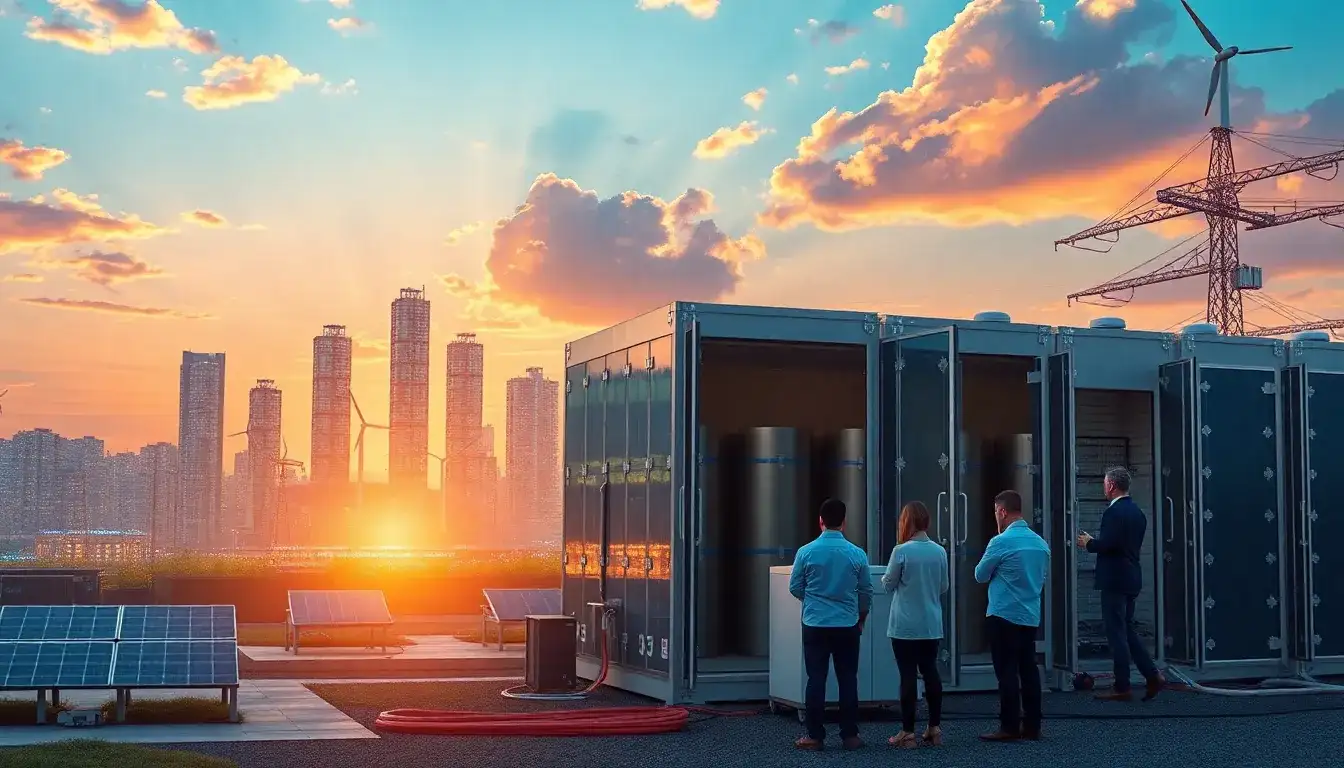
The energy storage industry is experiencing significant growth potential. With ongoing policy support and unexpected increases in domestic and international demand, the industry’s growth prospects are becoming increasingly certain, leading to heightened market interest.
Previously, the energy storage sector was predicted to face a slowdown in demand. However, recent incremental policies have been introduced, establishing clear policy targets and significantly boosting industry demand, providing robust support for the sector’s development.
Ongoing Policy Support
The latest incremental policy was released on September 12, when the National Energy Administration issued the “Special Action Plan for the Scaled Development of New Energy Storage (2025-2027).” According to this plan, by 2027, the installed capacity of new energy storage in the country is expected to exceed 180 million kilowatts (180 GW), driving direct project investments of approximately 250 billion yuan.
According to statistics from the China Energy Storage Alliance (CNESA), by the end of 2024, China’s cumulative installed capacity of new energy storage is projected to reach 78.3 GW/184.2 GWh, with an additional 43.7 GW/109.8 GWh expected in 2024 alone. Looking ahead, the target for new installations over the next three years is set at 102 GW (an average of 34 GW per year). Although this average is lower than the 44 GW expected in 2024, considering that installation targets are often exceeded, Ping An Securities views this policy as a stabilizing factor for future installation scales, helping to bolster domestic confidence in large-scale energy storage.
The plan not only supports the scale of installations but also reaffirms the role of energy storage in the power system, aiming to enhance the utilization level of new energy storage and improve market participation mechanisms, which is likely to propel the domestic sector towards high-quality development.
According to Kaiyuan Securities, by mid-2025, China’s new energy storage capacity is projected to reach 94.91 GW. To meet the 2027 installation target, the installed capacity will need to nearly double over the next two and a half years, with approximately 85 GW of new installations expected, averaging 34 GW annually. Calculating with a backup duration of four hours, this translates to an average annual installation of 136 GWh, representing a 34% increase compared to the 101 GWh expected in 2024.
From a policy perspective, the introduction of a special action plan for energy storage construction reflects a clear top-level commitment, indicating that demand is backed by policy support. Zhongshan Securities believes this will accelerate the refinement of mechanisms in the new energy storage market. Specific measures include promoting “renewable energy + storage” as a joint bidding entity to participate in electricity market transactions, guiding orderly participation in ancillary service markets, and enhancing pricing mechanisms for energy storage resources.
Provincial capacity policies are trending upward. Ningxia has revealed a pricing mechanism for capacity on the power generation side, with standards set at 100 yuan/kW·year from October to December 2025 and rising to 165 yuan/kW·year starting January 2026. Inner Mongolia has also issued related notices to compensate independent new energy storage power stations that are included in the plan for their discharge to the public grid, with a compensation standard fixed for a year; in 2025, the compensation will be 0.35 yuan/kWh, with a compensation period of 10 years, setting national records for both the highest compensation standard and the longest duration. Gansu has also issued a related notice soliciting opinions, proposing a capacity price standard of 330 yuan per kW annually for coal power units and new energy storage on the grid side, with a two-year implementation period.
According to Kaiyuan Securities, the gradual introduction of capacity pricing details by provincial units is continuously driving the improvement of energy storage business models, enhancing the profitability of energy storage projects. Zhongshan Securities also notes that with the cancellation of mandatory storage requirements outlined in Document 136, the relay of provincial capacity policies represents a significant trend and an important foundation for the future development of the large energy storage industry.
Industry Prosperity on the Rise
From a demand perspective, the growth will be both surprising and sustainable. In August 2025, the domestic energy storage market completed a total of 25.8 GW/69.4 GWh of energy storage systems and equipment EPC bidding work, in addition to 13.3 GWh of energy storage cells and DC-side procurement. Of the project types, independent storage, bulk purchasing, renewable energy storage projects, and user-side storage projects accounted for 55.5%, 38.3%, 4.5%, and 1.8% of the total scale, respectively. From January to August, the domestic energy storage bidding scale reached 80 GW/272 GWh, representing year-on-year increases of 131% and 191%, respectively.
Looking ahead, with the gradual implementation of provincial plans following Document 136, the profitability models for large energy storage will gradually become clearer and optimized, shifting energy storage demand from policy-driven to market-driven. If capacity pricing is promoted further, its economic viability will become even more apparent. The marginal improvements in business models are driving domestic energy storage demand beyond expectations. Zhongshan Securities similarly believes that with national planning and provincial capacity policies providing strong support, domestic energy storage tendering will remain highly prosperous, with demand likely to exceed expectations.
Meanwhile, overseas energy storage demand is also showing considerable growth. Xingye Securities predicts that by 2025, the global installed capacity of energy storage will reach 106.04 GW/265.1 GWh, representing year-on-year growth of 43% and 49%. In terms of regions, the major markets of China, the U.S., and Europe are maintaining steady growth, while emerging markets in the Middle East and Africa are rapidly expanding. Over the next five years, the industry’s compound annual growth rate is expected to remain between 25% and 30%.
In the U.S., there has been a 90-day extension of tariffs, and during this policy window, the pace of installations in the U.S. energy storage market is expected to accelerate throughout 2025. Australia is stimulating distributed energy storage with a combination of federal and state subsidies, aiming to add one million household batteries by 2030. The cost per kWh is set at 372 AUD (approximately 1,737 yuan), covering about 30% of installation costs, which will shorten the investment recovery period for household storage systems to four to five years, leading to a surge in installations in the latter half of the year. Similarly, demand in emerging markets such as Europe and the Middle East is continuously surging due to urgent needs for flexible resources, improved energy storage economics, and government subsidies.
From an investment perspective, Kaiyuan Securities believes that with strong policy support and an advancing industrial trend, the outlook for the battery industry is gradually improving, revealing advantages over other sectors. Central and local policies are driving a recovery in energy storage demand, benefiting the battery sector. In terms of industrial trends, solid-state batteries, as a new technology in the battery field, are seeing rapid advancements and potential commercialization, attracting significant market attention. With the push from energy storage projects and overseas demand, the battery industry’s production is expected to increase, leading to an upward trend in industry prosperity. It is recommended to pay attention to investment opportunities in the GEM, particularly in the battery sector.
Zhejiang Securities suggests focusing on energy storage system integrators, PCS manufacturers, energy storage cell producers, thermal management manufacturers, and companies related to power intelligence. Ping An Securities believes that opportunities in non-U.S. large storage markets are promising, recommending companies with leading global market competitiveness and low valuations, as well as high-quality enterprises with small overseas business bases actively expanding abroad, and emerging market household storage and European industrial storage demand.
Original article by NenPower, If reposted, please credit the source: https://nenpower.com/blog/significant-growth-opportunities-open-up-in-the-energy-storage-industry-through-2027/

