

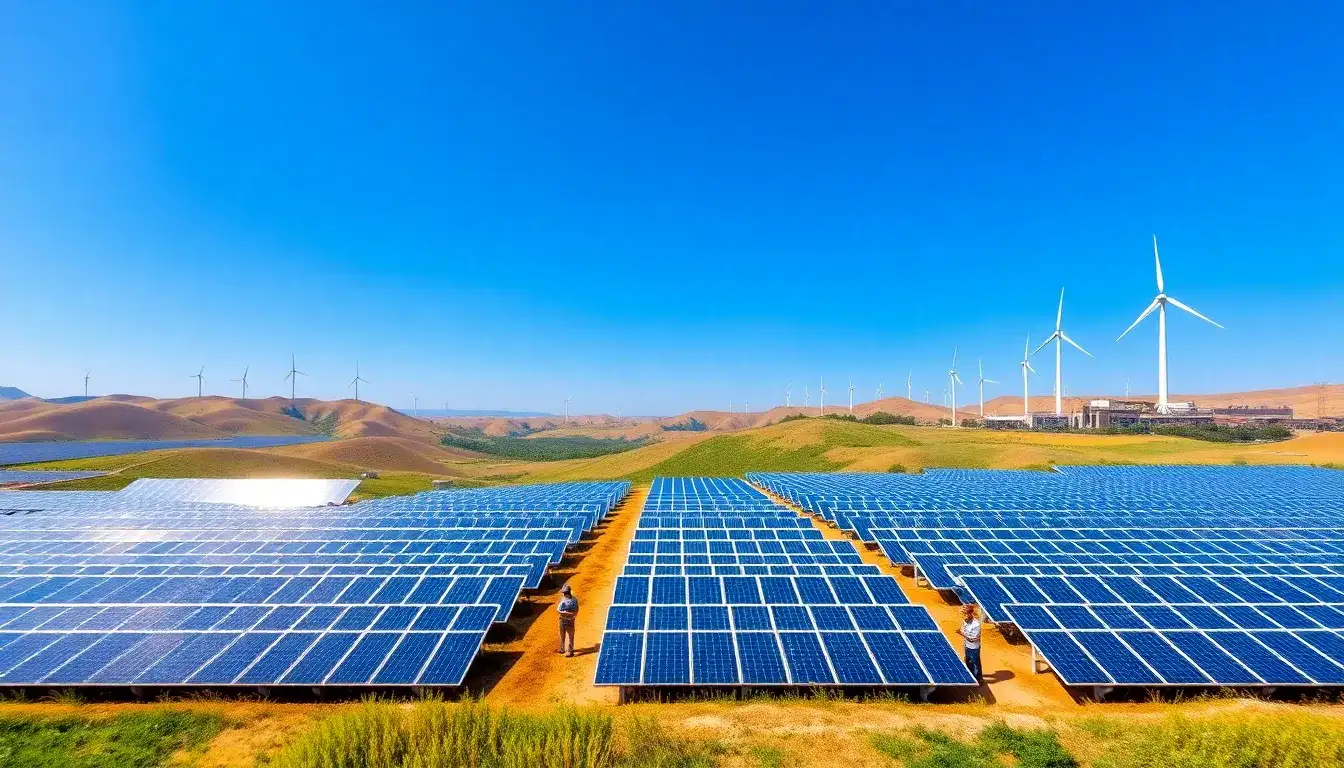
In a recent report from the 21st Century Business Herald, it was highlighted that as of April 25, 2025, China’s installed capacity for solar power reached 59.71 GW, reflecting a substantial year-on-year increase of 30.5%. However, the implementation of the “430” policy has led to a tightening of supply chains, resulting in increased costs for solar energy systems.
The data released by the National Energy Administration indicates that from January to March 2025, the country’s new solar installations achieved 20.24 GW, a significant rise compared to the previous year. By the end of March, the total installed capacity of solar power systems reached 59.71 GW, marking a year-on-year increase of 30.5%.
In recent months, the domestic solar power market has experienced a price surge, with average prices for solar modules climbing significantly. For instance, the price range for N-type monocrystalline silicon modules is currently set between 3.90 to 4.50 yuan per watt, with a recent transaction price recorded at 4.03 yuan per watt, representing a decrease of 1.71%.
Additionally, prices for P-type monocrystalline silicon modules are in the range of 3.10 to 3.50 yuan per watt, with the most recent transaction priced at 3.30 yuan per watt, down by 1.49%. The market has seen a continuous decline in prices, primarily due to the ongoing adjustments in the supply chain and the demand for new installations.
Despite the price increases, there is an expectation of further reductions in prices as producers are urged to maintain competitive pricing strategies. The overall market activity remains strong, but the profitability of solar projects may be compromised by rising module costs.
This week, the market for solar modules remains in a state of flux with fluctuations in supply and demand impacting pricing structures. Current trends indicate that prices for high-efficiency solar modules are under pressure, especially with the introduction of new policies aimed at stabilizing the market.
According to the Chinese Photovoltaic Industry Association, the market dynamics are largely influenced by the recent implementation of the “430” policy, which aims to regulate the industry and enhance the overall stability of solar energy production.
As we move forward, it is anticipated that the demand for solar power will continue to grow, fueled by both domestic and international markets. However, manufacturers will need to navigate these challenges effectively to ensure sustainable growth and profitability.
Original article by NenPower, If reposted, please credit the source: https://nenpower.com/blog/significant-growth-in-chinas-solar-power-capacity-expected-amid-policy-changes/

