

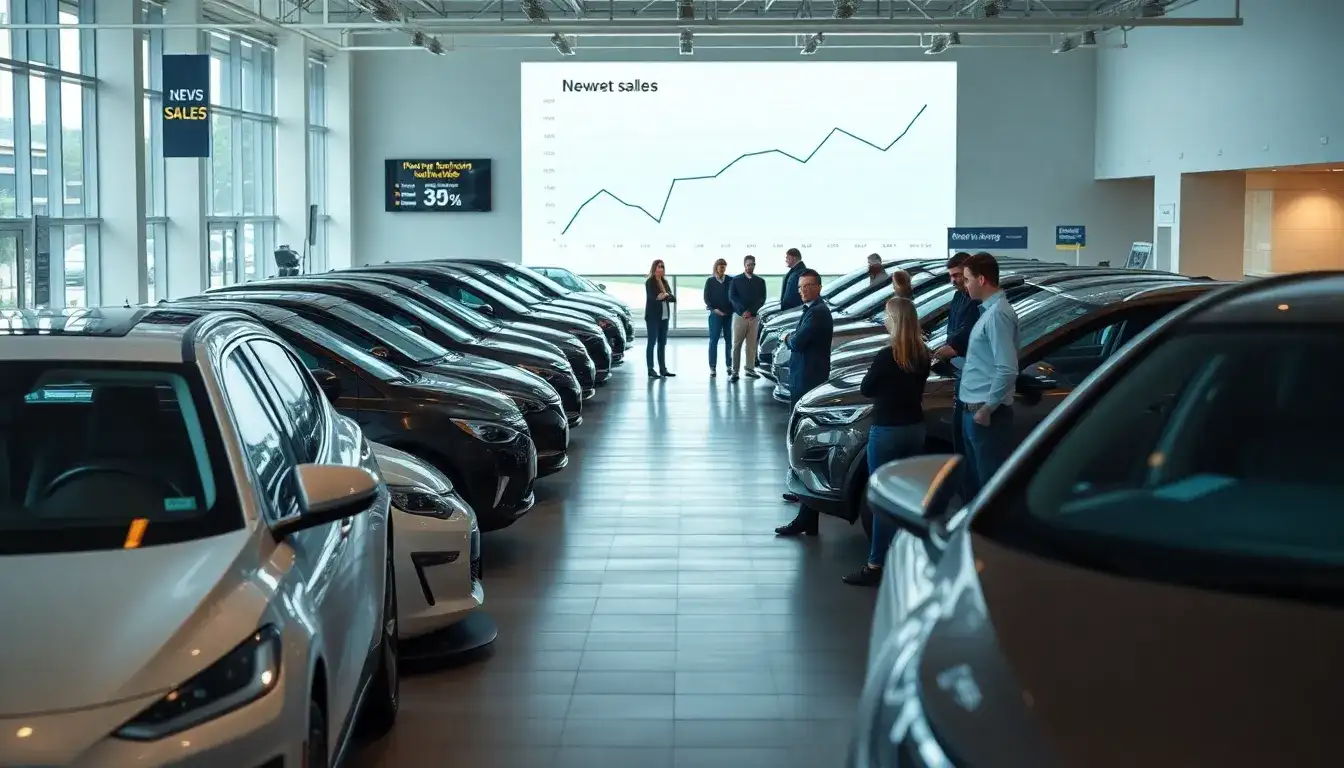
The new energy vehicle market has once again experienced a significant drop. In January 2025, the penetration rate of new energy vehicles fell to 41.5%, marking the second consecutive month below 50% and the fifth month of continuous decline. This decline has been steep, dropping from a peak of 53.7% in August of the previous year to nearly 40% by January 2025.
In the meantime, traditional fuel vehicles have gained traction, countering the market share of new energy vehicles. What has caused this shift? According to the China Association of Automobile Manufacturers (CAAM), the low penetration rate in January is attributed to seasonal patterns. The period around the Lunar New Year is a peak time for offline vehicle purchases, and the lack of charging infrastructure in smaller towns contributes to the higher proportion of fuel vehicles.
Indeed, the scarcity of charging stations in county-level cities is a significant issue; when I visit my hometown, I struggle to find even a few charging points. However, attributing the low penetration rate solely to the lack of charging stations during the holiday season does not explain the continuous decline that has persisted since September. Clearly, the issue cannot solely be blamed on charging infrastructure.
So, what is the underlying cause? The main factor is pricing. Fuel vehicles have significantly reduced their prices in response to competition from new energy vehicles, with brands like BMW, Benz, and Audi (BBA) offering substantial discounts. For many drivers who travel less than 20,000 km a year, whether in large or small cities, purchasing a fuel vehicle is much more cost-effective.
Does this mean that new energy vehicles are on a downward trajectory? Absolutely not. Companies such as BYD, Changan, Xpeng, and NIO are pushing for equal access to smart driving technology, which is likely to drive prices of new energy vehicles down further. The price reduction potential for fuel vehicles will eventually diminish, resulting in a market share stabilization around 20% to 30%.
Furthermore, the vast majority of electric vehicle owners are unlikely to switch back to fuel vehicles due to the vastly different user experience, akin to the difference between smartphones and older mobile phones. As for the argument that fuel vehicles retain value while electric vehicles do not, this is a misleading notion. Both new energy vehicles and fuel vehicles are experiencing price decreases, and neither retains its value well. The valuation of second-hand vehicles is based on current new car prices, and with subsidies expected in 2025, the overall penetration rate for new energy vehicles should remain strong.
The CAAM predicts that the total sales of passenger vehicles will reach 23.4 million units, reflecting a 2% growth. Among these, new energy vehicles are expected to account for 13.3 million units, representing a 20% increase, with a penetration rate soaring to 57%. As a proud owner of a new energy vehicle, I firmly believe that this trend is irreversible.
Original article by NenPower, If reposted, please credit the source: https://nenpower.com/blog/significant-decline-in-new-energy-vehicle-sales-sparks-concerns-in-the-automotive-market/

