

DEPCOM Power, a subsidiary of Koch Engineered Solutions, is a prominent EPC provider specializing in solar and energy storage solutions across the U.S. The company collaborates with local utilities to enhance energy-efficient operations that bolster the grid and improve reliability.
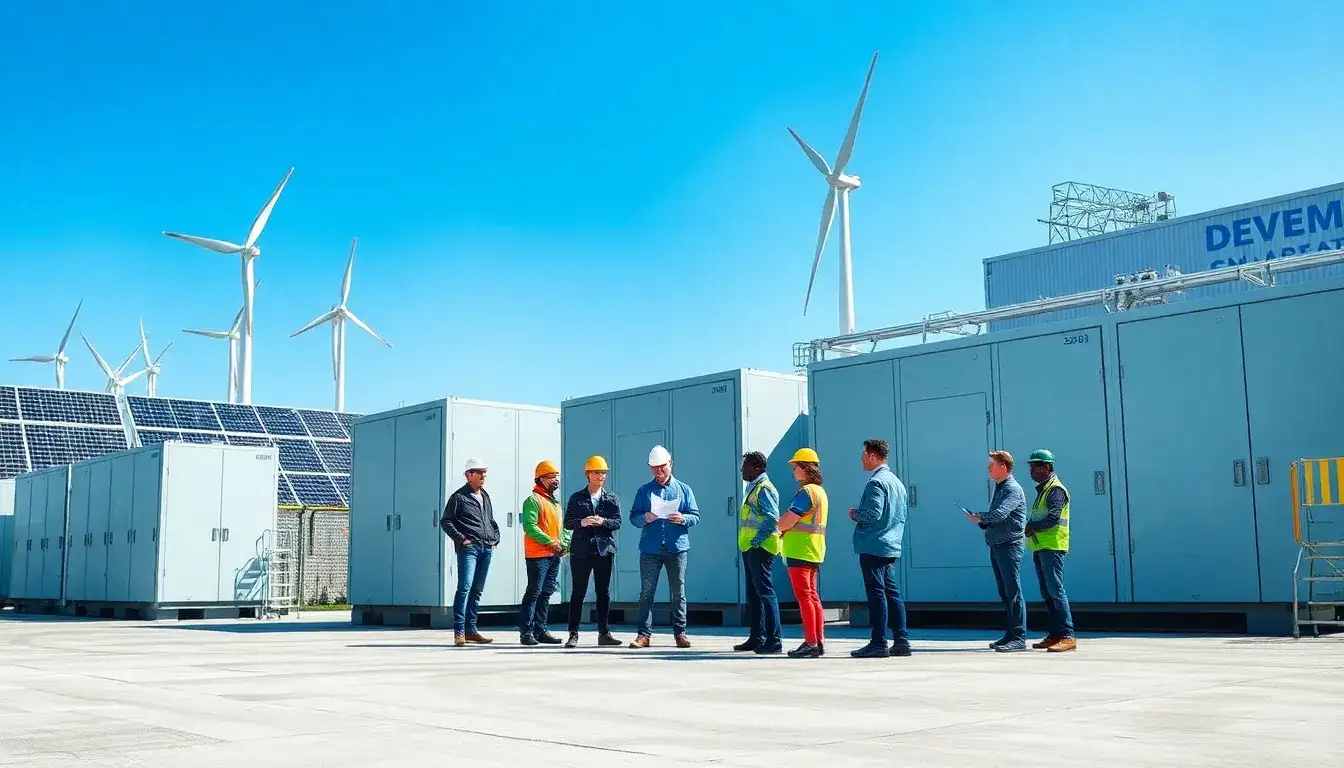
In an ambitious project, DEPCOM Power was tasked with designing, building, and maintaining a Battery Energy Storage System (BESS) capable of storing 800 megawatt-hours of solar and wind energy for approximately 42,000 customers. Spanning 10 acres, this project utilizes modified 20-foot ISO containers housing Lithium Iron Phosphate (LFP) batteries connected to centralized inverters and integrated into a transmission substation. Given the substantial auxiliary power requirements for temperature control, a robust 480V 3-phase AC network distributes power to 360 battery containers. The auxiliary protection components feature a network of switchboards and panelboards, all equipped with Siemens 3WA and 3VA line circuit breakers.
To maintain optimal battery temperatures, a continuous HVAC system is essential. In the event of a power outage, an auxiliary switchboard activates a generator to provide backup power. DEPCOM Power enlisted the expertise of EPEC, a North Carolina-based electrical switchboard provider, and its agent, ReBoSS, to create a tailored auxiliary power switchboard system for HVAC control and battery monitoring. This system includes a network of switchboards and panelboards, outfitted with Siemens 3VA6 molded case circuit breakers and Siemens 3WA main air breakers, all assembled at the Siemens plant in Grand Prairie, TX.
The project, expected to complete by summer 2025, is a 200-megawatt standalone energy storage initiative that will deliver over 800 megawatt-hours of energy. Its main goal is to enhance grid stability by storing excess solar energy and distributing it to local homes after sunset, providing power for approximately four hours. Mark Sauls, Vice President of Sales and Operations at EPEC Solutions, explained, “Excess solar produced during the day is used to charge these batteries, which then discharge after sundown to extend power availability.”
This BESS project aligns with the local utility’s aggressive sustainability goals, aiming for net-zero direct greenhouse gas emissions by 2050. It stands as one of the largest battery storage systems in the American Southwest, leveraging its storage capacity to stabilize and enhance the reliability of inherently intermittent energy sources. As noted by Walker Wentzler, Senior Director of Electrical Engineering at DEPCOM Power, the site is strategically located near a population center, enabling efficient power delivery without transmission constraints.
Energy enters the BESS through the local distribution network and is stored in lithium iron phosphate batteries, which feature advanced technology for longer life and safer operation. Wentzler emphasized the importance of maintaining a cool temperature within the battery modules, stating, “The liquid heating and cooling system regulates the temperature of the circulating fluid to keep the batteries operating optimally.” The EPEC switchboard is crucial for supplying power to the HVAC system, ensuring the batteries remain in a stable condition.
The flexibility and customization of the auxiliary power switchboard were key factors in DEPCOM Power’s decision to partner with EPEC. The switchboards, manufactured by EPEC’s QT Corp., are equipped with dual, electrically switchable Siemens 3WA main breakers and 14 Siemens 3VA6 circuit breakers, enhancing safety and reliability. Drew Vermillion, president of ReBoSS, highlighted the importance of having a backup breaker to maintain HVAC operations even if the substation experiences an outage.
Siemens technology plays a vital role in the success of this project. The 3VA6 circuit breakers, noted for their reliability and efficiency, are equipped with electronic tripping, which is preferable in battery energy storage applications. This feature minimizes nuisance tripping, a common issue with thermal magnetic circuit breakers in extreme temperatures. Additionally, built-in metering capabilities allow for real-time monitoring of current, which is essential for maintaining the health of the HVAC system and overall plant performance.
The 3VA6 circuit breakers also provide flexibility and safety, incorporating the latest features to comply with OSHA and NEC standards. Wentzler emphasized the need for high short-circuit breaking capacity to protect technicians and reduce arc flash risks, particularly given the high auxiliary loads required for the HVAC systems.
Moreover, the project necessitated customizations, such as a larger auxiliary panel board and an external, lockable rotary operator for technician access. The integration of Siemens 3WA main breakers supports the automation and interlocking needed for efficient long-term operations.
The collaboration between DEPCOM Power, EPEC, and Siemens exemplifies the value of partnership in the renewable energy sector. The 3VA and 3WA circuit breaker lines are critical components that deliver the necessary functionality, flexibility, and safety for this demanding project. Sauls expressed confidence in Siemens, stating, “Siemens can always be counted on for reliability, quality, and support.”
This project addresses the growing energy needs in a region abundant in solar resources, providing a cost-effective and innovative solution to the nation’s energy supply challenges. As Vermillion pointed out, “A diverse energy generation mix is essential, and large-scale battery sites represent the next step in achieving this goal. It brings significant value to the local community.”
Original article by NenPower, If reposted, please credit the source: https://nenpower.com/blog/siemens-and-depcom-power-collaborate-with-local-utility-to-enhance-electric-grid-stability-through-renewable-energy-storage/

