

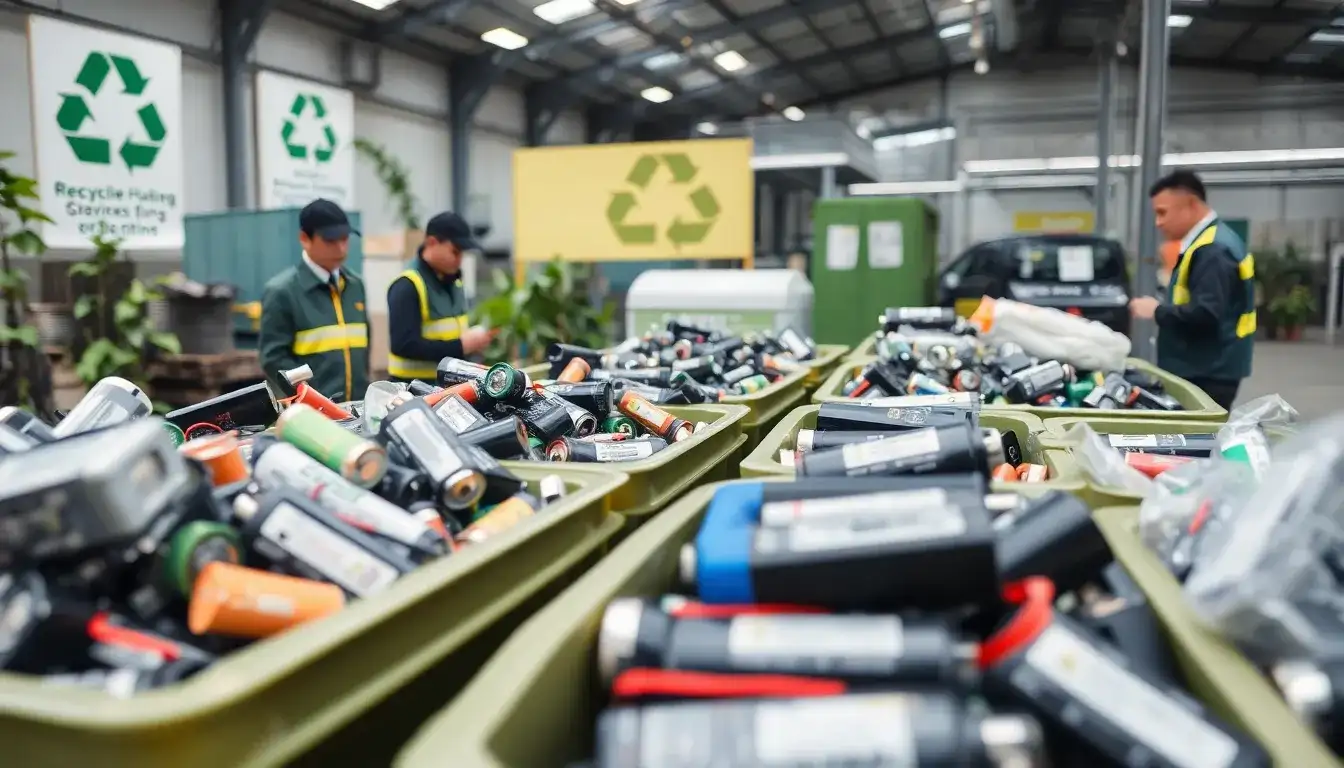
On May 7, a policy briefing was held for the Interim Measures for the Management of the Recycling and Utilization of Waste Power Batteries for New Energy Vehicles in Sichuan Province (hereinafter referred to as the Measures). During the event, it was revealed that the Measures consist of 7 chapters and 27 articles aimed at ensuring that waste power batteries follow proper channels for disposal through source management, complying with regulations during the recycling process, and extending producer responsibility to enhance the recycling service network. This document marks the first provincial-level regulatory framework in the country specifically governing the recycling and utilization of waste power batteries.
Starting from June 1 of this year, the implementation of the Measures is expected to bring significant changes for vehicle owners, companies, and the industry. A representative addressed several concerns raised by attendees.
With the introduction of the Measures, the first large-scale “retirement wave” of waste power batteries is anticipated. According to Zeng Jiming, a member of the Party Leadership Group and Deputy Director of the Sichuan Provincial Economic and Information Technology Department, “The formulation of the Measures is not only essential for developing the waste power battery recycling industry but also necessary for regulating recycling activities.” Sichuan is responsible for approximately one-fifth of the national power battery production. Currently, there are 11 comprehensive utilization enterprises for waste batteries, with 512 recycling service points and a total utilization capacity of about 69,000 tons, indicating a solid industrial foundation.
By the end of 2024, the province is projected to have 1.402 million new energy vehicles, with Chengdu being the city with the highest number of vehicles in the country, reaching 932,500 new energy vehicles, a 48.7% increase. Zeng mentioned that in the next 2 to 3 years, Sichuan will face its first large-scale “retirement wave” of waste power batteries, offering promising prospects for the recycling market. Waste materials that can be recycled are often referred to as “urban mines” or “secondary mines.” For instance, retired power batteries still possess considerable “residual value.” Those with potential for secondary utilization can be used in energy storage systems, extending the battery’s life by 3 to 5 years and improving resource efficiency. Batteries that do not have secondary utilization value can have valuable metals extracted, recovering over 95% of precious metals such as nickel, cobalt, and lithium. Thus, waste power batteries are indeed a “rich mine.”
The Measures provide a systematic framework for the construction of 4 to 5 regional centers across the province, focusing on the establishment of recycling norms and support measures. But what exactly is a “regional center”? According to Lu Yi, Director of the Environmental and Resource Comprehensive Utilization Division of the Sichuan Provincial Economic and Information Technology Department, “You can think of the regional center as the ‘heart’ of the province’s waste power battery recycling system.” In the Measures, regional centers are defined as integrated facilities within a specific area that meet certain conditions and combine various functions such as recycling, storage, transportation, disassembly, testing, repair, secondary utilization, and regeneration of waste power batteries. These centers will operate as market entities to provide “one-stop” services for the community in handling waste power batteries.
Sichuan plans to construct 4 to 5 regional centers based on a “build as conditions mature” approach throughout different regions of the province.
While the number of new energy vehicles being recovered has significantly increased, many recycling and dismantling enterprises report that over half of the recovered vehicles are missing their power batteries. Yang Jun, Director of the Resource Recycling Division of the Sichuan Provincial Commerce Department, stated that some vehicle owners dismantle and sell the batteries privately, subsequently delivering the “battery-less” vehicles to recycling enterprises, which removes the batteries from regulatory oversight and poses environmental and safety risks. To address these industry challenges, the newly implemented Measures strengthen the obligations of vehicle owners and the responsibilities of recycling and dismantling enterprises. When a new energy vehicle reaches the end of its life, the owner is required to send it to a dismantling enterprise for battery removal. For scrapped vehicles that lack power batteries, the relevant provisions of the national Regulations on the Management of Scrap Motor Vehicle Recycling must be followed.
Recycling and dismantling enterprises are required to enter the vehicle identification code and battery coding, quantity, model, and flow of the scrapped vehicles into the national relevant traceability management platform. They must properly store the dismantled batteries and sell them to recycling service points established by new energy vehicle manufacturers or enterprises that meet the relevant requirements for secondary utilization and comprehensive utilization of batteries.
Original article by NenPower, If reposted, please credit the source: https://nenpower.com/blog/sichuan-introduces-first-provincial-regulations-for-recycling-used-power-batteries/

