

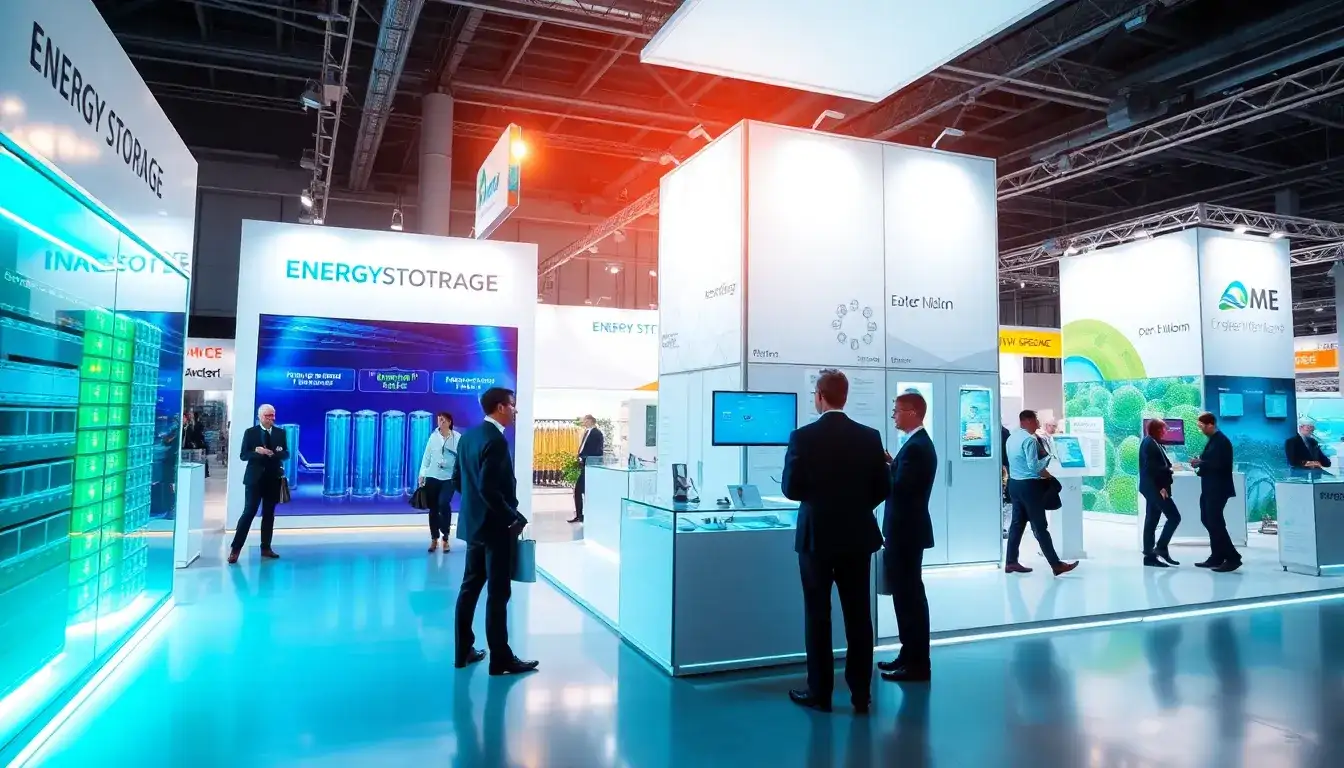
Several System Integrators Absent from the 2025 CIES Energy Storage Exhibition: A Reflection on Industry Changes
On May 6, 2025, the 15th China International Energy Storage Conference and Exhibition (2025 CIES) took place, attracting global attention as the first major event in the energy storage industry for the year. Such high-profile gatherings typically serve as key platforms for system integrators, battery manufacturers, and other stakeholders to showcase their latest products and future strategies. However, the noticeable absence of several well-known Chinese energy storage brands has sparked discussions within the industry. This seemingly random occurrence actually reflects a deeper transformation within the energy storage sector, allowing for insights into the significant changes in the industry landscape over recent years.
1. Behind the Absence: Structural Adjustments in Industry Competition
The absence of multiple mainstream system integrators and battery companies at this exhibition is not merely a strategic choice, but rather an external manifestation of the changing competitive dynamics in the industry:
- Accelerating Market Restructuring: As the energy storage market expands, technological advancements and cost pressures compel companies to focus on their core strengths, leading some firms lacking technological barriers or financial support to gradually withdraw from the spotlight.
- Reconstructed Roles of Players: The collaboration and competition between state-owned enterprises and private companies are becoming increasingly significant. The former leverage their resource integration capabilities to accelerate their presence in battery manufacturing and system integration, while the latter seek differentiated survival through innovation, shifting the industry from simple competition to a model of “co-opetition.”
2. Two Core Trends in Industry Transformation
(a) Digitalization and Intelligence: Reshaping Competitive Barriers
Driven by policy and technological advancements, energy storage systems are evolving from “hardware stacking” to “smart solutions”:
- Emerging Technical Necessities: Products equipped with digital management, intelligent control, safety warnings, and smart operation and maintenance features are becoming mainstream in the market. Companies that fail to keep pace face the risk of marginalization.
- Expanded Application Scenarios: The industry is transitioning from single energy storage stations to integrated models such as “source-grid-load-storage,” virtual power plants, intelligent computing, and smart microgrids, necessitating cross-domain technical integration capabilities.
(b) Diverse Competition and Cross-Industry Collaboration: Reconstructing the Industrial Ecosystem
The emergence of new niche markets (such as residential energy storage, commercial energy storage, and long-duration energy storage) has generated diverse demands:
- Innovation as a Decisive Factor: Companies must continually break through in areas such as material systems, system design, and cost control to adapt to differentiated scenarios.
- Strengthening Collaborative Ecosystems: Collaborations are increasingly tight among state-owned and private enterprises, energy storage companies, technology firms, financial institutions, and grid companies. The former provide capital and channel advantages, while the latter inject technological vitality, achieving cost reduction and market expansion through resource sharing.
3. Future Pathways: Innovation and Collaboration Drive High-Quality Development
The “absence phenomenon” observed at this exhibition essentially signals the industry’s inevitable growing pains as it transitions from “scale expansion” to “value enhancement.” For companies, the way forward lies in:
- Focusing on Technological Innovation: Increasing investment in research and development in digitalization, intelligence, safety economics, and green low-carbon technologies, such as exploring high-safety, long-life batteries, virtual power plant scheduling algorithms, and integrated solar-storage charging solutions to build an irreplaceable technological moat.
- Product Upgrades Tailored to Demand: Optimizing the product matrix based on market orientation to enhance safety, economic viability, and adaptability. For instance, developing highly integrated and easy-to-install modular products for overseas residential markets and strengthening system stability and peak-shaving capabilities for grid-side storage.
- Building Barriers through Ecological Collaboration: Deepening collaboration with upstream and downstream partners in the supply chain and cross-industry allies, such as co-developing intelligent operation and maintenance assurance systems with insurance companies and exploring asset securitization paths with investment firms. This multi-faceted synergy of “technology + capital + scenarios” can enhance risk resistance and market share.
Conclusion: The “empty spaces” at the 2025 CIES exhibition are a testament to the ongoing transformation in the energy storage industry. In the context of an accelerating global energy transition, the industry is moving from “disorderly growth” to “meticulous cultivation.” Only by centering innovation and fostering collaboration can stakeholders navigate the waves and collectively write a new chapter of high-quality development in the energy storage sector.
Original article by NenPower, If reposted, please credit the source: https://nenpower.com/blog/shifts-in-the-energy-storage-industry-as-major-integrators-miss-2025-cies-exhibition/

