

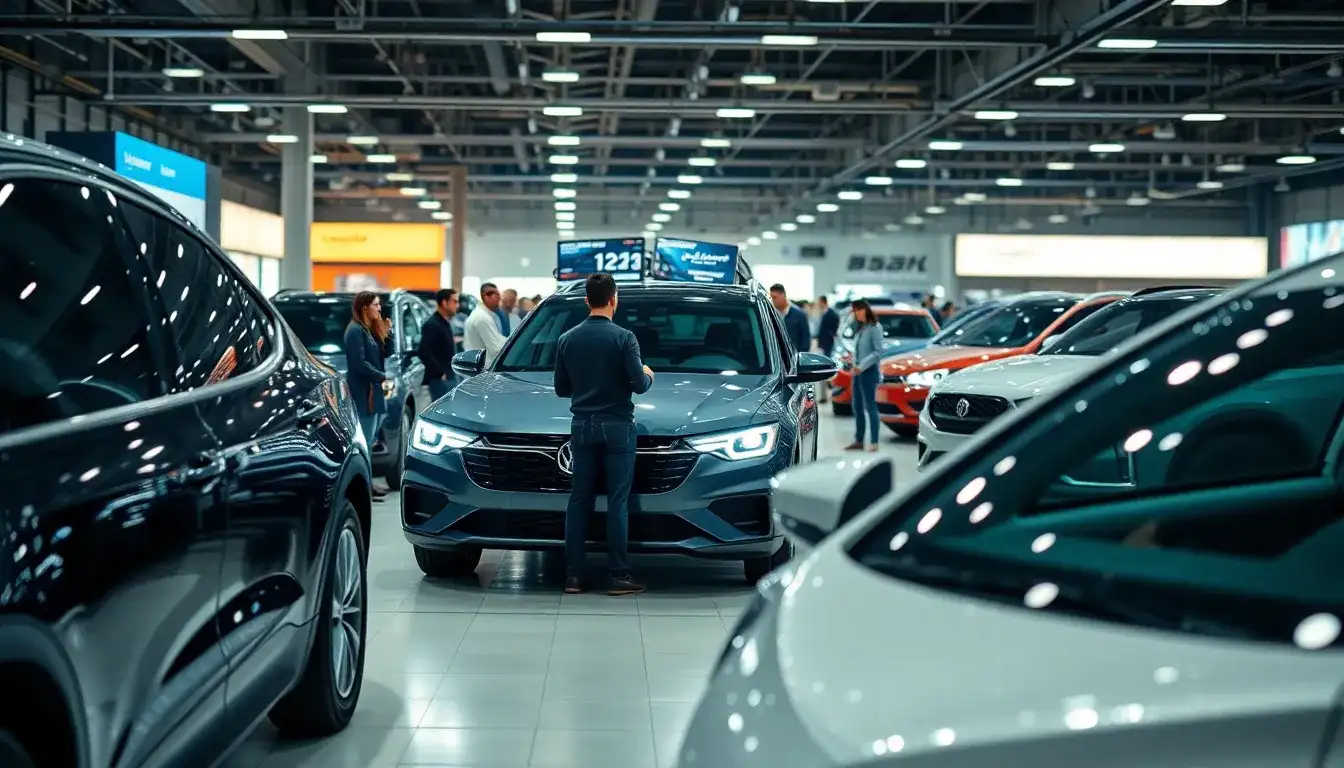
In the automotive market of 2026, the allure of price wars is beginning to fade. A recent conversation with a friend who was purchasing a new car highlighted this shift in consumer behavior. He mentioned that this time, he was not just focused on the sticker price. In seeking to maximize his trade-in subsidy, he looked at vehicles priced above 200,000 yuan. During his search, his discussions with sales representatives shifted from “How much cheaper can you make it?” to questions like “Is the intelligent driving system reliable?” “Is the seat ventilation genuinely comfortable or just a gimmick?” and “How do you handle battery degradation?” His focus moved beyond just the price tag, reflecting a fundamental change in the 2026 automotive market: after years of price wars, a deeper “value war” is emerging. Cheap prices are no longer the ace in the hole.
The reasons behind this shift toward higher-priced vehicles are quite tangible. On one hand, policies are evolving. Starting in 2026, adjustments to the purchase tax incentives for new energy vehicles, along with updated trade-in subsidies, are no longer universally accessible. To qualify for maximum subsidies, many consumers find their budgets must gravitate toward around 200,000 yuan. This isn’t a coercive measure but rather a practical guide—encouraging buyers to realize that spending a little more can lead to significantly better options.
On the other hand, consumers themselves have changed. After years of driving and exposure to new technologies, people are clearer about what they desire in a vehicle. The cost of a cheaper car often comes with compromised experiences, and many consumers are no longer willing to settle for that. Data supports this observation. According to the China Passenger Car Association, 177 models saw price reductions in 2025, a decline of 42 models from 2024, and this trend is expected to continue into 2026 with even fewer price cuts. Secretary-General Cui Dongshu also noted that over 30% of consumers set their budget for their next vehicle at over 300,000 yuan. These figures indicate a trend: consumers are becoming desensitized to price drops but increasingly sensitive to whether their spending is worthwhile. The magic of price wars is losing its effectiveness.
As consumer perspectives shift from “Who is cheaper?” to “Who offers more value?” automotive manufacturers are changing their strategies accordingly. The competition now revolves around which company can offer more robust technology, superior configurations, and sustainable experiences within mainstream pricing. For instance, can a vehicle priced in the 200,000 yuan range provide an experience previously only available in models costing 300,000 to 400,000 yuan? In consumers’ eyes, “luxury” is no longer merely a brand label; it encompasses whether seats genuinely alleviate fatigue, whether intelligent driving features truly reduce stress, and whether the details can withstand scrutiny.
This trend is evident in market share data. According to Cui Dongshu’s survey, vehicles priced between 200,000 and 300,000 yuan captured 18% of the domestic retail market in 2024, rising to 19% in 2025. Models like the Volvo XC60, Cadillac XT6, Xiaomi YU7, and Wenjie M7, which emphasize high value, have received positive market feedback. Consumers are becoming increasingly discerning; they are no longer willing to pay for mere reputation but are willing to invest in genuine experiences. This signals a new competitive cycle focused on long-term user value in the industry.
For example, the upcoming GAC Toyota iA6 reflects this approach. It integrates an advanced intelligent driving system, the latest Harmony cockpit, and dual-chamber air suspension with predictive capabilities. Even more importantly, it has been fine-tuned by experts from Lexus and the GR series to enhance the driving experience. Some luxury brands are adopting similar strategies focused on genuine user needs; for instance, Mercedes has made heated and ventilated seats standard across certain models, while Audi has added new intelligent features to sold models via OTA upgrades.
Safety and long-term service are also becoming increasingly vital. Once the novelty of intelligent features wears off, consumers return to the fundamental need for reliability and safety in vehicles. Some well-established brands are beginning to make commitments in this area, offering assurances that they will take responsibility for battery issues or accidents involving intelligent driving systems. Such commitments are, in themselves, part of the value proposition.
Interestingly, to excel in this “value war,” many automakers are learning from one another. New energy brands are focusing more on mechanical quality and passenger safety while expanding their service networks. Meanwhile, traditional companies like Volkswagen and Toyota are accelerating their efforts to improve intelligent cockpit features and respond more agilely to consumer demands. The lines between “new” and “old” are becoming increasingly blurred. The best vehicles may be those that successfully combine the software intelligence and user-centric approach of new energy brands with the craftsmanship and quality control of traditional manufacturers. The GAC Toyota iA6 embodies this fusion, showcasing advanced technology while leveraging GAC Toyota’s longstanding reputation for quality and reliability, providing consumers with the reassurance they seek.
This may represent the healthiest aspect of the automotive market in 2026—not a matter of who can disrupt whom but rather who can effectively integrate distinct advantages to deliver true value.
In conclusion, while 2026 may present challenges for automakers, the path forward is clearer than ever. The era in which “cheap” was a surefire strategy for success has passed; the focus will now shift to the “value war.” For consumers, this is a positive development, as the car selection process will become more grounded in reality. If a vehicle in 2026 is merely cheap without providing substantial value, it will be deemed irrelevant. So, what constitutes value? It is those enhancements that can be genuinely felt in daily use.
Original article by NenPower, If reposted, please credit the source: https://nenpower.com/blog/shift-from-price-wars-to-value-battles-in-the-2026-automotive-market/

