

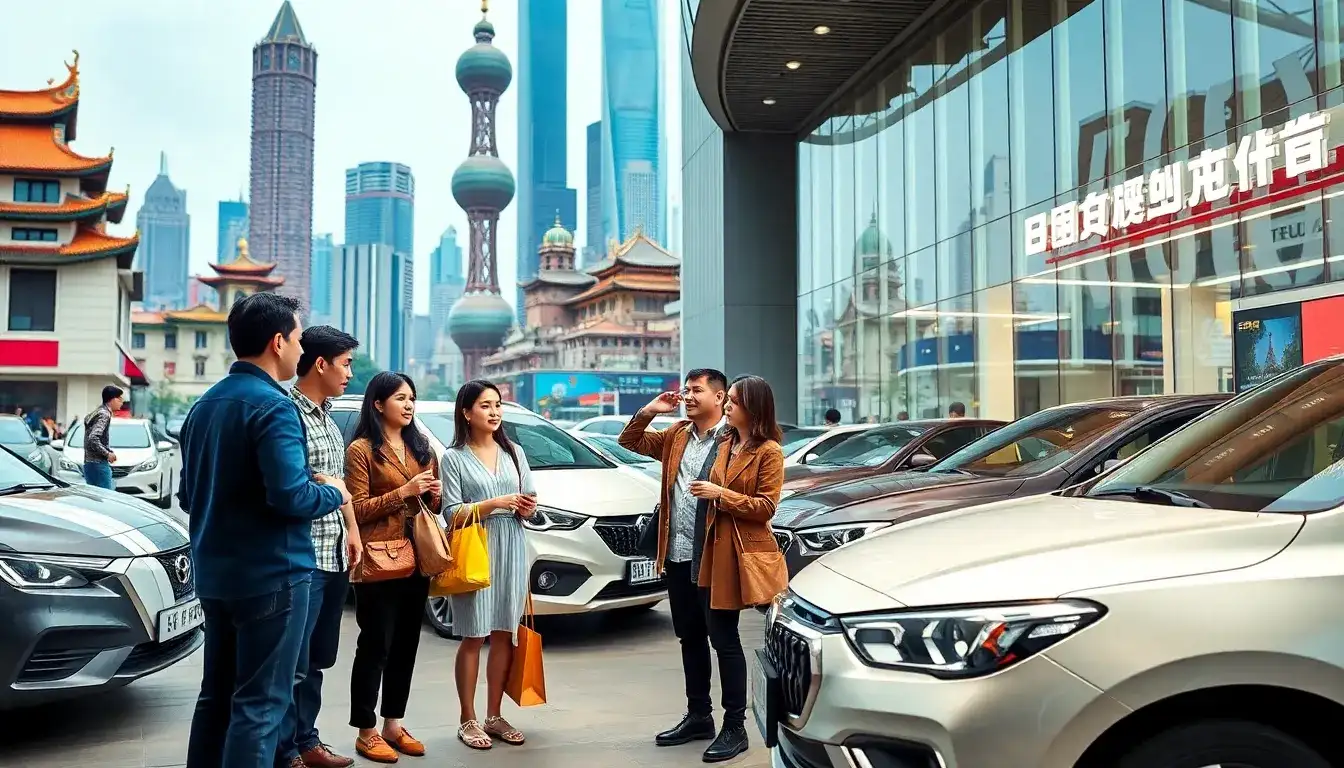
Shanghai residents are increasingly willing to purchase cars, signaling the start of a consumption engine in the second quarter.
In the first quarter, the willingness of Shanghai consumers to buy homes, cars, and durable goods saw a notable increase. This year, the automotive industry experienced a strong start, with Shanghai, known as a key consumer market for automobiles, showing particularly impressive results. According to data released on April 23, retail sales of new energy vehicles in Shanghai's enterprises above designated size grew by <b>10.6%</b> year-on-year in the first quarter.

This positive start can be attributed to a boost in consumer confidence. Recent survey results indicate that the car-buying sentiment among Shanghai residents has significantly improved, with the car purchase expectation index for this quarter reaching <b>98.7 points</b>, surpassing pre-pandemic levels. Consumers' attitudes towards buying cars are shifting from a state of "wait and see" to a more "active" approach.

During the highly anticipated F1 Chinese Grand Prix, held in Shanghai, the event attracted <b>220,000</b> spectators, breaking last year's attendance record. The momentum for car consumption is also heating up, with NIO delivering over <b>100,000</b> vehicles in Shanghai and SAIC Group reporting a nearly <b>30%</b> year-on-year increase in new energy vehicle sales in the first quarter.

On the policy front, Shanghai has introduced a subsidy policy for vehicle replacement and upgrades, which expanded in the second quarter to include old vehicles from outside the city. This has further enhanced car owners’ enthusiasm for trading in their vehicles, creating a positive feedback loop in Shanghai's automotive market characterized by "policy benefits release—market response acceleration."

The 21st Shanghai International Automobile Industry Exhibition (referred to as the "2025 Shanghai Auto Show") commenced on April 23, featuring over a hundred new vehicle launches during its run. With the implementation of trade-in subsidies and the debut of numerous new models at the auto show, the momentum for market growth is expected to continue into the second quarter.

In the first quarter, several car manufacturers enjoyed a strong start. On April 13, NIO celebrated the delivery of its <b>100,000th</b> production vehicle in Shanghai. NIO's founder, chairman, and CEO Li Bin announced on social media that Shanghai is the company's birthplace and the first city to have over <b>100,000</b> NIO vehicles on the road. In Shanghai, NIO has established <b>187</b> battery swap stations, with over <b>95%</b> coverage in core urban areas. Users can find a battery swap station within an average of <b>3 kilometers</b>, with each station serving over <b>500</b> vehicles daily—an efficiency that even surpasses traditional gas stations.

SAIC Group and Tesla also recorded impressive performances in the first quarter. On April 1, SAIC announced that it sold <b>945,000</b> vehicles in total during the first quarter, a <b>13.3%</b> year-on-year increase, with cumulative deliveries exceeding <b>1.08 million</b> vehicles, indicating continuous improvement in channel health. In the same period, SAIC sold <b>273,000</b> new energy vehicles, marking an almost <b>30%</b> increase year-on-year.

On April 2, data from the China Passenger Car Association revealed that Tesla’s Shanghai Gigafactory delivered over <b>78,800</b> vehicles in March alone. By the end of March, Tesla’s cumulative sales in China for 2025 had already surpassed those of the same period in 2024. The refreshed Model Y has continued to maintain its status as the best-selling passenger car in the country since its launch. In the first quarter, the Shanghai Gigafactory delivered more than <b>172,000</b> Model 3 and refreshed Model Y vehicles, with domestic sales reaching <b>137,200</b>, setting a new quarterly record since 2022.

The Shanghai market reflects the overall positive performance of the national automotive market in the first quarter. According to the China Association of Automobile Manufacturers, China's total automotive production and sales reached <b>7.561 million</b> and <b>7.47 million</b> units, respectively, in the first quarter, representing year-on-year increases of <b>14.5%</b> and <b>11.2%</b>.

Chen Shihua, deputy secretary-general of the association, stated that a series of policies to boost automotive consumption have continued and accelerated in the first quarter, leading to improved market quality and enhanced consumer confidence, resulting in double-digit growth in both production and sales, indicating a good start for the automotive industry.

The increase in the car purchase expectation index beyond pre-pandemic levels highlights the recovering consumer confidence among Shanghai residents. On April 15, the Shanghai Social Survey Research Center and Shanghai University of Finance and Economics released the "2025 Q1 Shanghai Social Economic Index Series." The results showed that the consumer confidence index for the first quarter of 2025 was <b>111.4 points</b>, up <b>10.5 points</b> from the previous quarter and <b>6.5 points</b> year-on-year. The purchasing willingness index also showed a significant increase, reaching <b>104.3 points</b>, up <b>21.9 points</b> from the previous quarter and <b>24.3 points</b> year-on-year, indicating a return to above the neutral level of <b>100 points</b>.

The analysis by Xu Guoxiang, a professor at the Shanghai University of Finance and Economics, and his colleagues suggests that the significant rebound in the consumer confidence index in the first quarter is attributed to several factors: firstly, the recent "Two Sessions" conveyed a stable and positive signal to the public, boosting confidence in steady economic development; secondly, Shanghai's economy showed early signs of recovery, with GDP growth expectations improving and a stable job market; and thirdly, efforts to enhance employment and stimulate consumption have positively impacted consumer sentiment, leading to a modest increase.

Looking ahead to the second quarter, the momentum for market growth is expected to continue. On February 12, the Shanghai Municipal Commission of Commerce released detailed implementation measures for the 2025 vehicle replacement and upgrade subsidy policy. From January 1 to December 31, 2025, individual consumers who purchase new energy passenger vehicles included in the relevant national directories and transfer their registered vehicles within the specified timeframe will receive a one-time subsidy of <b>15,000 yuan</b>. A similar subsidy of <b>13,000 yuan</b> is available for those purchasing conventional fuel vehicles who transfer older vehicles meeting lower emission standards.

In April, Shanghai further enhanced its automotive subsidy policy by expanding the replacement subsidy to include old vehicles from outside the city and maintaining the maximum subsidy for new energy vehicles at <b>15,000 yuan</b>, while increasing the fuel vehicle subsidy to <b>13,000 yuan</b> and simplifying the application process via the "Shanghai Commerce" and "Shanghai Development and Reform" WeChat official accounts. This policy has further encouraged car owners to trade in their old vehicles, releasing pent-up demand for replacements.

This evolving demand for consumer upgrades will drive companies to accelerate product innovation, facilitating industrial renewal and upgrading. As the 2025 Shanghai Auto Show, themed "Embrace Innovation, Win the Future," kicks off on April 23, it brings together nearly <b>1,000</b> renowned companies from <b>26</b> countries and regions, covering an exhibition area of over <b>360,000 square meters</b>, with over a hundred new models making their debut. For the first time, the exhibition period extends into the "May Day" holiday, exploring synergies with urban culture, transportation, and tourism activities to fully unleash the brand's economic vitality.

Data from the first quarter and the effects of the policies indicate that Shanghai's automotive consumption has entered a positive cycle of "policy benefits release—market feedback acceleration." In the second quarter, the ongoing implementation of trade-in subsidies, the technological empowerment of new models showcased at the auto show, and the deepening promotional strategies of car manufacturers are expected to collectively sustain market growth momentum.
Original article by NenPower, If reposted, please credit the source: https://nenpower.com/blog/shanghai-residents-show-increased-car-purchasing-intent-fueling-second-quarter-consumption-growth/

