

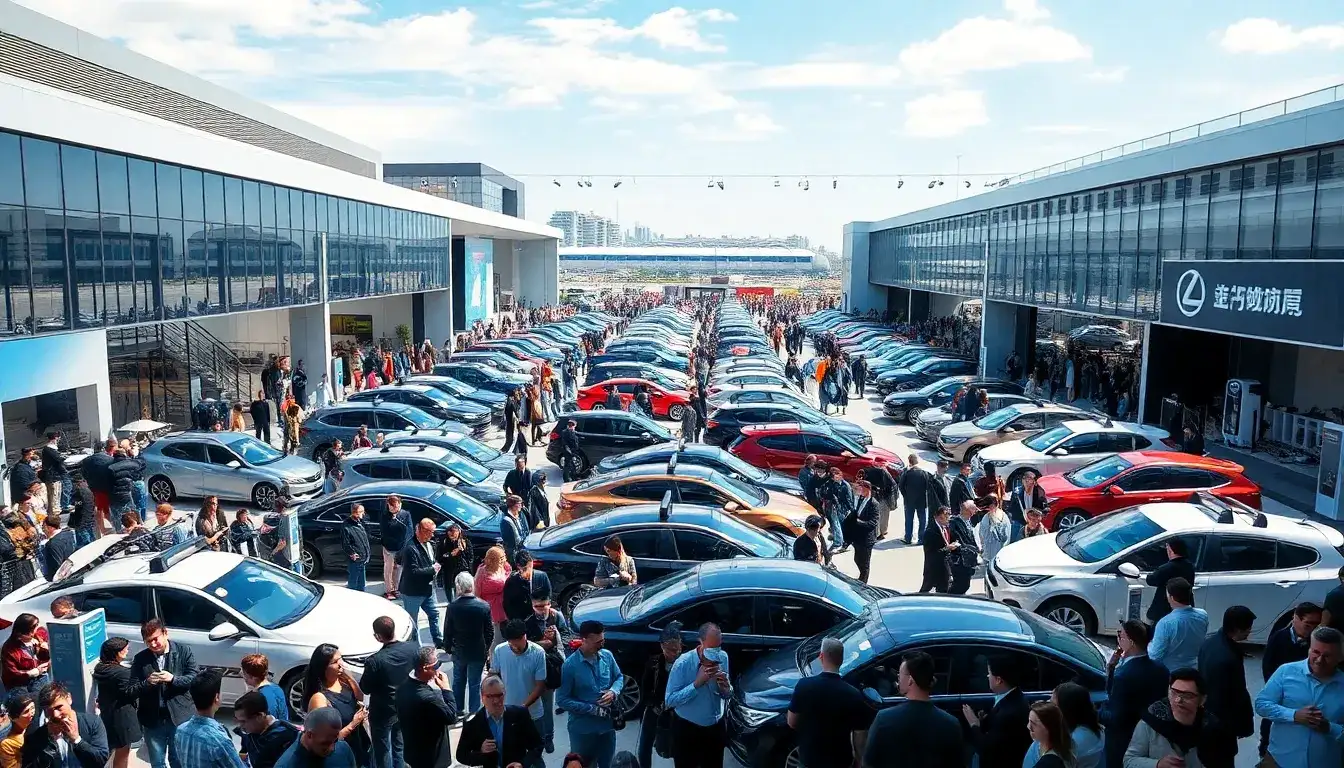
At the 2025 Shanghai Auto Show, there were as many as 30 new traditional fuel vehicles showcased alongside 67 new energy models, featuring innovative products from brands like Porsche and Great Wall Motors.
A recent survey by McKinsey revealed that over 30% of pure electric vehicle owners regretted their purchase of electric cars, indicating they would return to “fuel vehicles” for their next purchase.
Battery manufacturers, such as CATL, introduced their second-generation rapid-charging battery and a new sodium-ion battery brand named “Naxin,” aimed at enhancing the electric vehicle consumer experience.
However, there is a conflict between ultra-fast charging and battery life; batteries frequently charged above 120kW can experience a 40% reduction in cycle lifespan compared to slower charging methods.
While the prices of domestic vehicles are gradually increasing, new models priced between 200,000 to 400,000 yuan are seeing a downward trend in pricing, reflecting a lack of strong consumer desire for upgrade.
“Irreplaceable” is a recurring slogan at Porsche’s exhibition booth at the Shanghai Auto Show, where they displayed 18 vehicles, including 9 museum pieces. Amid discussions suggesting that fuel vehicles should be consigned to museums, Porsche’s unwavering stance attracted many attendees eager to visit their booth. Lacking any cutting-edge technology, Porsche’s booth drew more visitors than Xiaomi and Wenjie, with peak wait times reaching three hours.
Similarly, Great Wall Motors, known for its commitment to traditional fuel vehicles, showcased its 4.0 TV8 engine and declared, “we will never produce range-extended vehicles,” contrasting with competitors fully engaging in new energy.
Statistics indicate that at this year’s Shanghai Auto Show, there were 67 new energy vehicles compared to 30 traditional fuel vehicles. Although new energy models dominated the exhibition, the presence of 30 fuel models is significant, especially considering predictions from previous years that suggested fuel vehicles would be nearly extinct by 2025.
Recently, McKinsey released the “2025 McKinsey China Automotive Consumer Insights” report, which showed that over 30% of pure electric vehicle owners regretted their choice and expressed intentions to revert to fuel vehicles for their next purchase, a significantly higher regret rate than that of plug-in hybrid or extended-range vehicle owners.
Is pure electric facing a bottleneck? At this year’s Shanghai Auto Show, battery manufacturers showcased their advancements within vehicle exhibition areas. The improvement of the electric vehicle consumer experience largely depends on progress in battery technology. Just before the show, CATL announced its second-generation rapid-charging battery, claiming it can charge from 5% to 80% in just 15 minutes, even in temperatures as low as -10°C. Additionally, CATL introduced its new sodium-ion battery brand “Naxin,” which allows hybrid vehicles to achieve over 200 kilometers of pure electric range and pure electric models to exceed 500 kilometers.
Yiwei Lithium Energy announced upgrades to its large cylindrical battery technology, with Vice President Jiang Jibing stating that the energy absorption capacity of the entire electronic system can reach 1000 joules, which is 6.6 times the new national standard. Following BYD’s 10C quick-charge technology, CATL launched its 12C model.
As supercharging technology evolves, it seems to encroach on the territory of battery swap models. When asked about this at the exhibition, Li Bin remarked, “Will super-fast charging dare to offer a 10 or even 15-year warranty? If they can, I will be convinced.” Generally speaking, it is challenging to achieve both super-fast charging and long battery life simultaneously.
Research from Tsinghua University, led by academician Ouyang Minggao, indicates that batteries frequently charged above 120kW may experience a 40% reduction in cycle lifespan compared to slower charging methods. In simpler terms, even if battery manufacturers claim significant breakthroughs in technology, the commercial model’s closure remains distant. From the consumer’s perspective, there is often a desire for multiple benefits at once.
Thus, new energy vehicles must strike a perfect balance across range, economy, and safety. Relying solely on technological advancements cannot achieve new breakthroughs in business models. For instance, if the anxiety regarding electric vehicle range is completely resolved, issues related to battery life, charging infrastructure, and usage costs will present new challenges.
A source involved in standard formulation mentioned that the next generation of power battery energy consumption standards will incorporate requirements for energy consumption under extreme temperatures, guiding companies and battery manufacturers to address electric vehicles’ challenges in difficult conditions. This will also raise expectations for companies’ energy management capabilities, especially for pure electric models.
Domestic vehicles are becoming increasingly expensive. Among the notable fuel vehicles presented at the 2025 Shanghai Auto Show are the SAIC Audi A5L, the new Volvo XC90, the sixth-generation Toyota RAV4, and the new Volkswagen Lavida Pro, primarily from joint venture companies. Meanwhile, domestic brands are focusing on high-end segments in the new energy race. After Huawei and JAC set a pre-sale price above one million yuan for their high-end model, the Zeekr flagship SUV 9X made its debut at the Shanghai Auto Show, with an expected starting price over 500,000 yuan. The Zeekr 009 Glory Edition is also set to launch with an anticipated starting price exceeding one million yuan. On the first media day, a Middle Eastern buyer expressed interest in purchasing the Zeekr 9X on the spot, even considering buying all the vehicles on display.
The full-size luxury SUV, the Yangwang U8L, was officially released at the Shanghai Auto Show, likely priced in the million-yuan range, while the Lantu Dreamer four-seater MPV debuted as the “Lantu Dreamer Mountains and Rivers,” with a pre-sale price of 709,900 yuan. It could be said that most of the most expensive vehicles showcased at this year’s Shanghai Auto Show are domestic new energy models.
McKinsey’s research indicates that an increasing number of potential electric vehicle consumers are considering plug-in hybrids and extended-range vehicles as purchase options, showing a significant rise compared to 2023. As plug-in hybrids and extended-range vehicles become more mainstream, joint venture automakers have adapted. Just before the Shanghai Auto Show, Buick launched its new large new energy MPV, the GL8 Lushang, starting at 249,900 yuan, featuring Buick’s “True Dragon” plug-in hybrid system.
Even though domestic vehicles are becoming more expensive, the willingness of users to upgrade their consumption is not particularly strong. As is well known, the Chinese automotive market has entered a stage of inventory, with purchases and replacements being the primary consumer groups. McKinsey’s survey shows that owners of vehicles priced under 150,000 yuan are eager to upgrade to a more expensive price range when replacing their cars. The same holds true for owners of vehicles priced over 400,000 yuan. However, owners of vehicles priced between 150,000 and 300,000 yuan are more inclined to “downgrade their consumption.” In plain terms, the “middle tier” has run out of money.
Overall, in a series of new models priced between 200,000 and 400,000 yuan that have already been launched, pricing trends are continuing to decline. While domestic cars are becoming more expensive, selling them for over 300,000 yuan is becoming increasingly challenging. At the last Shanghai Auto Show, an automotive executive predicted that in three to four years, there would be no new fuel vehicles left in the world. However, this year, with nearly 70% of the exhibition dedicated to new energy vehicles, no similar predictions were made.
From the plans of Volkswagen, General Motors, Toyota, and Honda, it is clear that in the foreseeable future, there will be layouts for pure electric, hybrid, and fuel vehicles. In conclusion, the world is changing rapidly, and no one can confidently predict what the future holds.
It may be wiser for industry leaders, rather than making bold claims and becoming the target of criticism online, to prepare thoroughly for an uncertain future.
Original article by NenPower, If reposted, please credit the source: https://nenpower.com/blog/shanghai-auto-show-sees-resurgence-of-fuel-cars-with-over-30-of-electric-vehicle-owners-regretting-their-purchase/

