

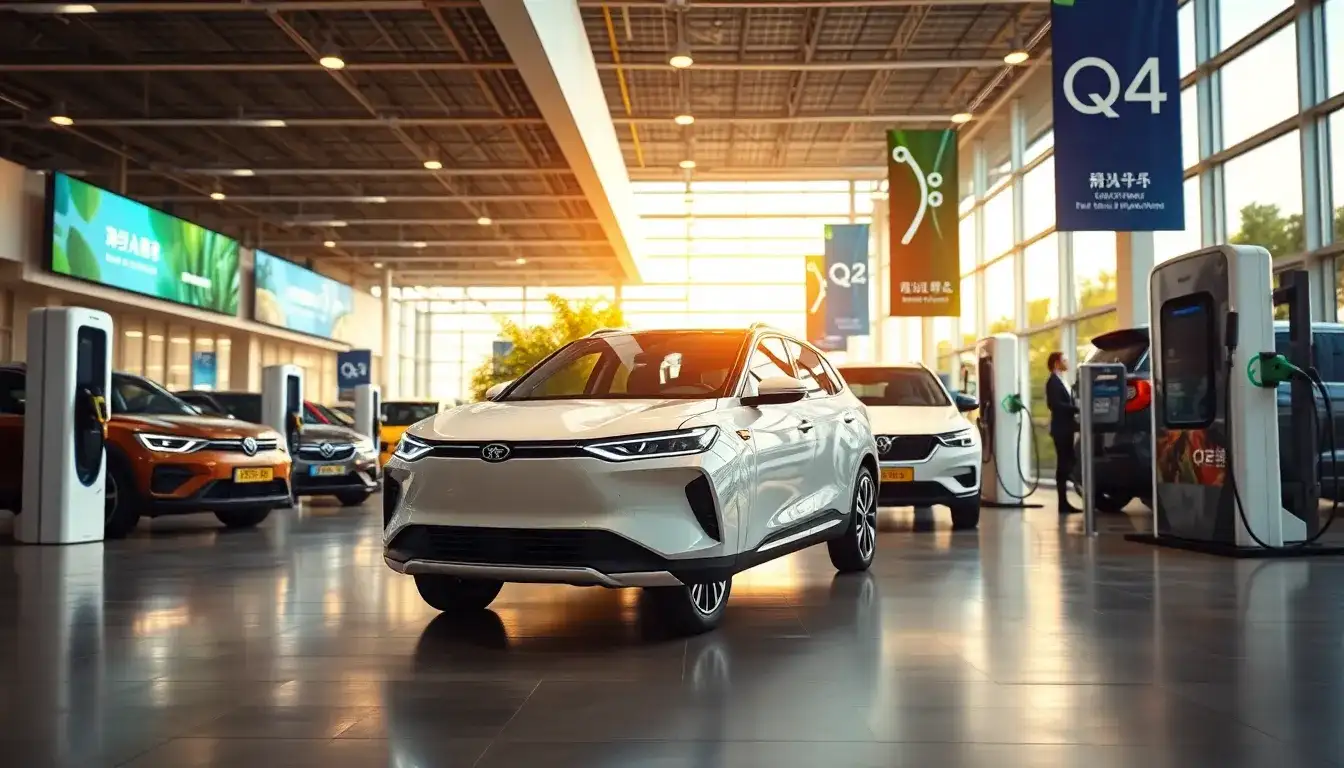
In September, traditional automakers released their latest sales figures, with BYD leading the pack by selling approximately 396,300 vehicles, marking a year-on-year increase in sales for their new energy models. Geely sold around 273,000 vehicles, with new energy sales rising by 81%, resulting in a penetration rate exceeding 60%. Chery Holding Group reported sales of 280,000 vehicles, a 55.4% rise in new energy sales, and successfully completed its IPO on the Hong Kong Stock Exchange. Both Changan Automobile and Great Wall Motors also achieved record highs in new energy sales. As the “Golden September and Silver October” peak sales season approaches, along with the launch of numerous new models, competition in the domestic automotive market is expected to intensify in the fourth quarter.
After the emergence of new energy vehicle manufacturers, many traditional automakers have also disclosed their latest sales results for September. According to the data compiled by Daily Economic News, BYD topped the list with 396,300 vehicles sold. Specifically, in September, BYD’s plug-in hybrid vehicle sales reached 188,000, while pure electric vehicle sales totaled 205,100, representing an increase of 24.31% year-on-year. In the first nine months of the year, BYD’s cumulative sales reached 3.26 million vehicles, reflecting a year-on-year growth of 18.64%.
A report from CITIC Securities suggests that BYD’s recent model releases exceeded market expectations, and with more new models set to be launched, the company is poised for a surge in sales during the peak season. Looking ahead to 2025, BYD’s strategies focused on globalization, high-end offerings, intelligence, and electrification continue to progress, enhancing its global competitiveness and brand value. The investment value of BYD as a leading player in the global new energy vehicle market is highly regarded, maintaining an “A+H stock buy” rating.
In September, Geely reported sales of approximately 273,000 vehicles, which is a 35% increase compared to the same period last year. Of this total, new energy sales accounted for about 165,000 vehicles, reflecting a substantial year-on-year increase of 81%. Both overall sales and new energy sales reached historic highs. In the first three quarters of 2025, Geely’s cumulative sales have already surpassed the total sales for the entirety of 2024. Year-to-date, Geely’s new energy vehicle sales reached approximately 1.168 million vehicles, showing a remarkable increase of 114%. Currently, Geely’s new energy penetration rate continues to rise, reaching 60.49% in September, with its Lynk & Co brand achieving a new high penetration rate of 79.3%.
Chery Holding Group reported September sales of around 280,000 vehicles, marking a 14.7% increase. New energy vehicle sales reached about 92,000 vehicles, up 55.4% year-on-year. For the first nine months, the company achieved cumulative sales of 2 million vehicles, the fastest pace in its history to reach this milestone within a single year. In September, Chery completed its IPO on the Hong Kong Stock Exchange. The prospectus revealed that 35% of the funds raised will be allocated to the development of multiple models to expand the product range, while 25% will be invested in next-generation vehicles and advanced technology development, including 10% for electrification upgrades and 15% for smart driving research. The company plans to launch over 60 new models and updated passenger cars by 2025, covering all categories of fuel and new energy vehicles to drive ongoing growth.
In the first three months of this year, Chery’s revenue from new energy vehicles was approximately 18.665 billion yuan, further increasing its share to 27.3%.
Changan Automobile reported September sales of about 266,000 vehicles, a 25% increase. New energy vehicle sales reached approximately 103,000 vehicles, reflecting a significant year-on-year increase of 87% and setting a new record. Great Wall Motors sold around 134,000 vehicles, up 23.29%, with new energy sales reaching approximately 46,000 vehicles, a year-on-year increase of 52.55%, also a historic high.
From the sales data reported by various companies, “growth” is a common theme. The China Automobile Dealers Association suggests that September marked the beginning of the traditional “Golden September and Silver October” peak season, combined with the full implementation of national subsidies and local purchase incentives. Some regions are offering subsidies on a first-come, first-served basis, which has stimulated consumer enthusiasm for buying cars. However, current local subsidy policies tend to favor higher-priced models, and some regions have introduced tiered subsidy policies, which may hinder the development of the mainstream automotive market and reduce the growth rate in smaller city markets.
Following the Chengdu Auto Show, the automotive market has entered a new phase of densely packed product launches. In September alone, several new models were introduced, including the Shangjie H5, Zhi Jing L7, Li Xiang i6, Lynk & Co 07 EM-P, and Qin PLUS EV/DM-i. According to the China Automobile Dealers Association, the Chengdu Auto Show featured a significant number of new models, with some new products priced strategically, leading to strong sales. Currently, the ownership rate of passenger vehicles per hundred people remains low, while the supply-demand imbalance is exacerbated by an oversupply of high-end models. Many of the new models introduced are characterized by their dimensions (approximately 5 meters in length, 2 meters in width, and a nearly 3-meter wheelbase) and are still in a slow growth phase. The lack of popular entry-level models has resulted in lower-than-expected contributions from new products.
As sales data for September emerges, the fourth quarter sales peak in the domestic automotive market officially begins, and manufacturers are expected to intensify efforts to meet year-end sales targets, leading to heightened competition within the industry.
Original article by NenPower, If reposted, please credit the source: https://nenpower.com/blog/september-sales-report-byd-leads-with-nearly-400000-units-as-traditional-automakers-boost-new-energy-vehicle-penetration-ahead-of-q4-competition/

