

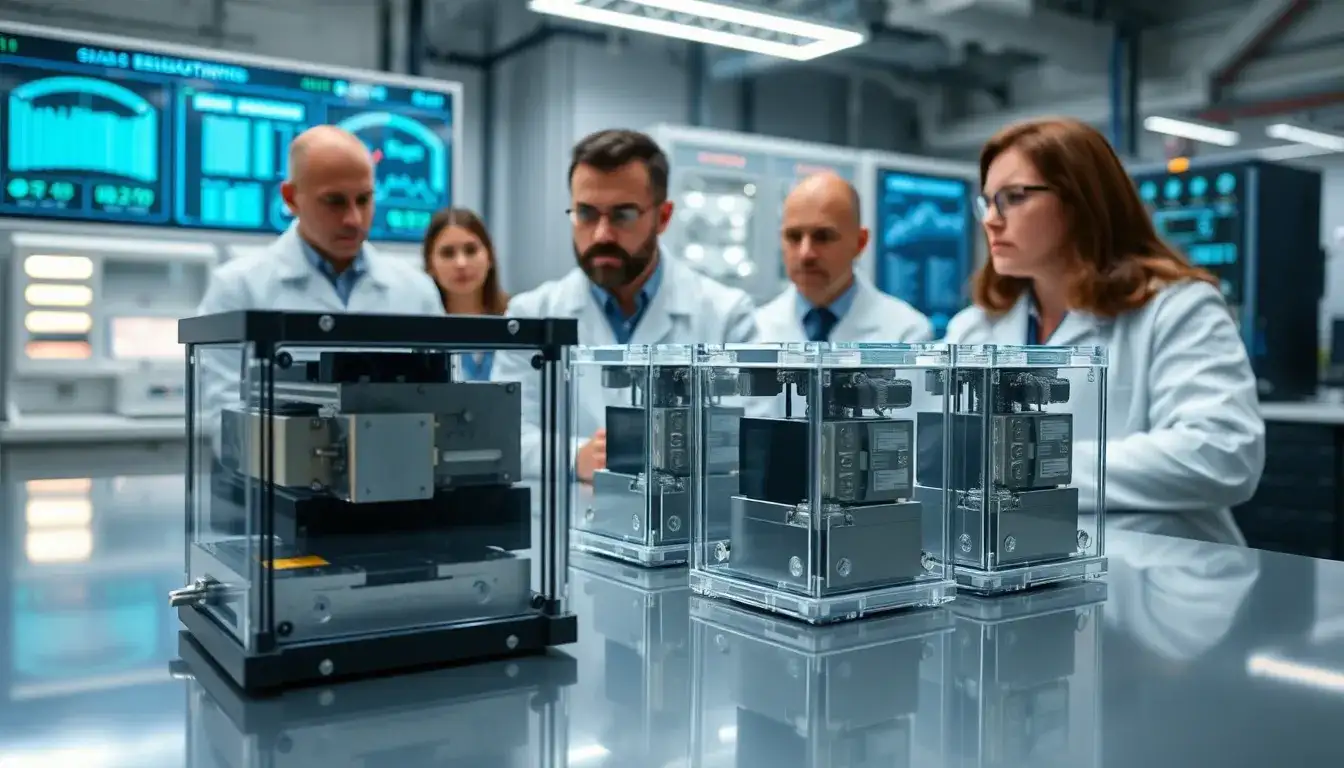
In 2025, the automotive industry is set to witness significant advancements in battery technology, particularly with the introduction of solid-state batteries. On April 10, Jia Jianxu, the president of SAIC Motor Corporation, announced that the next-generation solid-state batteries would begin mass production by the end of this year for the new MG4 model. These batteries boast an energy density exceeding 400Wh/kg and significantly enhanced safety features. Furthermore, SAIC plans to launch its first solid-state battery, the “Guangqi Battery,” in 2027, which is anticipated to become a focal point for industry competition.
Major automakers such as Toyota, Nissan, and Volkswagen have also set 2025 as a crucial year for the mass production of solid-state batteries. Zeng Yuqun, chairman of CATL, stated that while many products currently available are semi-solid-state batteries, the true mass production of solid-state batteries will take an additional 8 to 10 years due to challenges such as high costs and immature technology. Industry experts believe that although solid-state batteries hold great promise, liquid batteries still have potential for optimization, leading to a diversified development of power battery technologies that include liquid, semi-solid, and solid-state options. Meanwhile, competition along the supply chain intensifies, making recycling technology an essential breakthrough area.
In the first quarter of 2025, the penetration rate of semi-solid-state batteries reached 22%, a significant increase from just 5% in 2023. Current models equipped with semi-solid-state batteries include the Lantu Zhaiguang, the Zhiji L6 Max Guangnian Edition, and the NIO ET7, with plans for the MG4 to follow suit.
However, challenges remain for the commercialization of solid-state batteries. During the recent China Electric Vehicle 100 Forum (2025), Zeng Yuqun criticized automakers for misleadingly promoting the timeline for solid-state battery mass production. He asserted, “Claiming that solid-state batteries will see large-scale application by 2025 is irresponsible. Transitioning from laboratory samples to mass production will take at least 8 to 10 years. Most so-called ‘solid-state batteries’ are actually semi-solid or quasi-solid-state, containing a significant proportion of liquid electrolytes, which fundamentally distinguishes them from true solid-state batteries.” He emphasized that some automakers are exaggerating the maturity of solid-state battery technology, potentially misleading the public and investors.
CATL is the world’s largest supplier of power batteries, holding a 37.4% share of the global electric vehicle battery market in 2024, making its technological choices indicative of market trends. Critics question whether Zeng’s strong opposition to solid-state batteries stems from CATL’s lagging technology in that field. In response, Zeng stated, “CATL has invested over 10 years in solid-state battery research and holds more than 500 related patents. Our reluctance to casually commit to production timelines comes from a thorough understanding of the challenges involved.”
According to a report by the Institute of Physics at the Chinese Academy of Sciences, as of 2024, no true solid-state battery has achieved mass production globally. The report indicates that the most advanced quasi-solid-state battery products still contain over 30% liquid components in their electrolytes, and their energy density and cycle life do not offer significant advantages compared to traditional lithium batteries, with costs being 2-3 times higher.
As noted by an official from Dongfeng Motor Corporation, “The current mass production and commercialization of solid-state batteries face significant challenges. The primary difficulties include an inadequate supply chain for raw materials and battery manufacturing equipment, necessitating improvements in electrolyte material selection and optimization, suppression of lithium dendrites, and solid-solid interface contact. Moreover, some raw materials for solid-state batteries have not yet reached mass production, leaving the overall industrial chain immature.” The official further explained that solid-state batteries require specialized manufacturing processes and considerable investment and time for research and equipment upgrades, contributing to their currently high costs.
In a broader perspective, the power battery industry is expected to diversify. Panasonic’s executive vice president, Nakajima Yukio, remarked at an industry conference in late 2024 that the energy density advantages of solid-state batteries are being rapidly challenged by new liquid battery technologies. He emphasized that no single battery technology can simultaneously satisfy all requirements for energy density, power density, lifespan, safety, and cost, making the parallel development of multiple technological routes a necessity.
Reports indicate that Panasonic’s newly developed 4680-type liquid lithium battery has achieved an energy density of 300Wh/kg, approaching industry expectations for solid-state batteries, while costing only 40% of solid-state battery prices. Despite claims that liquid batteries have reached high energy densities, the official from Dongfeng Motor argued that solid-state batteries still hold irreplaceable advantages in enhancing energy density, addressing safety concerns, and improving adaptability to extreme environments. Current liquid battery advancements are incremental, whereas solid-state batteries are poised for disruptive breakthroughs that could achieve energy densities exceeding 400Wh/kg.
As technology matures, the pricing of solid-state batteries may become competitive with or even equal to that of liquid batteries. The future of solid-state batteries appears promising, especially in the realms of power batteries, consumer batteries, and energy storage, with forecasts suggesting that battery demand will exceed 1500GWh by 2030, creating a substantial market opportunity for solid-state technology.
Professor Huang Jia, dean of the Materials College at Beijing Institute of Technology, commented, “Viewing solid-state batteries as the only path for battery technology development is shortsighted. In the current context of widespread electric vehicle adoption, a diversified technological approach is more conducive to healthy industry growth.” He noted that lithium nickel cobalt manganese and lithium iron phosphate batteries still have over 30% performance improvement potential through material innovation and process optimization, sufficiently meeting market demands over the next 5-8 years.
In summary, the power battery industry is likely to evolve in a diverse and parallel manner, with liquid batteries undergoing continuous optimization while solid-state batteries accelerate toward commercialization. As the ultimate battleground for development competition, the industry ecosystem will witness intensified resource competition upstream, significant breakthroughs in recycling technology, and a deeper integration of automakers with battery manufacturers as they ramp up in-house research and development.
Original article by NenPower, If reposted, please credit the source: https://nenpower.com/blog/semi-solid-batteries-hit-the-market-as-full-solid-variants-approach-amid-industry-skepticism/

