

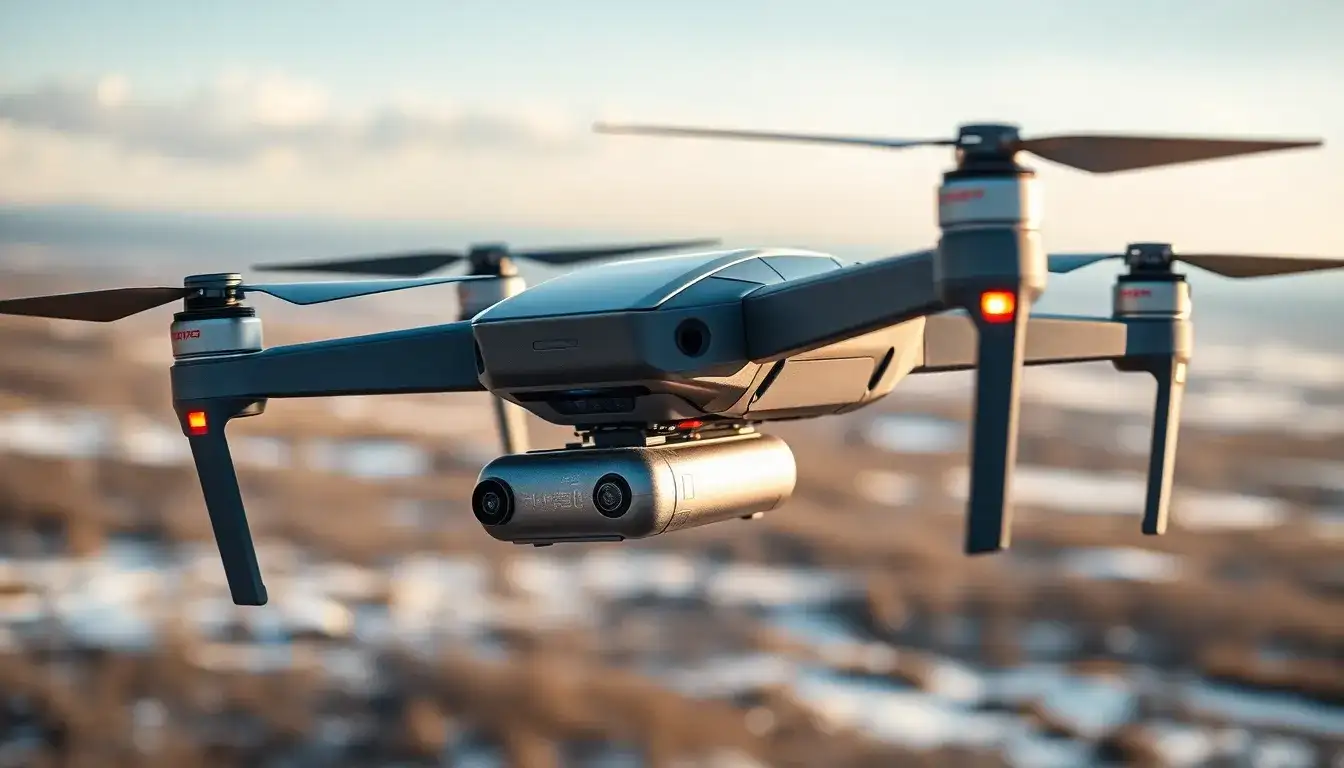
According to information released by the Moscow Aviation Institute (MAI) on June 18, 2025, the institute has introduced a new generation of high-capacity lithium-ion batteries featuring polymer electrolytes and a unique cell design. This innovation aims to enhance the endurance and operational flexibility of small unmanned aerial vehicles (UAVs). Developed by MAI’s Department 1204 in collaboration with the Skolkovo-based company INTER, the prototypes have demonstrated the ability to handle high current loads, up to ten times their rated capacity, without any degradation in performance. This advancement could potentially extend flight times for small battery-powered drones from 20 minutes to 35 minutes, significantly improving capabilities for frontline reconnaissance and tactical surveillance missions.
This technology is particularly relevant for smaller electrically powered drones, such as the Eleron-3 and micro-UAVs, which operate in short-range, high-tempo environments. The battery design incorporates highly dispersed electrode materials and solid-state polymer electrolytes, providing superior energy density, better thermal stability, and enhanced safety compared to traditional lithium-ion systems that use liquid electrolytes. These enhancements reduce the risk of ignition and improve service life, allowing for integration into compact UAVs without sacrificing performance.
While this battery technology may not be directly applicable to larger drones like the Orlan-10 or Korsar—both of which use internal combustion engines and possess multi-hour endurance—it holds significant promise for smaller electrically powered drones. The MAI battery system could extend endurance, enhance payload capacity, and ensure sustained power delivery for energy-intensive sensors and systems. This is especially valuable for configurations that emphasize low acoustic signatures and minimal thermal emissions, which are crucial for stealth and survivability in contested environments.
Drones used for short Intelligence, Surveillance, and Reconnaissance (ISR) missions, electronic warfare, or infantry-level situational awareness would particularly benefit from these enhancements. Additionally, the batteries developed by MAI offer potential for integration into Russia’s broader range of unmanned and autonomous systems, including loitering munitions, swarm drones, and other electric or hybrid UAVs. Their high-discharge rate and compact design make them suitable for propulsion bursts, rapid repositioning, and high-frequency communication tasks.
As the Russian military increasingly focuses on drone swarm coordination, autonomous operations, and maintaining a persistent battlefield presence, energy-dense and robust power systems like those developed by MAI could play a crucial role in the future of UAV-based warfare. With successful tests conducted on MAI platforms and ongoing discussions with defense sector clients, these advanced lithium-ion battery systems appear set for near-term deployment, promising significant improvements in endurance, reliability, and tactical effectiveness for Russia’s growing fleet of electrically powered reconnaissance and support drones.
Original article by NenPower, If reposted, please credit the source: https://nenpower.com/blog/russia-introduces-advanced-lithium-batteries-to-enhance-drone-endurance/

