

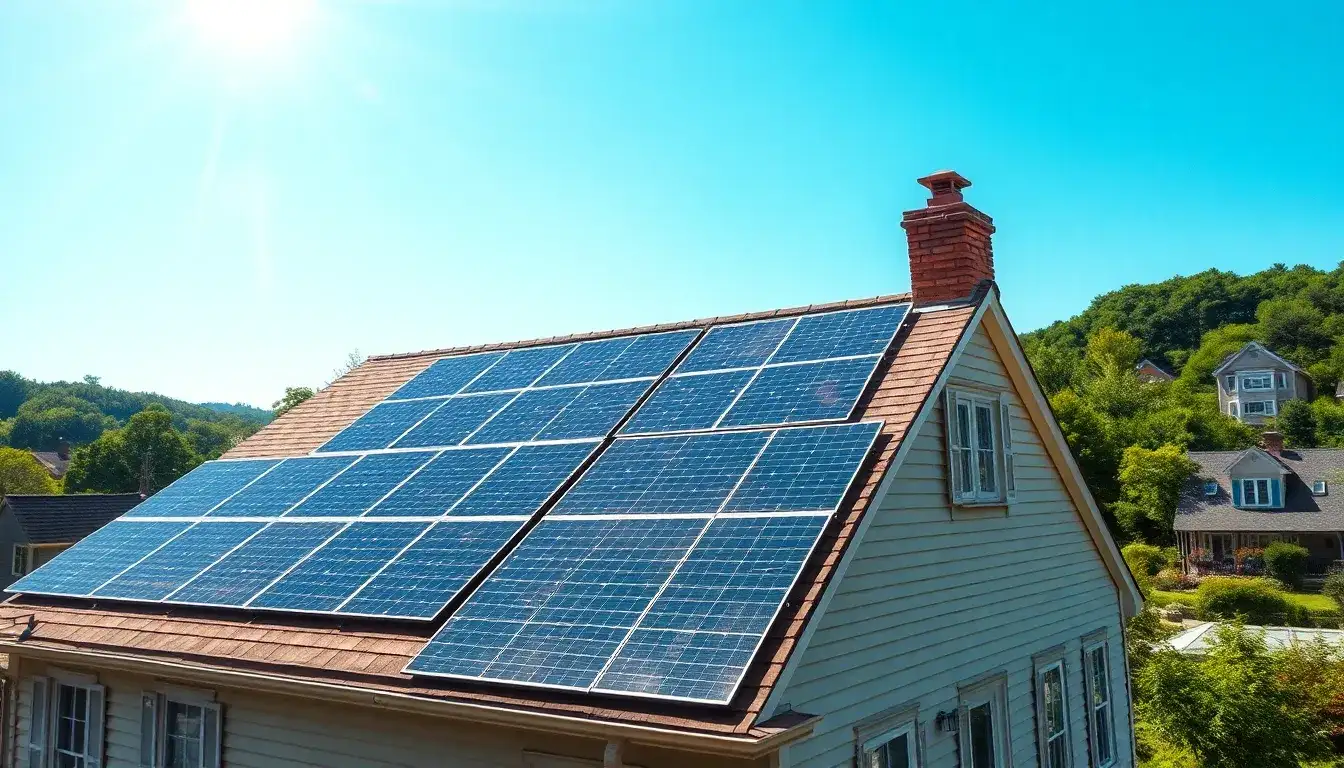
As New England endures its first heat wave of the summer, electricity consumption is surging. Fortunately, the region’s power grid is managing to keep up with demand, thanks in part to the contributions of rooftop solar panels. These solar installations, found on homes, parking lots, and roadside areas, are turning sunlight into electricity and alleviating stress on the grid.
This type of solar energy, known as “behind-the-meter” solar, is generated at the site where it is used, meaning it is not monitored by the organization that operates the power grid. Historically, behind-the-meter solar has provided relatively limited power in New England. However, in the past 15 years, its growth has been substantial. Collectively, these small solar arrays can now generate approximately 5,000 megawatts of power for the region, surpassing the output of all nuclear power plants in New England combined. According to ISO New England, the regional grid operator, this capacity is expected to more than double by 2045.
Behind-the-meter solar is particularly valuable during peak energy demand times, such as hot afternoons during a heat wave. “On a hot summer day, everybody is using electricity, and we need every resource we can get,” said Jeremy McDiarmid, managing director of Advanced Energy United. “Behind-the-meter solar plays a pivotal role in keeping the lights on.”
During the current heat wave, ISO New England anticipates some of the highest energy demands of the summer. On Monday, electricity consumption peaked around 7 p.m., with a total usage of about 24,380 megawatts. This was nearly double the usage from the previous Monday, where peak demand reached approximately 14,400 megawatts. On Tuesday, expected to be the hottest day of the week, peak demand is forecasted to reach 25,800 megawatts.
“What we’re expecting this week is the highest demand we’ve seen this year,” stated Matt Kakley, a spokesperson for ISO New England. He reassured that the power plants and renewable energy resources, including wind and solar farms, should adequately meet the demand.
Although ISO New England cannot directly monitor behind-the-meter solar production, it employs sophisticated models to estimate their output, accounting for minor weather variations that could impact electricity generation. Kakley noted that this data is factored into decisions regarding which additional power sources may need to be activated. During the peak demand on Monday at 3 p.m., with temperatures in Greater Boston soaring into the low-to-mid 90s, behind-the-meter solar accounted for 18% of the region’s electricity needs—approximately 4,700 megawatts.
Joe LaRusso, manager of the Clean Grid Program at the Acadia Center, emphasized that behind-the-meter solar is already aiding New England by reducing peak energy demand. Most of the region’s electricity is generated from burning natural gas and nuclear power. When demand spikes, the grid operator often relies on “peaker plants,” which are typically older and more polluting facilities. “Without behind-the-meter solar, New England would have needed to burn that much more coal and oil to balance the supply of electricity with customer demand,” LaRusso explained.
As the sun began to set on Monday, solar production diminished, leading to an increase in oil production to meet demand. By 7 p.m., oil and coal contributed about 1,900 megawatts of power to the grid. LaRusso expressed optimism that with the installation of more behind-the-meter solar and the increasing use of battery storage, the region can rely less on peaker plants during heat waves.
In addition to providing a vital source of emissions-free energy, advocates argue that behind-the-meter solar can help lower utility bills in the long run, even for those without solar panels. The electric grid must accommodate peak demand with costly infrastructure, and lowering that peak demand could reduce costs for ratepayers. “By generating power close to where it is used, rooftop solar reduces strain on the grid and the need for costly transmission upgrades,” said Sean Gallagher, senior vice president of policy for the Solar Energy Industries Association. “And that means fewer power outages and lower energy prices for everyone.”
Original article by NenPower, If reposted, please credit the source: https://nenpower.com/blog/rooftop-solar-powers-new-england-amid-summer-heat-wave/

