

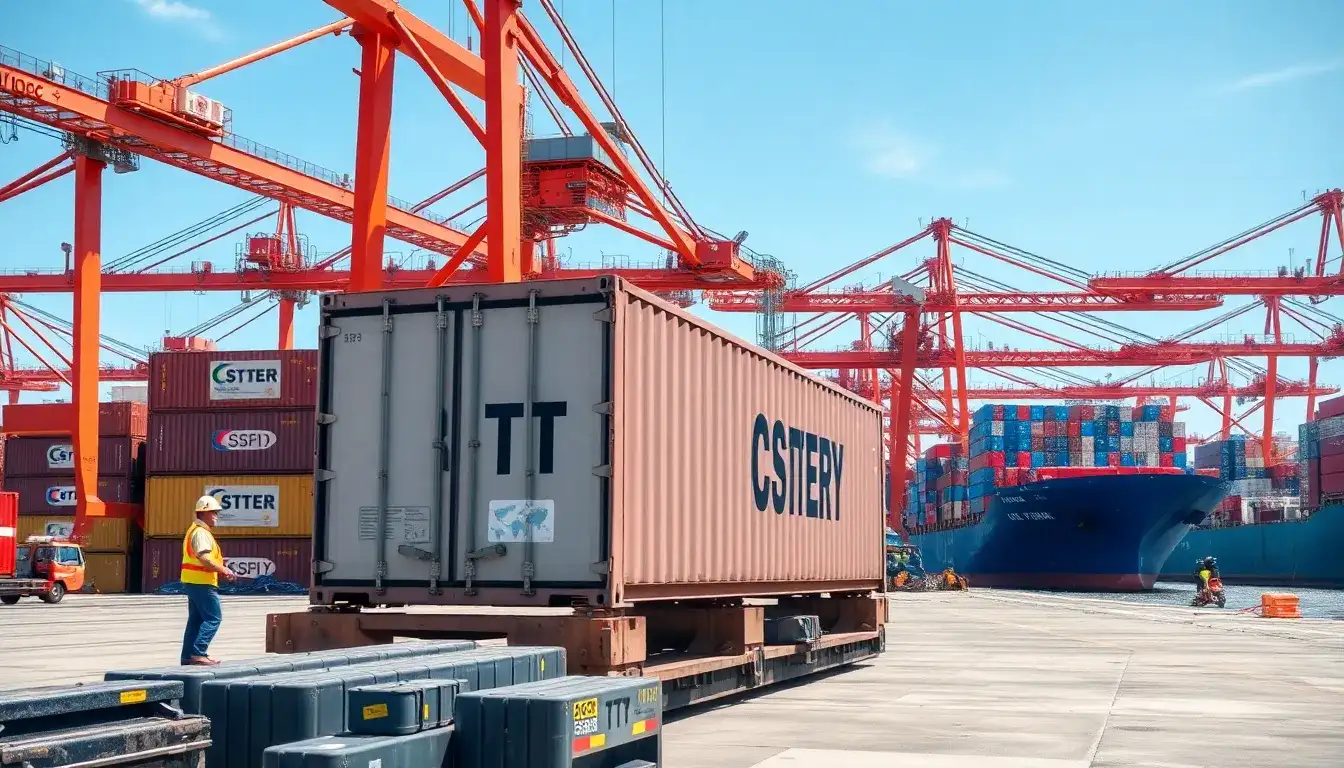
Rongbai Technology has announced that products produced in China using ternary materials will no longer be sold in the U.S. market; instead, they will be exported from factories in South Korea. This decision reflects the impact of U.S. tariff policies on the trade of ternary materials.
On May 7, 2025, Rongbai Technology released its investor relations activity record, indicating that the company had been surveyed by 106 institutions on May 5, 2025. In the first quarter of 2025, the company reported operating revenue of 2.964 billion yuan and a net profit of -4.05 million yuan. Despite the losses, the company has made significant progress in expanding its primary business in cathode materials.
Regarding the influence of U.S. tariffs on ternary material shipments, Rongbai Technology stated that due to these tariffs, products manufactured in China are no longer sold to the U.S. market. Currently, the products exported to the U.S. mainly originate from their South Korean factories, which are less affected by tariffs.
Rongbai Technology has also made advancements in semi-solid and all-solid-state batteries. In the semi-solid battery sector, the company has consistently shipped ultra-high nickel ternary cathode materials. For the all-solid-state battery sector, they are focusing on the development of ultra-high nickel ternary cathode materials alongside solid electrolytes. In the first quarter of 2025, they achieved ton-level sample testing of ultra-high nickel ternary cathode materials and are advancing the construction of a sulfide electrolyte pilot line at their Xiangyang base.
In the sodium battery sector, Rongbai Technology is innovating not only in materials but also in battery applications and Battery Management System (BMS) innovations. Their core efforts concentrate on market introduction, including cost estimation, business model development, commercial pathway exploration, quality standard setting, and optimizing production lines and processes. They plan to establish a demonstration production line with a capacity of 6,000 tons within the year, aimed at developing scalable production line types. A capacity breakthrough is expected between 2026 and 2027, propelling the sodium battery business into a rapid growth phase.
Regarding the impact of new national standards on ternary materials, Rongbai Technology noted that the new standards raise the technical threshold for batteries, leading to a differentiation among battery manufacturers. Stronger manufacturers will have more advantages. Although the new standards do not directly affect the materials themselves, they may impact some of their customers. The company intends to deepen strategic collaborations with technically capable clients.
In the first quarter of 2025, the company achieved a profit of approximately 47 million yuan from its ternary business, although this was a decrease compared to the previous quarter due to reduced sales volumes and lower production capacity utilization which increased processing costs. Other segments, including manganese iron lithium and sodium batteries, collectively reported a loss of around 70 million yuan.
The company reported full production capacity in its manganese iron lithium segment due to increased orders from power customers and new national standards. The first-generation products have successfully broken through in mass production for electric vehicles, garnering orders for thousands of units. Development and validation for second-generation products are ongoing, with significant advancements in fast-charging capabilities.
In the sodium battery material segment, Rongbai’s products have achieved a leading position among major domestic and international battery manufacturers. They have secured orders for thousands of tons of layered oxygen materials and are accelerating the industrialization of sodium battery cathodes. The annual capacity of the new integrated sodium battery production line in Xiangyang is set to reach 6,000 tons.
In the solid-state battery sector, the company maintains stable partnerships with downstream clients for the relevant cathode materials, and mass shipments have commenced. They are also focused on research for solid electrolytes and supporting cathode materials. The design for continuous production lines for electrolytes has been completed, with some pilot production equipment already validated.
Rongbai Technology’s Korean base reported a first quarter operation rate of about 60%-70%, with an expected increase in sales in the second quarter. The first phase of production capacity in Korea, which is 20,000 tons, has been fully operational since the end of 2024. The second phase, with a capacity of 40,000 tons, began commissioning in the first quarter of this year and is expected to reach full production in the second half of the year.
The impact of U.S. tariff policies on ternary material shipments has altered the landscape for exports, with the Korean factories being less affected. The company has established various collaborations in Europe, primarily with major domestic clients and companies from Japan and South Korea aiming to penetrate the European market.
Overall, Rongbai Technology continues to focus on strengthening its competitive edge through strategic partnerships and innovations in battery materials and technologies.
Original article by NenPower, If reposted, please credit the source: https://nenpower.com/blog/rongbai-technology-shifts-export-of-battery-materials-from-china-to-south-korea-amidst-us-tariffs/

