

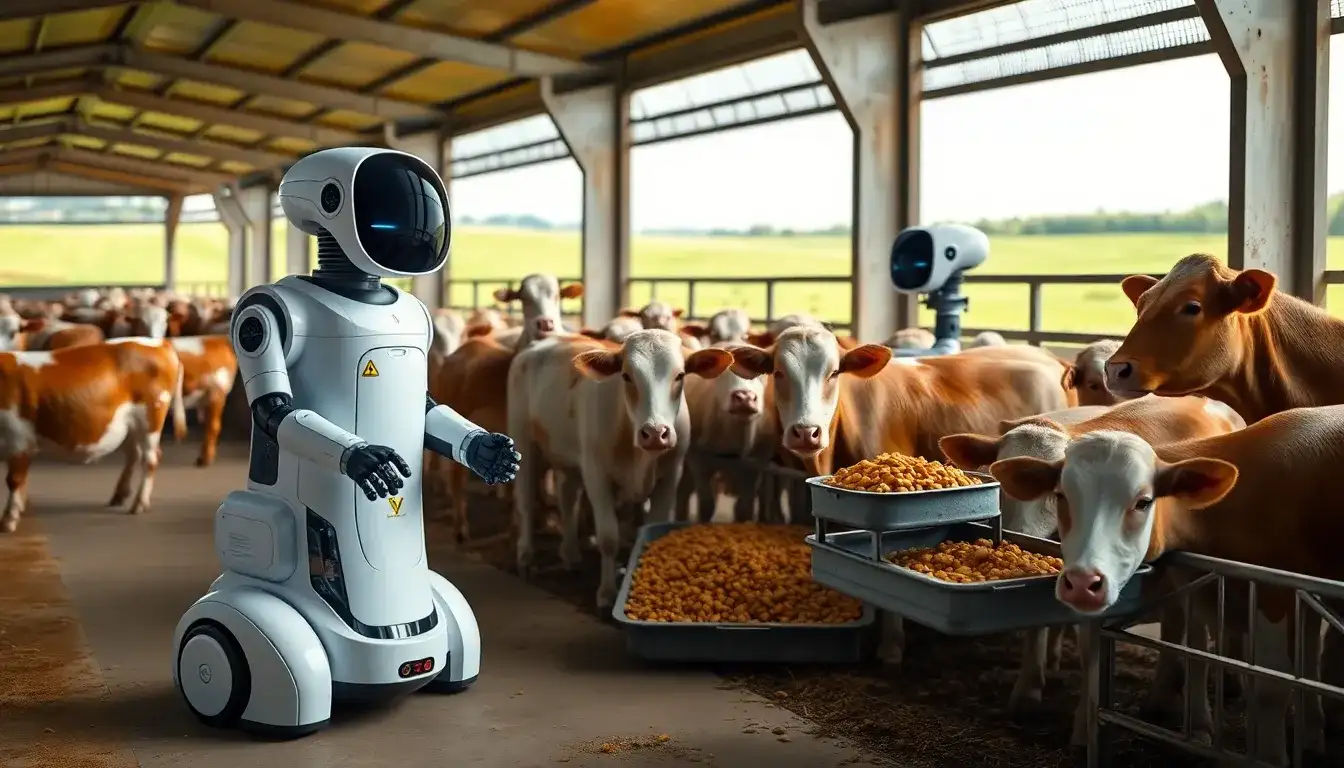
Smart Breeding: Cost Reduction and Efficiency Improvement through Green and Safe Production — Disinfection and Feeding Robots for Large-Scale Farms
Background of the Intelligent Disinfection and Feeding Robot in Large-Scale Farms
Currently, China’s livestock farming is rapidly transitioning towards large-scale, intensive, and standardized operations. Large farms face increasing demands for feeding management, environmental disinfection, and biosecurity due to high livestock numbers and density. Traditional manual feeding is labor-intensive and inefficient, leading to issues like uneven feed distribution, high waste rates, and inconsistent consumption. Manual disinfection also suffers from uneven spraying, numerous blind spots, difficulty in maintaining frequency, and high risks of personnel contact with livestock. These factors make it challenging to meet the high standards required for epidemic prevention and environmentally friendly farming.
With rising labor costs, difficulties in recruiting frontline workers, and harsh conditions such as ammonia and dust in barns, the traditional manual model no longer meets the operational needs of large farms for efficiency, stability, and safety. In this context, intelligent disinfection and feeding robots have emerged, replacing manual labor with autonomous operations that can simultaneously perform precise feeding, comprehensive disinfection, and environmental inspection tasks. This technology reduces labor costs, enhances feeding efficiency, and strengthens biosecurity, making it a core piece of equipment for large-scale farms aiming for smart farming, cost reduction, and green, safe production.
Equipment Overview
The intelligent disinfection and feeding robot is an integrated smart device designed specifically for large-scale farms. It combines automatic feeding, comprehensive disinfection, and environmental inspection functionalities. The robot can autonomously plan its path, ensuring even feed distribution and thorough disinfection, effectively reducing human contact and the risk of disease transmission. It enhances feeding efficiency and biosecurity levels in barns, demonstrating stable operation, user-friendly controls, and adaptability to harsh farming environments. This makes it a key device for achieving intelligent, unmanned, and standardized management in modern farms.
Product Positioning
The “Disinfection + Feeding” integrated robot is primarily developed for large-scale dairy and beef cattle farms. It builds on the features of the second-generation disinfection robot while adding a dedicated feeding mechanism. This allows the robot to perform disinfection, feeding, and inspection tasks simultaneously, offering multifunctional capabilities. The disinfection component includes a 150L large-capacity medication tank, with a fogging efficiency of up to 50,000 square meters per hour, effectively eliminating pathogenic microorganisms in the environment. The feeding function is designed to push feed that cattle have pushed aside back to within 0-10 cm of the fence, reducing feed waste and lowering residual feed rates by 3%-8%. The inspection module is equipped with high-definition and thermal imaging cameras that continuously monitor cattle feeding, resting, and manure aisle conditions, with real-time data synchronization to the farm management platform.
Software and Functionality
The task planning relies on a digital map of the barn, supporting two operational modes: “disinfection followed by feeding” and “disinfection and feeding performed simultaneously.” The system can automatically allocate tasks based on pen positions, requiring a minimum operational width of 1.5 meters. The intelligent feeding strategy uses AI vision to detect the width of feed spillage, activating the feeding roller only when the spillage exceeds 3 cm. The device features adaptive travel speeds, moving straight at 0.8 m/s and slowing to 0.4 m/s during turns to prevent feed from scattering. The disinfection strategy supports segmented concentration levels, using high-concentration solutions in manure areas and low-concentration solutions in feeding areas. An adaptive wind algorithm adjusts the fogging angle automatically when crosswinds exceed level 3, enhancing disinfection effectiveness and chemical utilization.
Automatic Charging & Replenishment
The robot can automatically return to the supply station when battery levels are low or when the medication tank is nearly empty. It supports quick battery replacement within 5 minutes and liquid replenishment and cleaning within 2 minutes, all without manual oversight, allowing for 24-hour continuous operation.
Log and Traceability System
The system automatically generates operation logs for disinfection and feeding, recording task locations, medication usage, feeding areas, abnormal site images, and cattle temperatures. It can interface with mainstream farm management systems such as Afimilk, Afijin, and Ranch Cloud.
Technical Parameters
Note: The above content (including any images or videos) is uploaded and published by a user of the NetEase Hao platform, which only provides information storage services.
Original article by NenPower, If reposted, please credit the source: https://nenpower.com/blog/revolutionizing-livestock-farming-the-role-of-intelligent-disinfection-and-feeding-robots-in-sustainable-production/

