

AI Is Revolutionizing Battery Production — Here’s How
The demand for high-performance batteries is surging, fueled by the global transition towards electric vehicles, renewable energy systems, and mobile electronics. However, traditional battery production methods are struggling to meet these rising expectations. Inefficiencies, trial-and-error research and development, and outdated processes impede progress. Today, AI is stepping in to revolutionize every aspect of battery production, from discovery to deployment.
### Smarter Design with AI
One of the most crucial stages in battery production is the design of better-performing batteries from the ground up. Historically, scientists have relied on years of trial and error to discover new materials. With AI, this timeline is significantly shortened. AI-powered tools, particularly machine learning (ML) algorithms, are now employed to discover advanced materials, including new cathodes, anodes, and electrolytes. These tools analyze vast databases and simulate chemical reactions to quickly identify promising candidates, a process that would take much longer using traditional methods.
For example, AI models can predict the energy density, conductivity, and thermal stability of thousands of chemical combinations, guiding researchers toward more effective solid-state materials or lithium-metal alternatives. This AI-driven approach substantially reduces research and development timelines and costs, leading to faster innovation and improved battery performance across various devices and industries.
### AI in Battery Manufacturing Processes
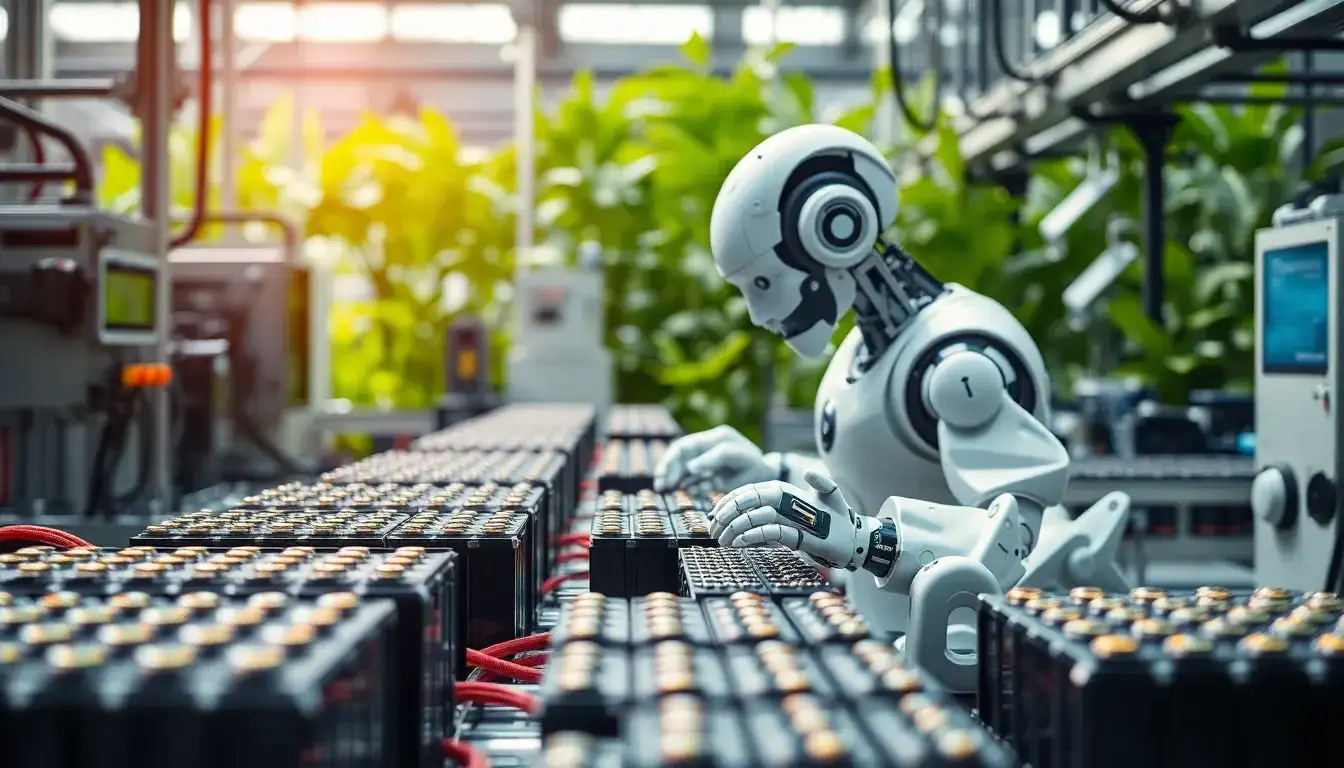
The introduction of AI into battery manufacturing is transforming the assembly and scaling of batteries. Modern battery production facilities leverage AI systems to optimize each step of the manufacturing workflow. In conventional setups, inconsistencies can result in high rejection rates. However, with AI-powered automation, manufacturers gain greater control over each phase of the battery production process.
AI-enabled systems utilize real-time data analytics to monitor temperature, humidity, pressure, and alignment during manufacturing. Through computer vision, AI can instantly identify defects in components such as electrode layers or cell enclosures, minimizing waste and enhancing quality control. Furthermore, AI improves traceability by tagging data from each unit throughout the battery production lifecycle. This capability ensures that if a batch fails a battery test, manufacturers can trace it back to the specific stage where the defect occurred. With these advancements, the future of battery production appears not only faster but also more precise and sustainable.
### Faster, Smarter Battery Testing
No battery production process is complete without rigorous testing. Traditionally, batteries must undergo weeks of performance and safety assessments before they can be approved for use, often causing delays and increased costs. Fortunately, AI is making battery test protocols smarter and faster. ML models can now predict battery behavior under various stress conditions—including charge/discharge cycles, temperature extremes, and mechanical stress—often without needing to physically test every scenario.
Moreover, AI can analyze the thousands of data points generated during battery testing, identifying patterns that signal potential failures or performance issues. This capability allows engineers to address problems earlier in the development cycle, thereby reducing recalls and enhancing product safety.
### Enhancing Battery Performance and Lifespan
Once deployed, AI continues to play a vital role in extending the operational life of batteries and ensuring their safety. Embedded AI algorithms within battery management systems (BMS) continuously monitor key parameters, such as voltage, temperature, and charge cycles. These systems can detect early signs of degradation, prevent overcharging, and isolate malfunctioning cells to avert total failure.
Smart charging is another area where AI makes a significant impact. Traditional charging methods can overheat batteries and accelerate wear. AI-powered systems, on the other hand, adjust charging rates based on battery age, health, and usage patterns. This approach reduces thermal stress and chemical degradation, ultimately prolonging the battery’s lifespan. According to reports, AI-powered batteries can deliver 10% more energy and last 25% longer by intelligently managing performance and minimizing wear.
AI’s predictive capabilities are especially valuable in sectors such as electric vehicles and renewable energy, where battery reliability is crucial. By analyzing usage patterns, AI can anticipate when a battery is likely to fail and initiate proactive maintenance or replacement, reducing downtime and improving safety.
### Conclusion
From smarter design to predictive maintenance, AI is transforming battery production into an intelligent, high-efficiency system. With enhanced quality, reduced costs, and improved battery performance, the future looks bright for manufacturers who embrace AI.
Don’t miss out on the advancements in battery production at The Battery Show Asia 2025, and discover how your business can lead the charge toward smarter energy solutions.
Original article by NenPower, If reposted, please credit the source: https://nenpower.com/blog/revolutionizing-battery-production-how-ai-is-transforming-the-industry/

