

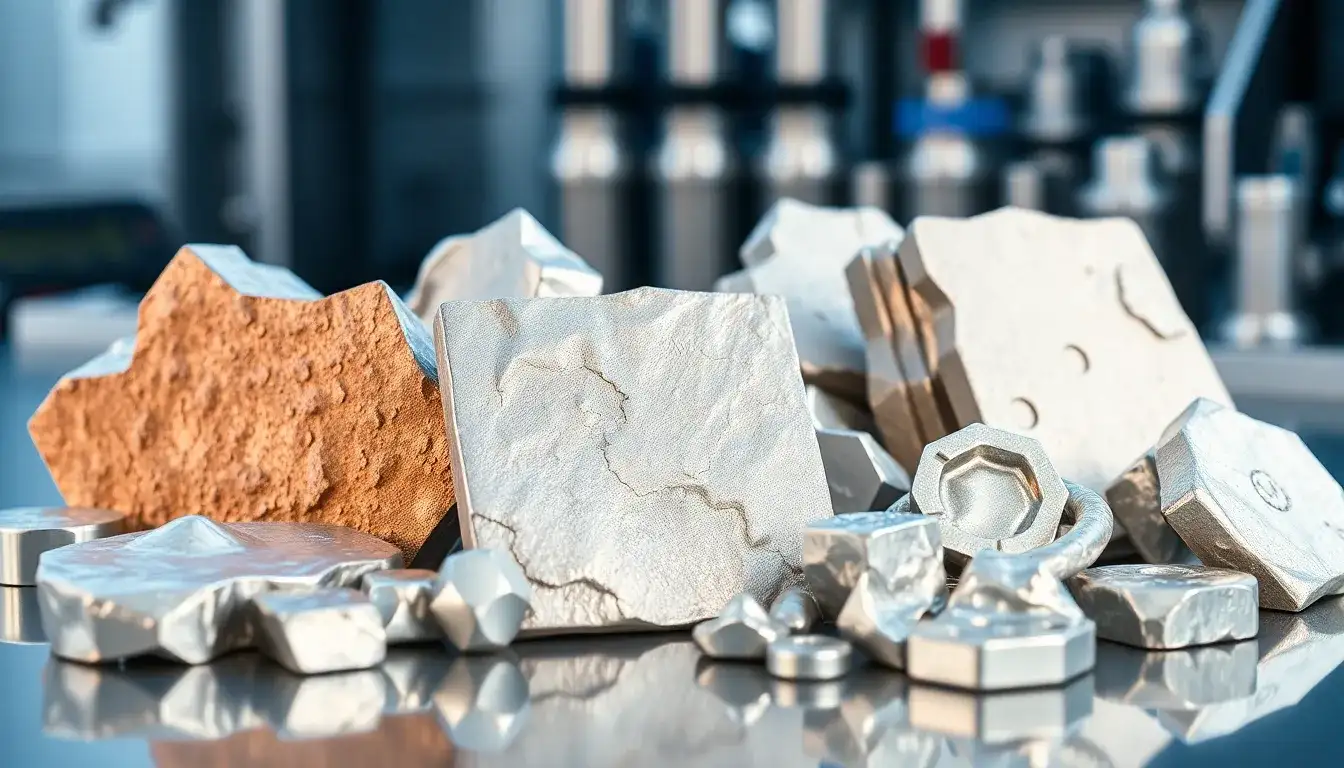
Supercharging Aluminium with Next-Gen Alloys
===============================================
In the global push for decarbonization, hydrogen has emerged as a clean, high-energy fuel that has the potential to transform transport, energy storage, and heavy industry. However, the efficient and safe storage and transportation of hydrogen remains a significant challenge.
Aluminium has long been favored in lightweight applications such as aerospace, automotive, construction, and packaging due to its lightweight, strength, corrosion resistance, and abundance. Yet, in hydrogen-rich environments, aluminium is not without its vulnerabilities. The metal can become brittle when exposed to hydrogen, a phenomenon known as hydrogen embrittlement. This is where the latest breakthrough in aluminium alloys comes into play.
### Strength Meets Resistance
A team of international scientists, led by the Max Planck Institute for Sustainable Materials in Germany and in collaboration with Xi’an Jiaotong University and Shanghai Jiao Tong University in China, has developed a new class of aluminium alloys specifically engineered to withstand hydrogen exposure. Their innovative design achieves an impressive balance between ultra-high strength and resistance to hydrogen-induced failure.
The key to this advancement lies in a clever microstructural modification. By alloying aluminium with scandium and magnesium, followed by a strategic two-step heat treatment, the researchers created a material imbued with dual nanoprecipitates. These tiny features serve essential functions: one set of nanoparticles, comprised of Al3Sc, significantly strengthens the alloy, while another complex shell phase known as Al3(Mg,Sc)2 acts as a trap for hydrogen atoms, preventing them from compromising the metal’s internal bonds. This dual functionality results in a remarkable 40% increase in strength and a fivefold enhancement in resistance to hydrogen embrittlement compared to traditional scandium-free alloys. As Baptiste Gault, a group leader at the Max Planck Institute, stated: “Our new design strategy overcomes the typical trade-off. We no longer have to choose between high strength and hydrogen resistance – this alloy delivers both.”
### Atomic-Level Insights
To fully understand the mechanisms behind these alloys, the team employed advanced microscopy techniques in materials science. Atom probe tomography, a method that allows for 3D mapping of atoms with near-atomic precision, confirmed that hydrogen atoms were indeed being captured by the Al3(Mg,Sc)2 phase. This atomic-level evidence was crucial in validating the alloy’s performance and provided researchers with an unprecedented understanding of the hydrogen-trapping mechanisms. Additional simulations and electron microscopy conducted at the partner institutes further enriched the findings. Notably, the new alloy maintained excellent ductility even under high hydrogen loads, achieving record uniform tensile elongation for hydrogen-charged aluminium materials. This means the alloy is not only strong and resilient but also flexible—a vital quality for components under stress.
### Built for the Real World
Importantly, this research is not merely theoretical. The alloy was produced using near-industrial techniques, with water-cooled copper mould casting and thermomechanical processing ensuring that the production process is scalable. This is a crucial factor, as the infrastructure needed to support hydrogen—such as pipelines, pressure vessels, and transport systems—must be safe, durable, and cost-effective. With these new alloys, aluminium may very well reclaim its status as the preferred material without the risk of embrittlement.
Moreover, these materials can be adapted across a wide array of existing aluminium-alloy systems, opening up numerous applications including hydrogen-powered vehicles, lightweight pressure tanks, and corrosion-resistant piping.
### A Global Collaboration with High Stakes
This research represents a truly international effort. Scientists from the Max Planck Institute collaborated with experts at Xi’an Jiaotong University and Shanghai Jiao Tong University, merging advanced European facilities with leading Chinese materials research. This East-meets-West collaboration was not merely academic; it was strategic. By combining expertise in atomic-scale analysis, large-scale materials processing, and alloy design, the team accelerated development that would have otherwise taken years. The publication of their findings in *Nature* serves as a call to action for materials scientists and industrial stakeholders alike, signaling that the question is no longer whether hydrogen can become mainstream, but rather how quickly it can happen.
### Shaping the Future of Hydrogen Infrastructure
For hydrogen to effectively lead us toward a zero-emissions future, it requires the right materials to support its infrastructure. The newly developed aluminium-scandium-magnesium alloys not only represent a significant breakthrough in materials science but also lay the groundwork for a sustainable future. Lightweight, resilient, scalable, and strong, these alloys are perfectly suited for tomorrow’s infrastructure. The potential applications range from aircraft fuselages and automotive components to onboard hydrogen tanks and beyond.
As the global hydrogen economy gains momentum, innovations like this highlight that progress is not solely about the fuel itself, but also involves the crucial materials that ensure its safety, efficiency, and viability. In this race, supercharged and embrittlement-resistant aluminium may emerge as the leading material.
### Forging Ahead
This new alloy design signifies more than just a technological milestone. It vividly illustrates how curiosity-driven science, combined with practical industrial foresight, can address some of our most pressing challenges. With these advanced aluminium alloys nearing commercial readiness, the hydrogen economy is poised to become significantly more robust. We are entering an era where high-performance, scalable, and environmentally friendly materials are not just desirable—they are essential. Thanks to this international collaboration, aluminium has found a renewed purpose in the pursuit of sustainable energy solutions.
Original article by NenPower, If reposted, please credit the source: https://nenpower.com/blog/revolutionizing-aluminium-new-alloys-enhance-strength-and-hydrogen-resistance/

