

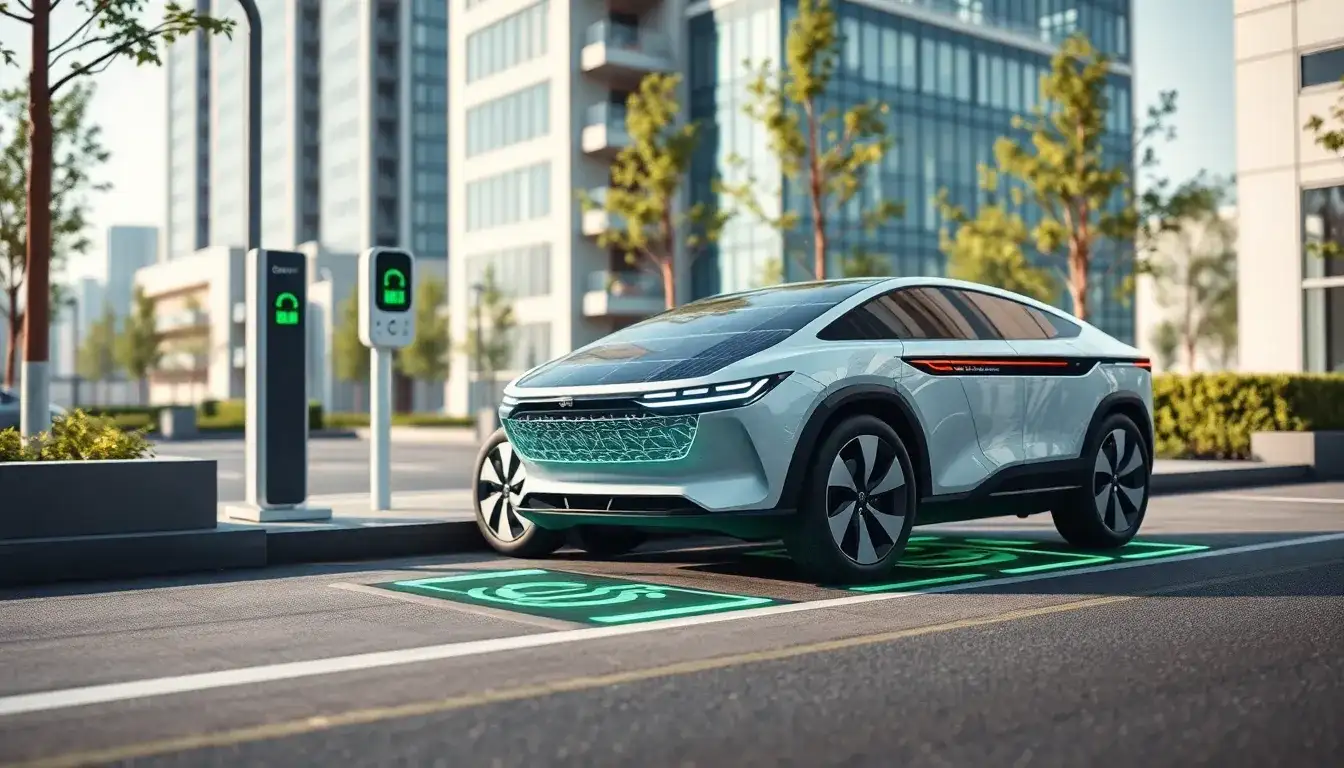
Revolutionary Innovation in Electric Vehicle Charging: Charge Anytime, Anywhere Without Charging Stations!
Imagine a scenario where charging your electric vehicle (EV) becomes so automated that even the effort of plugging it in is eliminated. This is the true blessing for those seeking convenience! Picture this: after a long day at work, you drive your electric car into a charging station. As soon as you park, a sleek silver robotic arm rises from the ground, perfectly aligning with your car’s charging port. The numbers on the charging station’s display surge visibly as you sip your coffee, replenishing 200 kilometers of range in no time. This isn’t science fiction; it’s the real-world experience brought to you by Huawei’s latest ultra-charging robot. Even more astonishing is the innovation by French company Π-POP, which has developed a battery-free electric assist bicycle that generates energy while you ride, freeing users from the constraints of traditional charging stations. With these advancements, the rules of the electric vehicle industry are being rewritten.
<h2>A Charging Revolution: From Serving Batteries to Freeing Hands</h2>
The three major pain points for traditional EV owners—difficulty finding charging stations, slow charging speeds, and battery degradation—are being tackled head-on by two groundbreaking technologies. The Π-POP electric assist bicycle, which replaces lithium batteries with supercapacitors, is a game changer. Weighing in at 21 kilograms, it features an energy recovery system that captures energy during downhill braking and provides 250W of assistance while riding on flat terrain, creating a perpetual energy experience that feels like "the more you ride, the more energy you have." Test results indicate that its supercapacitors have a lifespan of up to 15 years and can handle over 500,000 charge-discharge cycles—more than five times the durability of lithium batteries. Meanwhile, Huawei's ultra-charging robot epitomizes the "lazy person's philosophy": with a 600kW liquid-cooled ultra-charging station and a vision-recognition robotic arm, it offers charging speeds of "1 kilometer of range in just one second." The most remarkable aspect of this system is its zero-contact operation; after parking, the robotic arm automatically handles the entire charging process, including plugging in and unplugging, without the need to even roll down your window. This new batch of robots, set for mass production next year, is compatible with multiple vehicle brands and will form a smart charging network across 100,000 ultra-charging stations.

<h2>The Technical Showdown: Supercapacitors vs. Ultra-Fast Charging</h2>
Hidden within the Π-POP aluminum-carbon supercapacitor lies the ultimate secret of the new energy industry: it requires no rare earth materials, poses no risk of thermal runaway, and operates flawlessly at -30°C. Developed by a French team over seven years, this energy storage device employs a cellulose separator and activated carbon electrodes to create a double electric layer structure, achieving charging efficiencies 20 times faster than lithium batteries. However, it does have its limitations—when faced with slopes exceeding 10%, the stored energy can be depleted within 500 meters, particularly for users weighing over 100 kilograms. In contrast, the ultra-charging robot faces the challenge of pushing the limits of the grid system. A single 600kW ultra-charging station draws power equivalent to that of 50 household air conditioners, necessitating a complete overhaul of urban electrical infrastructures. The latest plans from the State Grid indicate that by 2025, 3,000 ultra-charging stations with capacities exceeding 480kW will be installed in highway service areas, but residential grid upgrades still face bottlenecks related to transformer capacities.

<h2>Charging vs. Battery Swapping: A Battle for "Time Sovereignty"</h2>
As the ultra-fast charging and battery swapping factions compete fiercely in the charging arena, consumers are casting their votes with their wallets:
- The ultra-charging robots excel in convenience, especially for urban professionals looking to recharge during brief moments of downtime.
- Battery swapping stations, with their ability to fully recharge in just three minutes, are particularly appealing to high-frequency users like ride-hailing drivers.
- The Π-POP model introduces a new pathway by utilizing energy recovery for "charging freedom," although it is limited by terrain and weight constraints.
Industry data shows that the number of battery swapping stations is expected to grow by 120% in 2024, yet 35% of user complaints are related to "incompatible battery models." In contrast, the ultra-charging robots boast a 98% vehicle compatibility rate, reshaping the market landscape.

<h2>Three Visions for the Future of Mobility: Breaking Physical Boundaries Through Technology</h2>
In a tech park in Shenzhen, the Π-POP electric assist bicycle has become a new favorite for commuting professionals. Sales director Li Wei has calculated that the €2,690 price tag, while seemingly steep, actually saves 40% in costs over 15 years by eliminating battery replacement expenses. At Shanghai Hongqiao Hub, Huawei's ultra-charging station operates with a single maintenance staff member while serving an average of 300 vehicles daily. This charging revolution not only brings technological upgrades but also reconstructs our travel concepts:
1. <b>Spatial Liberation:</b> Parking spaces in residential areas transform into miniature power stations, eliminating the battle for charging stations.
2. <b>Time Reconstruction:</b> Charging integrates seamlessly with shopping and dining, turning waiting into an enjoyable experience.
3. <b>Energy Democracy:</b> Distributed photovoltaics combined with supercapacitors enable each vehicle to serve as a mobile energy storage unit.

<h2>A Rational Guide for Consumers: New Technology Does Not Equal Blind Rush</h2>
In the midst of dazzling charging technologies, experienced users offer three tips to avoid pitfalls:
1. For commuters, opt for the Π-POP design: ideal for daily rides under 20 kilometers, weight under 80 kg, and primarily flat terrain.
2. Long-distance drivers should focus on the ultra-charging network: choose vehicles supporting 800V high-voltage platforms and check the locations of charging stations along your route in advance.
3. High-frequency users should consider battery swapping systems: prioritize brands like NIO that are part of battery swapping alliances and pay attention to battery health assurance policies.
Industry expert Wang Zhenyu points out, "2025 will be a watershed year for charging technologies. Ultra-fast charging will address efficiency issues, battery swapping will focus on specific scenarios, and passive energy storage will create a new ecosystem; ultimately, all three will converge."
Your support drives me forward, so please hit the <b>like</b>, <b>view</b>, and <b>share</b> buttons!
Original article by NenPower, If reposted, please credit the source: https://nenpower.com/blog/revolutionary-charging-innovations-for-electric-vehicles-no-charging-stations-needed/

