

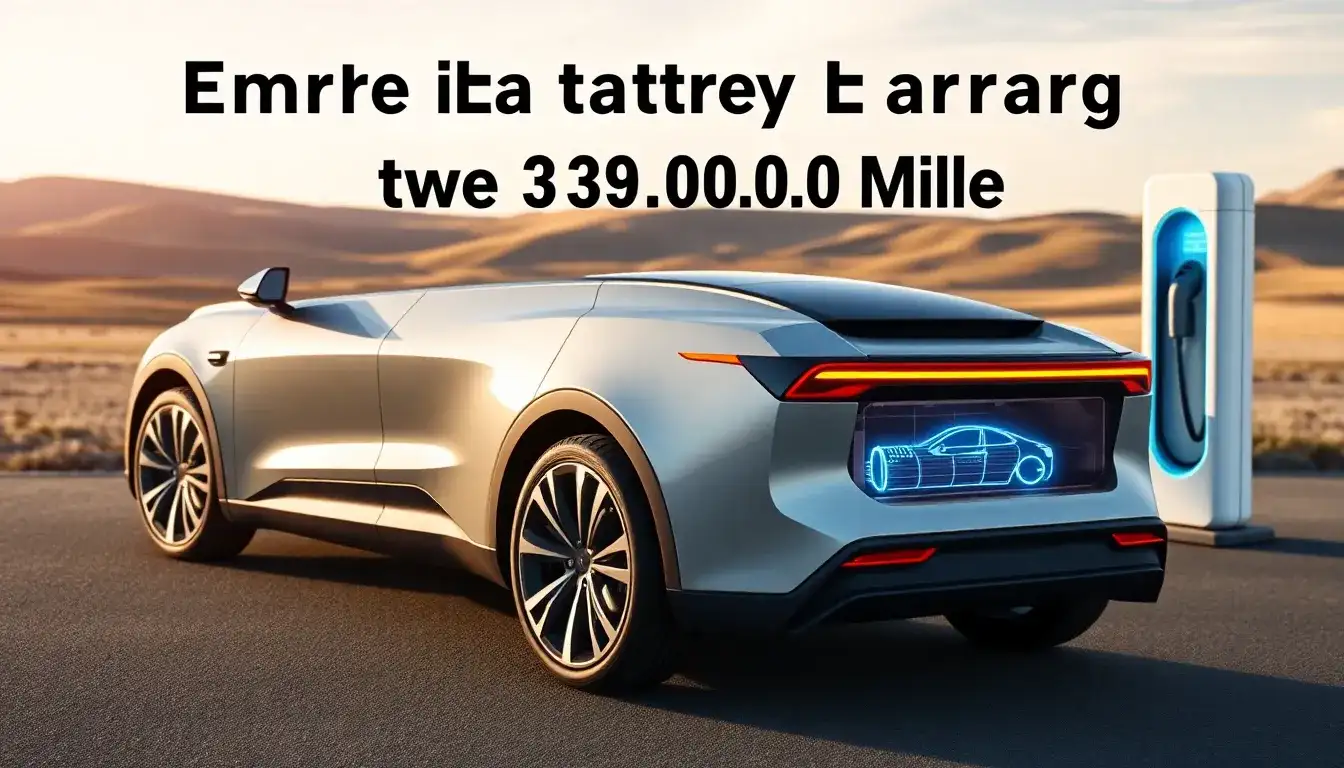
Electric vehicles (EVs) are on the brink of a significant transformation, thanks to innovative advancements in battery technology that promise to enhance their capabilities dramatically. This breakthrough comes at a critical time, as the demand for electric cars is growing rapidly. Central to this progress are improvements in energy storage within batteries, which could substantially increase vehicle range and revolutionize the use of renewable energy.
### The Importance of Battery Anodes
To understand the significance of this new technology, it’s essential to grasp the basics of how batteries function. Batteries store energy through two main components: the anode and the cathode. The anode collects energy during charging and releases it to power devices like electric vehicles. Currently, most battery anodes are made from graphite, a dependable material, but one that limits energy storage capacity. Researchers have long sought alternatives, such as silicon, which can store significantly more energy. However, silicon’s propensity to expand during charging poses challenges, leading to potential damage and safety risks. These issues have hindered the widespread adoption of silicon despite its advantages.
### A Major Breakthrough in Battery Safety and Capacity
Recently, professors Soojin Park and Youn Soo Kim from Pohang University of Science & Technology (POSTECH), along with professor Jaegeon Ryu from Sogang University, addressed the challenges associated with silicon. Their team developed an innovative binder material that prevents silicon from swelling during charging. This crucial advancement enables batteries equipped with silicon anodes to store ten times more energy than those with graphite anodes. This development is not just a minor enhancement; it represents a transformative leap forward. The implications for electric vehicles are profound, allowing for driving ranges comparable to traditional gasoline-powered cars without the need for frequent recharges. Professor Park notes, “This research has the potential to significantly increase the energy density of lithium-ion batteries through the incorporation of high-capacity anode materials, thereby extending the driving range of electric vehicles.” He further states that silicon-based anode materials could potentially increase driving range by at least tenfold.
### Global Efforts in Battery Innovation
POSTECH is not alone in its quest for battery advancements. Researchers and companies around the globe are exploring various exciting approaches. In China, for instance, scientists are investigating sodium-based batteries as a more affordable and accessible alternative to lithium. This innovation could make electric cars more economical and widespread, particularly in regions where lithium resources are limited. Meanwhile, NASA scientists are making strides in developing solid-state batteries, which are lighter and more compact, benefiting both space missions and electric vehicles by enhancing their efficiency.
In addition, some research focuses on sustainable battery materials, such as biodegradable batteries made from crab shells, underscoring the push for environmentally friendly options.
### The Broader Impact Beyond Transportation
The significance of these battery breakthroughs extends well beyond the realm of transportation. Renewable energy sources, such as solar and wind power, rely heavily on efficient energy storage systems. Unlike fossil fuels, renewable energy does not produce power consistently—sunlight and wind can fluctuate, making effective storage solutions crucial. Advanced batteries can capture and store excess energy generated during optimal conditions and release it when needed, thus enhancing the feasibility of renewable energy usage and reducing dependence on fossil fuels.
### Striving for a Greener Future
These innovations signify substantial progress towards decreasing global reliance on fossil fuels. Improved battery storage can make electric vehicles more practical and appealing to consumers, accelerating the transition from gasoline engines to cleaner electric alternatives. As battery technology continues to evolve, the vision of a greener future becomes increasingly attainable. Researchers and scientists worldwide are contributing vital innovations, each step bringing us closer to a sustainable energy landscape. With escalating climate challenges, efficient and powerful battery technologies are not just desirable—they are essential. Each advancement nudges the world closer to a future dominated by renewable energy and electric vehicles, where sustainability becomes a tangible reality.
In summary, this advancement in battery technology represents more than just a step forward for electric vehicles; it marks a pivotal transformation in energy storage, management, and utilization, ultimately paving the way for a cleaner, healthier planet for future generations.
Original article by NenPower, If reposted, please credit the source: https://nenpower.com/blog/revolutionary-battery-technology-extends-electric-vehicle-range-beyond-3000-miles/

