

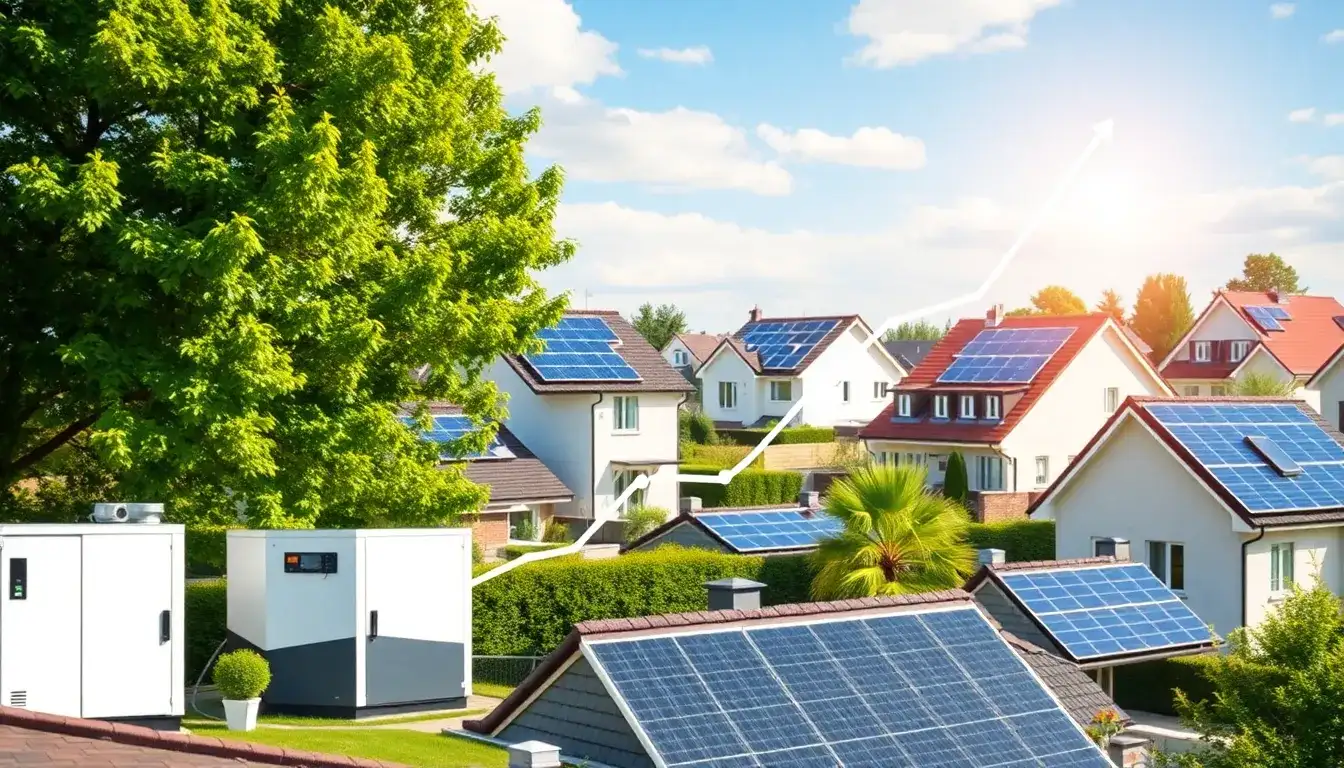
The global residential energy storage market is set to experience remarkable growth over the next decade, expanding from approximately USD 10 billion in 2024 to an estimated USD 35 billion by 2034. This growth reflects a robust Compound Annual Growth Rate (CAGR) of 13.2%, driven by the increasing demand for energy independence, the rapid adoption of renewable energy technologies, and ongoing innovations in battery storage solutions. Homeowners worldwide are increasingly turning to energy storage systems to mitigate rising utility costs, contribute to sustainability efforts, and ensure reliable power supply.
### Key Market Drivers
#### Adoption of Renewable Energy and Energy Independence
One of the main drivers of market growth is the global shift towards renewable energy sources such as solar and wind. As homeowners install more solar panels, the need for efficient and cost-effective storage solutions rises. Residential energy storage enables users to store excess energy generated during the day for nighttime use or during power outages, fostering energy self-sufficiency.
#### Technological Advancements and Smart Energy Management
The industry is witnessing rapid innovations, particularly through the integration of Artificial Intelligence (AI) and the Internet of Things (IoT) into storage systems. These technologies facilitate real-time monitoring, predictive energy consumption analytics, and improved energy optimization, enhancing user control and system efficiency. As these advanced solutions become more affordable, consumer adoption rates are expected to rise significantly.
#### Favorable Government Policies
Governments across the globe are implementing supportive regulations and incentive programs, including tax credits, rebates, and net metering, to encourage the adoption of residential energy storage. These incentives help reduce installation costs and motivate homeowners to invest in sustainable energy infrastructure.
#### Rising Energy Prices and Supply Chain Considerations
The volatility of energy prices and global supply concerns have amplified interest in energy security and cost control. Residential storage systems provide a buffer against electricity price fluctuations, allowing homeowners to rely more on stored or self-generated energy.
### Market Segmentation
– **By Product Type**
– Lithium-Ion Batteries
– Lead-Acid Batteries
– Flow Batteries
– Sodium-Sulfur Batteries
– Others (e.g., Nickel-Cadmium)
– **By Battery Capacity**
– Less than 5 kWh
– 5 kWh to 10 kWh
– More than 10 kWh
– **By End User**
– Single Family Homes
– Multi-Family Homes
– Residential Units in Urban Areas
– **By System Configuration**
– AC Coupled Systems
– DC Coupled Systems
– **By Grid Connection**
– Off-Grid
– Grid-Tied
– **By Sales Channel**
– Direct Sales
– Online Sales
– Wholesale Distribution
– **By Region**
– North America
– Europe
– Asia Pacific
– Latin America
– Middle East & Africa
### Segment Analysis
#### By Product Type
Lithium-Ion Batteries dominate the market, making up nearly 60% of the total share thanks to their superior energy density, long lifespan, and decreasing costs. Technological improvements, including enhanced safety features and thermal management, have further boosted their popularity. Lead-Acid Batteries, once dominant, now hold around 25% of the market share but are declining due to their shorter lifespan and lower efficiency. Flow Batteries, which account for roughly 5% of the market, provide longer cycles and are ideal for larger or off-grid installations.
#### By Battery Capacity
Systems in the 5 kWh to 10 kWh range are the most popular, catering to the average household’s energy requirements and representing approximately 50% of the market. Smaller capacity systems (less than 5 kWh) serve smaller homes and emerging markets, while those exceeding 10 kWh are suited for energy-intensive households, making up about 20% of this segment.
#### By End User
Single-family homes represent the largest consumer segment, accounting for nearly 65% of the demand as these households gain the most from energy independence and are significant adopters of rooftop solar systems. Multi-family homes hold a 20% market share and are gradually increasing adoption through shared systems or community energy projects, while urban residential units account for 15% of the market.
#### By System Configuration and Grid Connection
AC-coupled systems lead the configuration segment with a 70% share, favored for their ease of retrofitting and compatibility with existing electrical systems. DC-coupled systems, which represent 30%, are gaining traction in new constructions due to their energy efficiency. In terms of grid connection, grid-tied systems dominate with an 80% share, providing benefits like net metering and consistent access to power.
#### By Sales Channel
Direct sales comprise over 60% of transactions, enabling manufacturers and vendors to offer personalized consultations and solutions. Online sales are rapidly emerging, representing 25% of the market, driven by the convenience of digital platforms. Wholesale distribution accounts for the remaining 15%, typically supporting bulk purchases for installers and larger projects.
### Regional Insights
#### Asia-Pacific: Market Leader
The Asia-Pacific region leads the market with a share of around 45%, driven by strong demand in countries like Australia, China, and Japan. This leadership is supported by rising energy consumption, ambitious renewable energy goals, and favorable government policies.
#### North America: Rapid Expansion
North America accounts for 30% of the market and is one of the fastest-growing regions, projected to grow at a CAGR of 12%. States like California are at the forefront, influenced by high utility rates, frequent power outages, and strong policy support.
#### Europe: Policy-Driven Growth
Europe contributes 20% to the global market and is expected to experience steady growth, bolstered by ambitious decarbonization goals, significant public-private investments, and EU directives on renewable integration.
#### Emerging Markets: Latin America & Middle East
Though still in early stages, Latin America and the Middle East present significant potential due to favorable solar conditions and a growing focus on sustainable development. Countries like Brazil and Saudi Arabia are beginning to invest heavily in grid decentralization and storage.
### Challenges and Market Barriers
Despite promising growth prospects, the residential energy storage market faces several challenges. High initial costs for system purchase and installation remain a significant barrier to mass adoption, particularly in cost-sensitive markets. Although battery prices are declining, the overall investment can still deter homeowners. Additionally, varying regulatory environments across countries and states can lead to confusion and hesitancy among consumers and businesses. Supply chain disruptions due to geopolitical instability or pandemics can affect the availability and pricing of essential components, complicating manufacturers’ ability to meet demand sustainably. Lastly, increasing competition may pressure profit margins and impact long-term investments in innovation.
### Recent Developments Among Key Players
– **Tesla, Inc.** launched the Powerwall 3 in September 2023, offering improved capacity and efficiency with advanced energy management features, reinforcing its position in the smart home energy sector.
– **LG Chem** merged with a major solar technology firm in August 2023, enhancing its ability to deliver integrated solar-battery solutions and signaling a move towards comprehensive solutions in residential markets.
– **Enphase Energy** introduced an AI-enhanced storage system in July 2023, providing intelligent forecasting and load balancing to empower homeowners to reduce energy waste and costs.
– **BYD** expanded into the Indian market in June 2023, aiming to scale production of residential energy systems in response to India’s growing clean energy ambitions.
– **Generac Holdings** acquired a software firm specializing in energy management in May 2023, aiming to combine backup power hardware with intelligent energy monitoring to improve user experience.
### Conclusion
The residential energy storage market is on a trajectory of substantial growth, driven by technological advancements, government incentives, and increasing consumer demand for energy independence. As the market evolves, ongoing innovations and strategic partnerships will play a crucial role in shaping its future.
For further insights, you can access the complete report [here](https://exactitudeconsultancy.com/reports/66698/residential-energy-storage-market).
Original article by NenPower, If reposted, please credit the source: https://nenpower.com/blog/residential-energy-storage-market-set-to-reach-usd-35-billion-by-2034-growing-at-13-2-cagr/

