

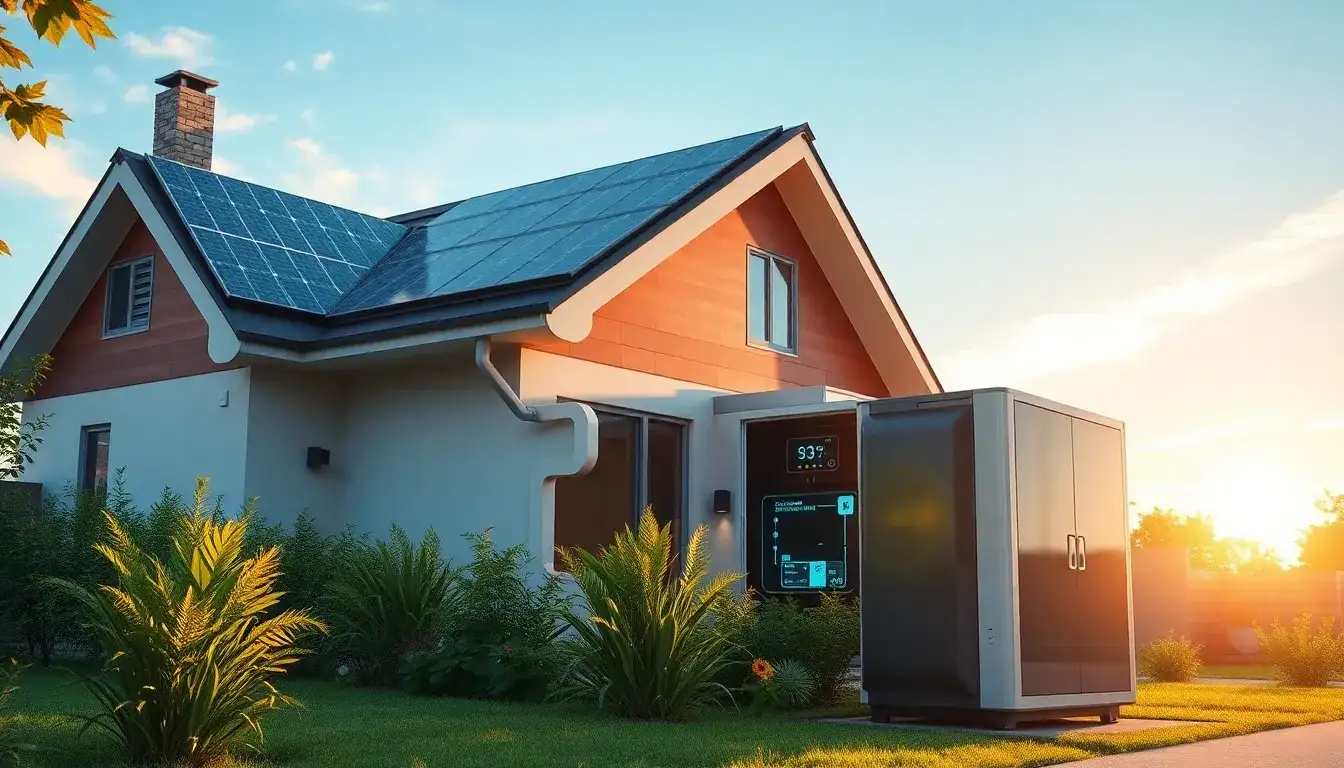
Residential Energy Storage
Residential energy storage systems allow homeowners to store electricity generated from renewable sources, such as solar panels, or from the electrical grid during off-peak hours. These systems are primarily used for backup power during outages, reducing reliance on the grid, and minimizing energy costs by utilizing stored energy during peak demand periods. Here’s an overview of residential energy storage:
Components and Types
- Battery-Based Systems: The most common type uses lithium-ion batteries for their high energy density and efficiency. Other types include lead-acid and flow batteries.
- Inverters and Supporting Equipment: Systems include inverters to convert direct current (DC) to alternating current (AC) for household use, along with charge controllers, battery management systems (BMS), and wiring.
- Thermal and Mechanical Systems: Though less common, options like thermal energy storage heaters and mechanical systems like flywheels also exist.
Benefits
- Energy Independence: Reduces reliance on the grid by storing energy from renewable sources.
- Backup Power: Provides power during outages, ensuring critical appliances remain operational.
- Cost Savings: Saves money by using stored energy during peak demand times.
- Environmental Benefits: Promotes renewable energy use and reduces fossil fuel dependence.
How It Works
- Charging: Batteries are charged using electricity from solar panels or the grid during off-peak hours.
- Usage: Stored energy is used during peak demand times or when the grid is unavailable.
- Inverter Function: Converts stored DC power into AC for household appliances.
Costs
The cost of residential energy storage systems varies widely, typically ranging from $5,000 to $20,000 or more, including installation. Factors influencing cost include battery type, capacity, and installation complexity.
Future Trends
Lowering costs have made these systems more affordable, with incentives like tax credits further reducing costs. Increased partnerships between automotive and energy industries are expanding home energy storage solutions.
Overall, residential energy storage offers homeowners greater control over their energy use, supporting a more sustainable and reliable energy future.
Original article by NenPower, If reposted, please credit the source: https://nenpower.com/blog/residential-energy-storage/

