

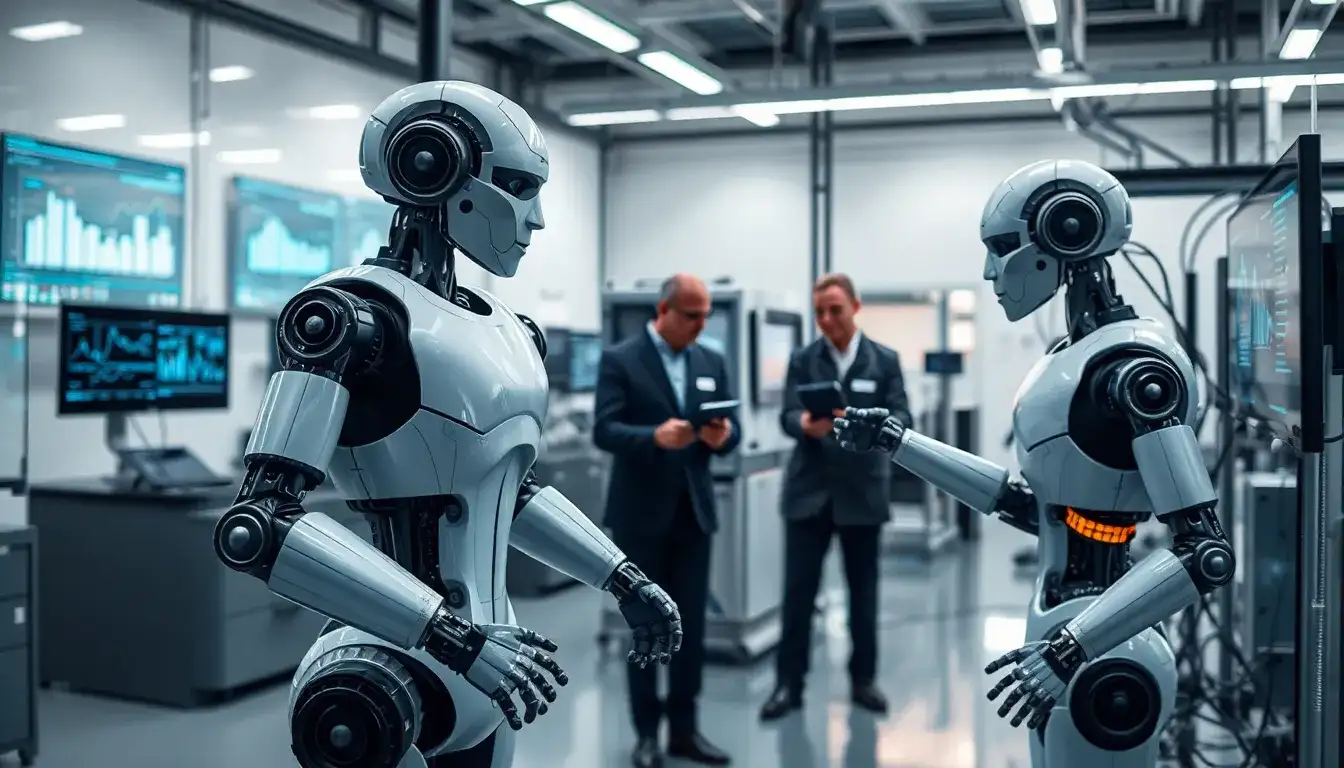
Quality Assurance for Future Intelligent Manufacturing— The Rise of Robots in Production Quality and High-Quality Development
On March 24, 2026, a national conference titled “Quality Assurance and the Health of Intelligent Manufacturing” was held to promote the standardization of robot inspections and certifications in the manufacturing sector. Attendees included representatives from the Ministry of Industry and Information Technology, as well as high-ranking experts from various technical fields.
According to participants, the future of intelligent machines is tied to their adaptability and efficiency in production, focusing on individual service capabilities. This includes addressing the key issues that arise in service provision and ensuring that robots meet evolving quality standards.
As intelligent robots are increasingly recognized by the government as a driving force in technological innovation, they are poised to become essential in various sectors, particularly manufacturing. However, specific challenges remain, such as reliability under extreme conditions and service adaptability, particularly in high-demand environments.
Current trends indicate that intelligent robots are experiencing rapid development, with a projection that by 2050, the market for such machines will reach $25 billion. China has maintained its status as the largest market for industrial robots for 13 consecutive years, with expectations of reaching 30.2 billion units by 2024, representing an increase of over 50% in market share.
The three key categories of robots currently being developed are: 1) Industrial robots, transitioning from “secondary products” to “primary products,” which will gradually take on more autonomous functions; 2) Medical robots, which are expected to streamline healthcare services; and 3) Service robots, designed to assist in various sectors including elderly care and hospitality.
As the demand for robots grows, it is essential that manufacturers pay attention to the training and operational efficiency of these machines. A robust system for performance testing and quality assurance is crucial to ensure that robots can operate effectively in diverse environments.
Furthermore, improvements in design, component quality, and maintenance protocols will be necessary to enhance the reliability and performance of robots in real-world applications. The push towards automation and intelligent systems is a reflection of the increasing complexities in production and service provision, which require a higher level of integration and responsiveness.
In summary, the future of intelligent manufacturing lies in the successful integration of advanced robotics and quality assurance systems, which will provide enhanced capabilities and reliability in production processes.
Original article by NenPower, If reposted, please credit the source: https://nenpower.com/blog/quality-assurance-and-development-trends-in-ai-insights-into-the-future-of-robotics/

