

Promoting Low-Carbon Transformation in Industrial Energy Use: How to Advance Green Microgrid Construction?
On January 16, 2026, the Ministry of Industry and Information Technology, along with four other departments, jointly released the “Guidelines for the Construction and Application of Industrial Green Microgrids (2026-2030)”. This initiative aims to transform industrial enterprises and parks from mere energy “consumers” into integrated “producers-consumers” that manage energy production, consumption, storage, and trading, thus facilitating energy conservation and carbon reduction in key industrial sectors.
As a major industrial nation, China’s industrial sector has long held a predominant position in the overall energy consumption structure. It is characterized by significant energy consumption and a heavy reliance on specific energy sources. By 2024, industrial electricity consumption is expected to account for over 60% of the total electricity consumption in society. The establishment of industrial green microgrids is seen as a crucial strategy for reducing carbon emissions and achieving green low-carbon development.
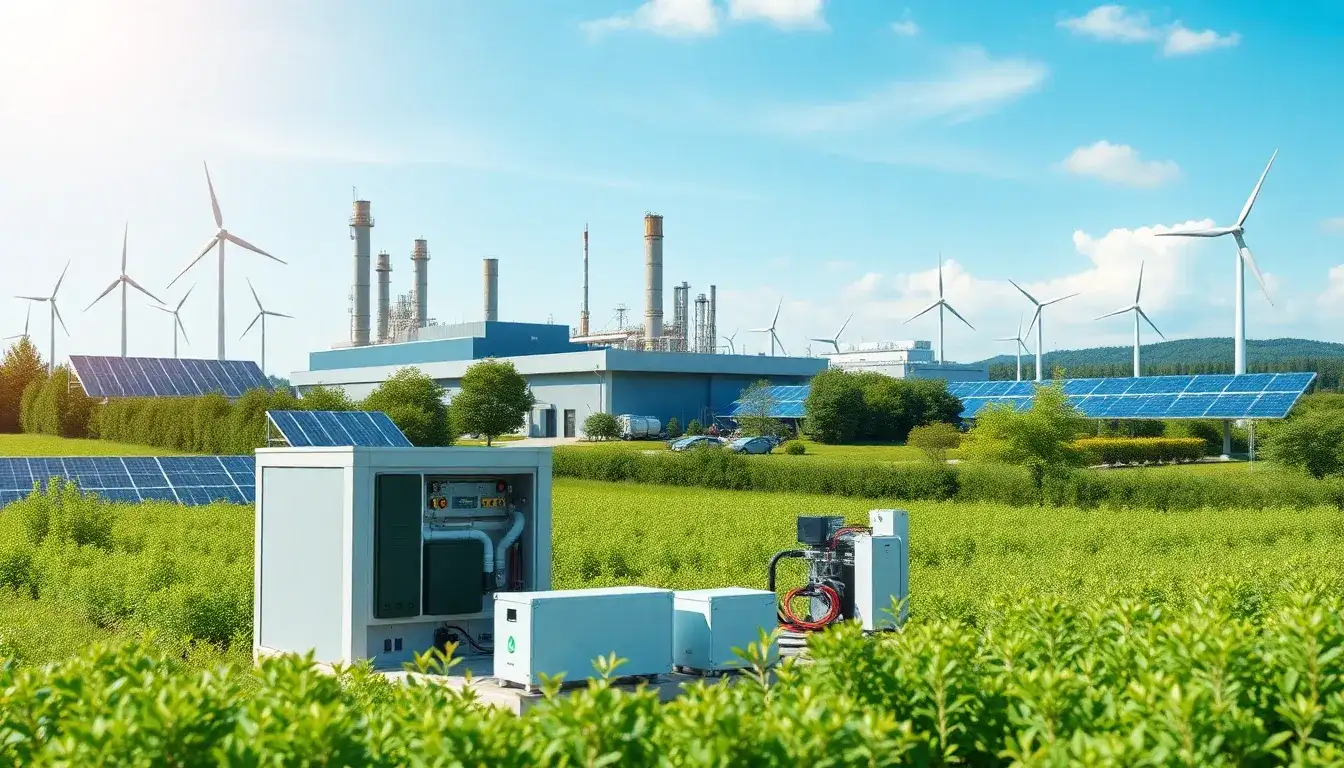
What exactly is an industrial green microgrid? It functions like a small green energy system within factories and industrial parks, capable of generating green electricity, storing energy, and interacting collaboratively with the larger power grid. According to Liu Yongdong, Deputy Secretary-General of the China Electricity Council, “Industrial green microgrids can significantly enhance the system’s source-load matching capabilities, the local consumption of clean energy, and operational resilience, thereby strengthening energy security and market competitiveness for enterprises.”
At the Borui Power Plant in Changzhou, Jiangsu Province, a 90,000 square meter rooftop is covered with photovoltaic panels, while eight integrated energy storage units operate in an orderly manner. The energy management center displays real-time updates on electricity generation and load curves. This intelligent microgrid generates an average of 25,000 kWh of photovoltaic energy daily, and by employing a “valley-fill peak-shave” strategy, it saves 5,000 yuan in electricity costs each month.
Green microgrids are rapidly integrating into the fabric of industrial transformation and development. Currently, over 300 industrial green microgrid projects are operational nationwide, with continuous breakthroughs in related technologies and equipment. However, the overall development is still in the pilot and demonstration phase, facing challenges such as technical standards, market mechanisms, and integration with larger power grids.
The guidelines outline a series of deployments regarding construction principles, main content, construction models, application scenarios, and requirements, providing a clear roadmap for the development of industrial green microgrids over the next five years.
Focusing on facility systems will strengthen the foundation for the development of industrial green microgrids. The guidelines specify that “the proportion of self-consumed renewable energy generation should not be less than 60% annually,” and emphasize the utilization of by-products such as coke oven gas, blast furnace gas, and residual heat from the steel industry. They also advocate for the orderly construction of integrated “hydrogen production + hydrogen utilization” projects in areas rich in wind and solar energy.
New energy storage solutions are essential for enabling time-space energy transfer and power support in industrial green microgrids. Wang Chengshan, an academician at the Chinese Academy of Engineering and professor at Tianjin University, states that the guidelines propose a precise approach to “configure according to functional requirements,” allowing for the selection of appropriate storage methods based on the varying needs of renewable energy consumption. This encourages innovation in new technologies such as sodium-ion batteries and thermal energy storage, guiding diversified development in energy storage.
Digitalization is a critical technological pathway for carbon management systems in industrial green microgrids. Many existing energy management platforms have limited functionality and lack capabilities for intelligent forecasting, optimized scheduling, and carbon management. Industry experts believe that the guidelines call for the application of advanced technologies, including artificial intelligence, big data, and the industrial internet, to enhance energy efficiency optimization, carbon management, and load management functions. This will provide platform support for industrial enterprises and parks to achieve zero carbon emissions and improve environmental benefits. Additionally, establishing a unified interface with grid scheduling platforms will ensure real-time information sharing, laying the groundwork for deep participation of industrial users in grid interactions.
To stimulate diverse investment dynamics, the guidelines propose innovative construction models. Given the significant investment and technical complexity of industrial green microgrids, a single model is inadequate for addressing the needs of all enterprises. The guidelines introduce two models: self-funded and built by the enterprises or parks, and third-party co-construction with service providers through contractual energy management. According to Liu Yongdong, these models cater to the operational characteristics of different entities, potentially accelerating the dissemination of industrial green microgrid technologies.
Furthermore, the revenue models for participating in the electricity market remain relatively singular for current industrial green microgrids. The guidelines suggest exploring the participation of industrial green microgrids as new business entities in electricity market transactions to enhance operational economic benefits. Liu Yongdong believes that adhering to a market-driven approach will facilitate the transition of industrial green microgrids from being “energy consumers” to “resource providers,” actively expanding diverse revenue channels and shortening investment recovery periods.
The guidelines represent a comprehensive and practical directive in the field of industrial green microgrids in China. They serve not only as a technical guide but also as an industrial policy aimed at guiding investments, stimulating vitality, and cultivating new productive forces. Wang Chengshan asserts that the implementation of these guidelines will help accelerate the low-carbon transformation of China’s industry, enhance green competitiveness, and support the construction of a new power system and the achievement of carbon neutrality goals.
Original article by NenPower, If reposted, please credit the source: https://nenpower.com/blog/promoting-low-carbon-energy-transition-in-industry-the-role-of-green-microgrid-development/

