

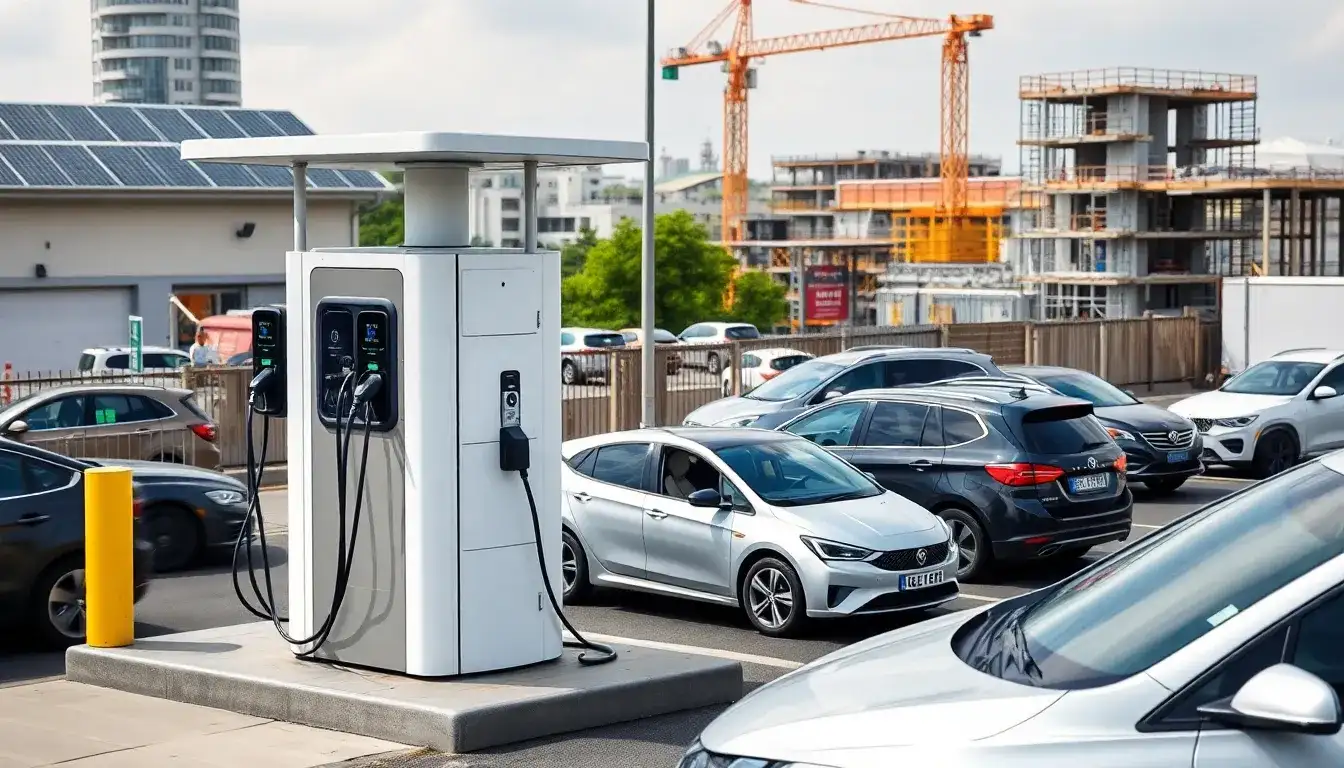
Is the “Open Energy” technology progressing? Compared to the past, how does the supply of electric vehicles stack up?
On June 1, 2025, at 15:24, the New Wave Finance APP reported that the electric vehicle industry continues to evolve, yet some issues remain unresolved. The electric vehicle technology is advancing, but challenges persist in terms of infrastructure and supply chain.
The company Huaneng (300750.SZ/03750.HK) has significantly increased the deployment of charging stations this year, with a goal of building 1,000 stations annually and 10,000 in the long term. On the other hand, BYD (002594.SZ/01211.HK) has adopted a strategy to enhance electric vehicle charging speeds and infrastructure development.
In March, BYD launched its “Open Energy” system, promoting the use of charging stations equipped with a “5-minute charging” capability, designed to alleviate user concerns regarding charging times. Under this initiative, BYD aims to establish a set of standardized charging solutions.
According to recent reports, BYD’s charging stations are equipped with advanced technology, including a 1500V carbon-neutral charging solution. These stations are designed with high efficiency and can output up to 1,360kW, which can also help alleviate pressure on the electrical grid.
However, the deployment of BYD’s charging stations has faced challenges, particularly in achieving the intended charging speeds. There is still a significant amount of work to be done in order to meet these speed targets, as the industry is experiencing rapid development.
In addition, BYD’s recent collaboration with various electric vehicle manufacturers aims to expand its charging network. On May 31, at the launch event for the “Open Energy” system, BYD announced that it plans to build 10,000 charging stations and collaborate with new energy companies to establish 5,000 additional stations.
As of now, BYD has collaborated with over 8,400 companies, serving approximately 34 million users, while 90% of the new energy charging stations are operational, contributing to the establishment of over 400 additional charging points.
The latest partnership aims to expedite the construction of charging stations, which is crucial for the growth of the electric vehicle market. The goal is to build 19,000 charging stations in the near future. This will facilitate a smoother transition for users and enhance the overall efficiency of electric vehicle charging.
In summary, the development of “Open Energy” technology is on the rise, with significant advancements in electric vehicle infrastructure. However, challenges remain, particularly in achieving the desired efficiency and speed of charging stations. The industry is expected to continue evolving with new partnerships and technological innovations.
Original article by NenPower, If reposted, please credit the source: https://nenpower.com/blog/progress-and-challenges-in-electric-vehicle-charging-infrastructure-development/

