

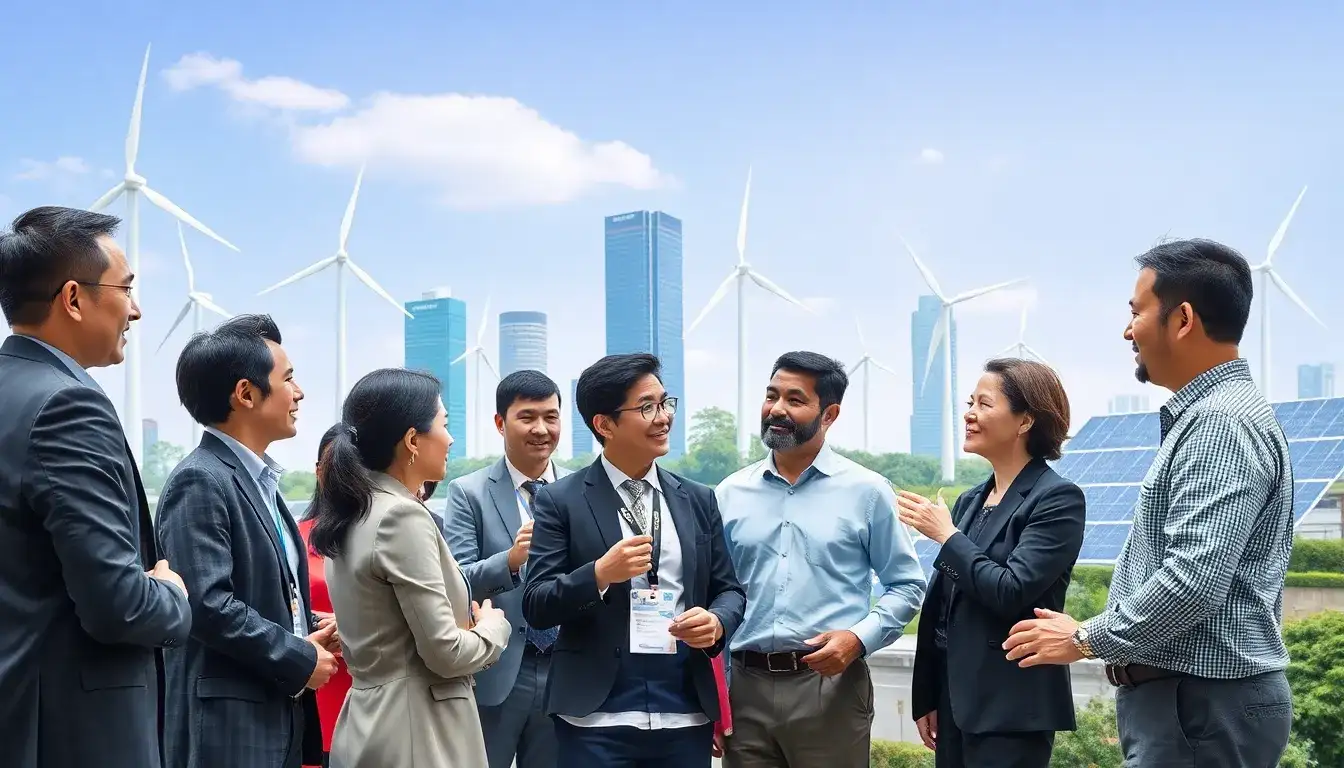
China’s Economic Outlook for the First Quarter | Breaking Down Barriers to Entry, Private Enterprises Accelerate Their Expansion in the Energy Sector
BEIJING, April 21 (Xinhua) — Title: Breaking Down Barriers to Entry, Private Enterprises Accelerate Their Expansion in the Energy Sector.
Energy is the lifeblood of the national economy. In the first quarter of 2025, guided by the “dual carbon” goals and a new energy security strategy, China has effectively ensured energy supply while continuously optimizing its industrial structure. Investigations reveal that under the wave of transformation and upgrading in the national energy sector, an increasing number of private enterprises are adopting greener practices and rapidly expanding their presence in the energy field, thus creating new development opportunities.
In March, in Daye, Hubei, the ±800 kV ultra-high voltage converter transformer developed by TBEA Group was successfully installed at the Daye converter station to support the implementation of the “West-to-East Power Transmission” strategy. Meanwhile, on the coast of the Yellow Sea, China’s first “carbon-neutral” offshore megawatt wind turbine—equipped with the world’s first fully integrated drive chain developed in-house by Envision Energy—was officially launched in Jiangsu. Further north, on the grasslands of Inner Mongolia, Edman Hydrogen Energy’s grid-side energy storage project has also broken ground.
This year, from the construction of ultra-high voltage backbone networks to the manufacturing of new energy equipment, more private enterprises are deeply involved in building a new energy system, making continuous efforts in key areas such as power transmission, clean energy generation, and flexible peak-shaving.
“We will continue to promote fair access to competitive sectors of infrastructure for all types of operational entities.” This was one of the positive signals released during a meeting of private enterprises held in February, aimed at breaking market entry barriers and fostering the development of the private economy. Zhang Xing, spokesperson for the National Energy Administration, stated that this year, China will intensify support for capable private enterprises to participate in oil and gas exploration and development, as well as electricity facility construction, encouraging investment in new technologies and business models such as new energy storage and smart microgrids.
The shift from “high thresholds” to “broad access” is continuously igniting new vitality within private enterprises. In the nuclear power sector, since 2020, private companies like Geely Group and Wanxiang Group have participated in project investments through shareholding. According to the National Energy Administration, the five newly approved nuclear power projects in August 2024 will require a total investment of approximately 245.5 billion yuan, with a 10% investment ratio allocated for private enterprises.
Private enterprises such as Shentong Valves and Shangshang Cables from Jiangsu, Jiuli Special Materials and Ningbo Tiensheng from Zhejiang, and Fangda Carbon from Gansu are thriving as China’s nuclear power equipment manufacturing industry moves towards higher-end production. These enterprises focus on niche sectors such as nuclear-grade valves, pipes, cables, seals, and graphite materials, overcoming several critical technologies, thus complementing the strengths of large state-owned enterprises focused on main equipment, and becoming an important part of China’s nuclear power industrial chain.
This development is driven by the synergy of policy guidance and market mechanisms. Zhang Xing indicated that the National Energy Administration and other departments have established demonstration lists for first-of-a-kind equipment and major science and technology projects, guiding private enterprises to invest 5% to 8% of their revenue into core technology research. Additionally, through mechanisms such as “soliciting bids” and “competitive races,” collaborative platforms for production, education, and research have been established, reducing the average technology development cycle by 18 months and increasing the patent conversion rate by nearly 40% compared to three years ago. The construction of an innovation ecosystem is propelling the rapid growth of China’s energy industry.
Envision Energy has become the world’s first wind turbine manufacturer to develop and mass-produce sliding bearings, with 500 units operating without failure, significantly supporting the large-scale development of wind turbines. Ruilin Hydrogen Energy’s self-developed super alkaline water electrolysis hydrogen production equipment is the first successful demonstration of alkaline off-grid hydrogen production in the country and has received EU certification. Hydrogen Energy’s corrosion-resistant electrolyzer technology has extended the lifespan of seawater hydrogen production equipment to over 30,000 hours, establishing a technological foundation for the world’s first 200MW offshore hydrogen energy platform.
These technological breakthroughs from private enterprises not only fill domestic gaps but also promote China’s participation in the formulation of international energy technology standards. Currently, the openness of the energy sector is deepening, creating a favorable environment and ample space for private enterprises to engage in energy project development and construction. According to the latest data from the National Energy Administration, about 60% of wind turbine manufacturing companies are private, while the majority of photovoltaic equipment manufacturing companies are also private. In the solar power sector, leading companies like CATL, Sungrow Power Supply, Dalian Rongke, and China Storage Energy have emerged in various new energy storage technology routes, collectively advancing the progress of China’s new energy storage technology industry.
As of now, there are over 2,400 private power trading companies in China, accounting for nearly 60% of the total number of power trading companies. Approximately 600,000 retail users purchase electricity through the retail market, achieving a retail trading volume of 3.6 trillion kilowatt-hours last year, which represents 58% of market-based trading volume. Furthermore, independent energy storage, virtual power plants, and charging operators are thriving, and new models and enterprises with diverse interactions are continuously emerging.
Recently, Shanghai has released 26 work measures across six aspects to promote high-quality development of the private economy, including clearly issuing support policies for power system adjustment capabilities and encouraging private enterprises to enter fields such as virtual power plants, vehicle-to-grid interactions, and new energy storage. Currently, there are over 10,000 various charging operators in China, with private enterprises accounting for over 80% among those operating more than 10,000 charging facilities. The four largest operators—Telai Electric, Star Charging, Yun Kuai Charging, and Xiaoju Charging—are all private enterprises, collectively holding over 50% of the market share.
From desert photovoltaics to deep-sea wind power, from hydrogen-powered heavy-duty trucks to large-scale nuclear projects, an increasing number of private enterprises are leveraging their technological advantages and market sensitivity to become indispensable forces in building the national new energy system, moving towards a brighter future in embracing green development.
Original article by NenPower, If reposted, please credit the source: https://nenpower.com/blog/private-enterprises-accelerate-entry-into-chinas-energy-sector-amid-easing-market-barriers/

