

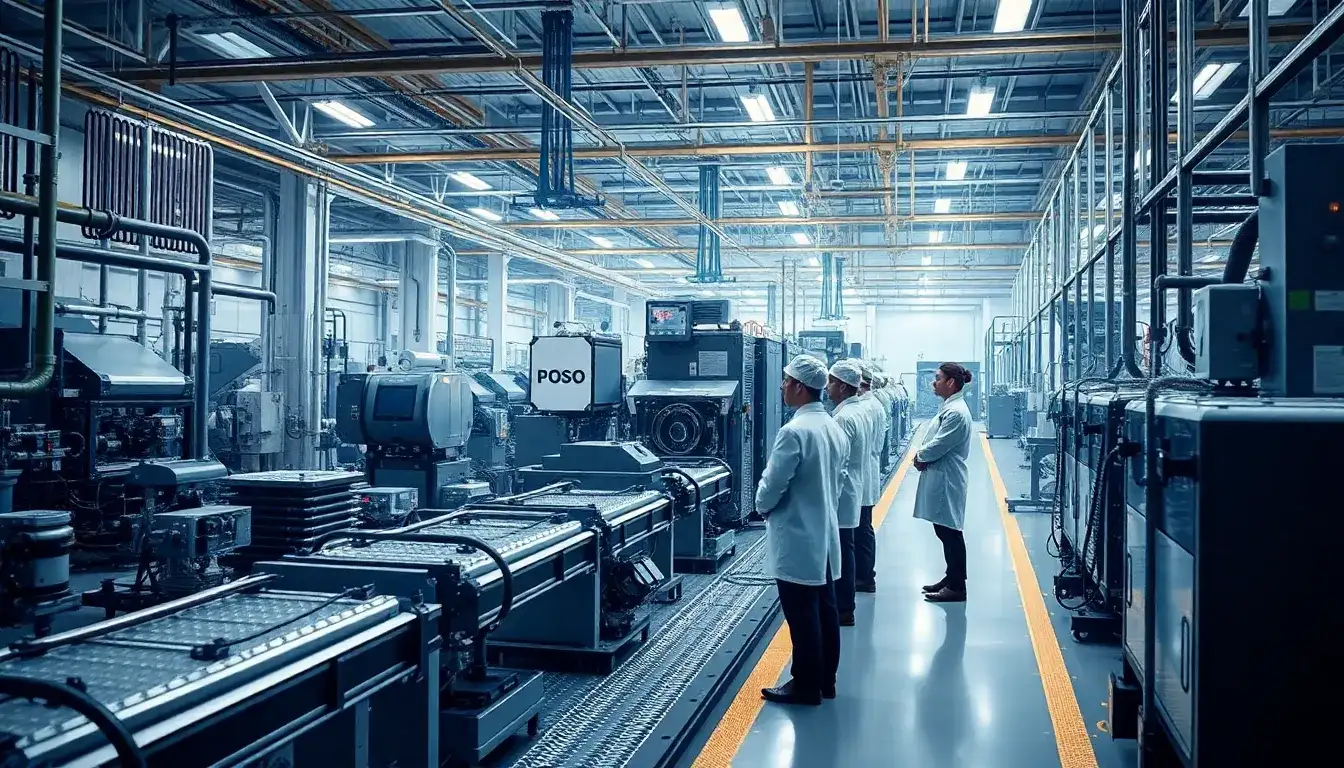
POSCO Future M to Challenge Dominance with LMR Cathode Materials
POSCO Future M is set to revolutionize the lithium-ion battery landscape with plans to commence mass production of lithium- and manganese-rich (LMR) cathode materials this year. This initiative aims to enhance both price competitiveness and safety, positioning the company to compete effectively against the current leaders in the market.
During a Q&A session at InterBattery 2025, held at COEX in Gangnam, Seoul, Hong Young-jun, Vice President and Head of Technology Research at POSCO Future M, emphasized the company’s strategy. “It’s not easy to rival large-scale Chinese cathode material companies,” he noted, “so we are focusing on developing new LMR cathode materials. We expect to finalize customer agreements and start mass production this year, with demand anticipated to surge in 2-3 years.”
LMR cathode materials are designed to minimize the amounts of nickel and cobalt while increasing manganese content compared to conventional lithium iron phosphate (LFP) materials. Traditional LFP materials typically contain 65% nickel; in contrast, LMR materials consist of 65% manganese and only 30-35% nickel. This shift in composition leads to enhanced stability and a reduced risk of thermal runaway, a significant safety concern associated with higher nickel content.
Moreover, the price competitiveness of LMR materials is noteworthy. In recycling LFP materials, only about 2% of lithium can be recovered, rendering the process unprofitable. In contrast, LMR materials contain approximately 8% lithium, which allows for production at a comparable or even lower cost when linked to recycling. Furthermore, the reduced nickel content decreases the need for expensive thermal runaway prevention devices.
POSCO Future M has also laid out plans concerning anode materials and solid-state batteries. With China currently dominating 95% of the natural graphite market, the company is working to establish a stable supply chain for artificial graphite. Hong explained, “We are developing technology to produce artificial graphite from raw materials available in various countries, which we expect will take about two years. Our goal is to cut costs by up to 50% through innovative processes that enable continuous extraction of artificial graphite.”
Regarding solid-state battery commercialization, Hong stated, “We are preparing for mass production by 2027, with a target of securing a 2% market share to establish a foothold. We anticipate achieving this by around 2032, five years from now.”
From March 5-7, POSCO Future M is showcasing these advancements at InterBattery 2025, along with the POSCO Group’s roadmap for new cathode and anode technologies. The company is introducing “Ultra High-Nickel Single Crystal Cathode Materials,” which enhance energy density by increasing nickel content to over 95%. This material is particularly suited for premium electric vehicles that require extended range, and POSCO Future M aims to secure mass production capabilities by 2026.
Additionally, the company is presenting low-expansion natural graphite anode materials that improve charging speed. This innovation accelerates lithium ion movement and reduces volume expansion, shortening charging time by 30% compared to existing products, with mass production targeted for 2027.
POSCO International, an affiliate of the group, is also highlighting its strategy for developing a supply chain for driving motor cores and graphite, essential components for electric vehicles. The company is expanding its eco-friendly vehicle parts business, aiming to create a global production system capable of producing 7.5 million units annually and capturing a 10% market share by 2030. It operates both domestic and international production bases, with a new plant expected to be completed in Poland this year.
In previous developments, POSCO International secured a raw material supply chain by signing a 25-year long-term supply contract for natural graphite with Tanzania’s Faru Graphite, a subsidiary of Australian mining company Black Rock Mining, in May 2023 and September 2024. The company is also involved in the overall value chain by showcasing steel products for electric vehicles, including battery packs and cylindrical battery can materials.
Original article by NenPower, If reposted, please credit the source: https://nenpower.com/blog/posco-future-m-set-to-compete-with-china-in-lmr-cathode-materials-production/

