

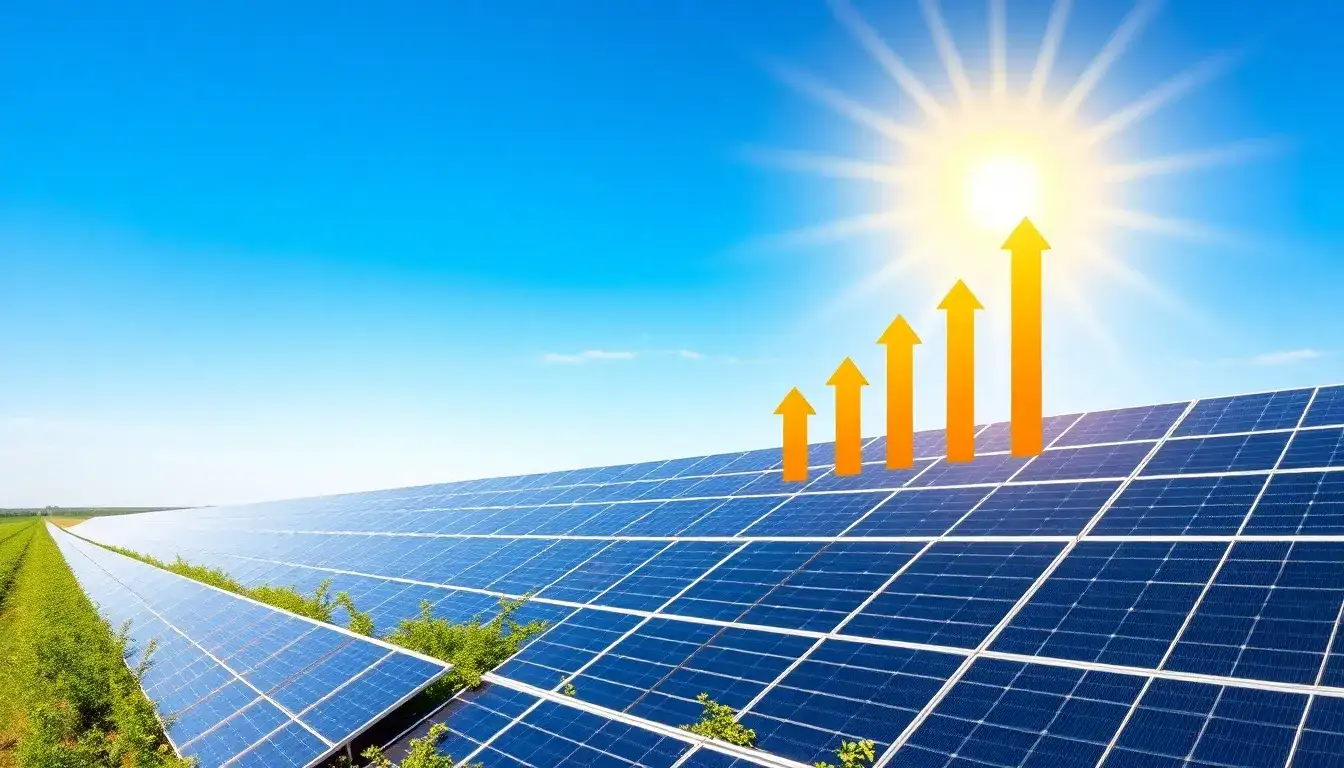
Photovoltaics Drive Growth! Global Renewable Energy Capacity to Increase by 4600 GW by 2030
According to the latest report titled “Renewable Energy 2025” from the International Energy Agency (IEA), it is projected that by 2030, the global renewable energy capacity will increase by 4600 gigawatts (GW). This amount is roughly equivalent to the current total power generation capacity of China, the European Union, and Japan combined, leading to a doubling of global renewable energy generation.
Photovoltaics Lead the Way, with Multi-Energy Development
In the next five years, photovoltaic (PV) power generation is expected to dominate the growth of global renewable energy, driven by its cost advantages and faster approval processes. PV is anticipated to account for approximately 80% of the increase in global renewable energy capacity. Wind energy follows as the second-largest contributor; despite facing short-term challenges, it is expected to expand significantly as supply bottlenecks ease and projects advance.
Hydropower, biomass, and geothermal energy will also continue to play significant roles. Geothermal installations are projected to reach historic highs in the United States, Japan, Indonesia, and several emerging and developing economies. The increasing challenges of integrating renewable energy into the grid have reignited the demand for pumped storage hydropower, which is expected to grow nearly 80% faster in the next five years compared to the previous five years.
Market Diversification: Emerging Countries Become New Growth Drivers
In emerging nations across Asia, the Middle East, and Africa, low costs and policy support are accelerating the growth of renewable energy. More countries are launching new bidding programs to enhance their development targets. India is poised to become the second-largest renewable energy market globally, following China, and is expected to easily meet its 2030 development goals.
At the same time, renewable energy growth expectations in the United States have been downgraded by nearly 50% due to policy changes, such as the early cancellation of tax incentives. In China, the mechanism for electricity pricing has affected project returns, resulting in a decline in growth forecasts. Conversely, India, Europe, and many emerging nations are experiencing robust growth, buoyed by new policy implementations, increased capacity, and expedited permitting processes.
Strong Corporate Confidence Amid Supply Chain and Grid Challenges
Confidence in renewable energy remains strong among businesses, with most developers maintaining or raising their deployment targets for 2030. Power purchase agreements, utility contracts, and commercial power stations are becoming significant growth drivers, expected to account for 30% of global renewable energy capacity expansion by 2030, doubling from last year’s forecast.
However, challenges regarding supply chain security and grid integration persist. The global supply chain for rare earth elements used in PV and wind turbines is still heavily concentrated in China. Although countries are pushing for diversified supply chain investments, it is expected that by 2030, over 90% of critical production will remain concentrated in China. As renewable energy rapidly rises, the pressure on power systems continues to grow, with instances of negative electricity prices occurring, indicating a significant increase in demand for grid, storage, and flexible generation solutions. Some countries are already using new capacity and storage tenders to alleviate grid pressure, but more work is needed.
Renewable Energy’s Steady Penetration in Transport and Heating Sectors
In the coming years, the role of renewable energy in the transport and heating sectors is expected to increase slightly. In transportation, the share of energy usage is projected to rise from the current 4% to 6% by 2030, largely supported by renewable electricity for electric vehicles in China and Europe. Additionally, biofuels are expected to see growth in markets such as Brazil, Indonesia, and India. In the heating sector, the share of renewable energy in global building and industrial thermal energy supply is expected to increase from 14% to 18%.
Original article by NenPower, If reposted, please credit the source: https://nenpower.com/blog/photovoltaics-drive-growth-global-renewable-energy-capacity-set-to-increase-by-4600-gw-by-2030/

