

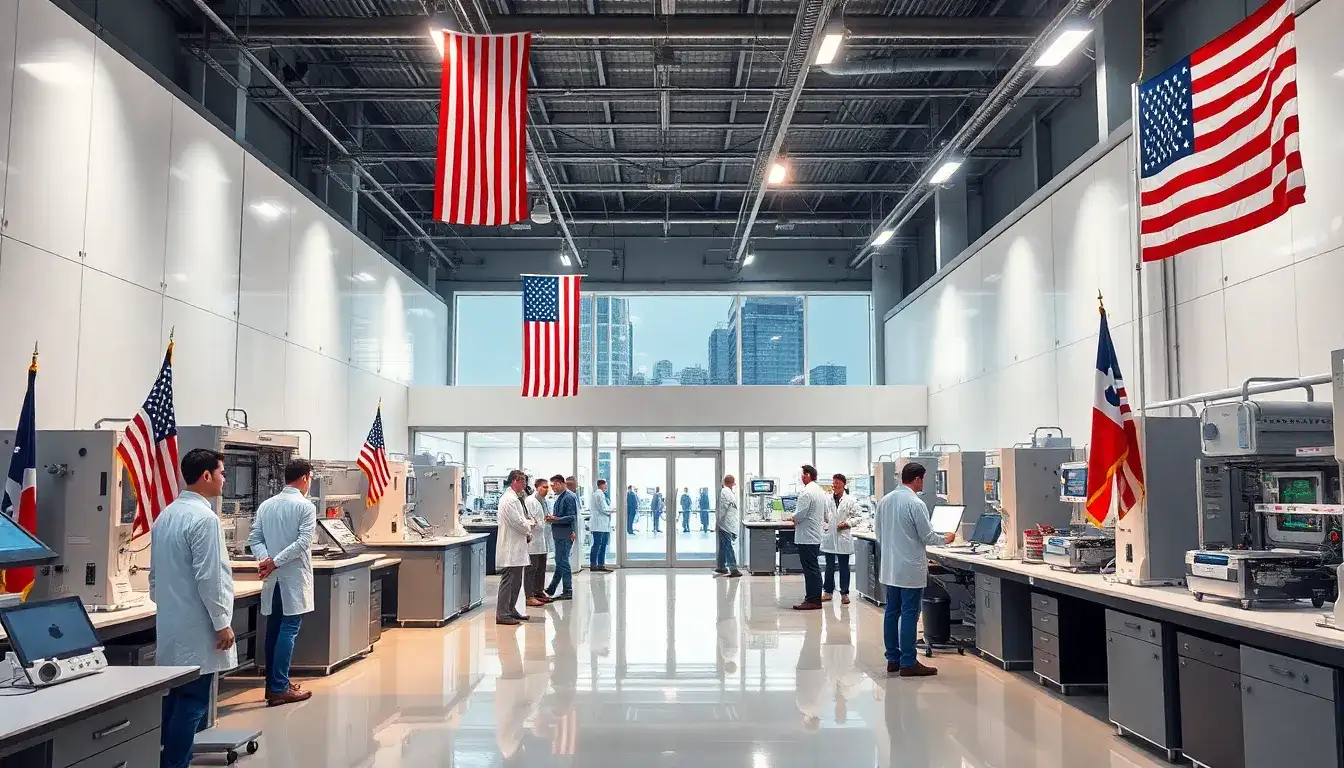
The University of Texas at Dallas has recently unveiled its new facility, the Batteries and Energy to Advance Commercialization and National Security (BEACONS), which is supported by a $30 million grant from the U.S. Department of Defense. The primary goal of this facility is to facilitate the commercialization of innovative battery technologies, enhance the resilience of the lithium-ion battery supply chain, and strengthen the domestic battery workforce.
Kyeongjae Cho, the director of BEACONS, emphasized the importance of achieving supply chain independence, stating, “We want to have that supply chain resilience and independence.” He explained that this facility aims to ensure that if there were to be disruptions in access to critical minerals, especially from foreign sources, the domestic battery supply, particularly for defense applications, would remain unaffected.
The Department of Defense (DOD) plays a significant role in driving battery demand, as its operations often rely on energy-intensive technologies in the field. However, the DOD’s battery supply chain is anticipated to undergo a contraction following the 2024 National Defense Authorization Act, which will restrict the procurement of batteries from certain Chinese-owned companies starting in October 2027. These companies include well-known manufacturers such as Contemporary Amperex Technology, BYD, Envision Energy, EVE Energy Company, Gotion High-tech, and Hithium Energy Storage. Current data indicates that China holds a dominant position in the production of active materials for lithium batteries.
Cho noted that historically, many defense applications have depended on batteries sourced from Chinese manufacturers, leading to a reliance on their supply. He stressed the necessity of reducing this dependence to avoid potential vulnerabilities in defense operations.
The BEACONS facility will prioritize the advancement of solid-state battery technology, which is increasingly utilized in drones and defense applications, compared to alternative battery types like sodium-ion and zinc-ion. The facility features a specialized 3,500-square-foot “dry room” that maintains humidity levels below 1% to protect sensitive materials during battery manufacturing. Additionally, it includes a solid electrolyte room, various flexible production lines to expedite the development and testing of new battery technologies, and dedicated workspaces for training and collaboration with industry partners.
To further reduce reliance on foreign sources, the facility is focusing on establishing transparency in the critical mineral supply chain. Cho explained, “We need to diagnose the issues before trying to address them,” indicating that the facility is advancing its efforts to identify the flow of different minerals through various stages of production. The ultimate goal is to create an independent supply chain for critical minerals that does not rely on foreign entities.
This initiative may involve partnerships with battery cathode manufacturers in allied countries like Canada and South Korea, as it is unlikely that the United States will quickly ramp up its own cathode development. Furthermore, the facility aims to enhance the domestic workforce by collaborating with community colleges in North Texas to ensure that the local battery industry can access a skilled labor pool.
Cho remarked, “To run any production line you typically need community college graduates, who tend to stay close to home.” This observation highlights the necessity for companies to cultivate a local workforce to meet their operational needs effectively.
Original article by NenPower, If reposted, please credit the source: https://nenpower.com/blog/pentagon-supported-battery-innovation-center-launches-at-ut-dallas-to-strengthen-domestic-supply-chain/

