

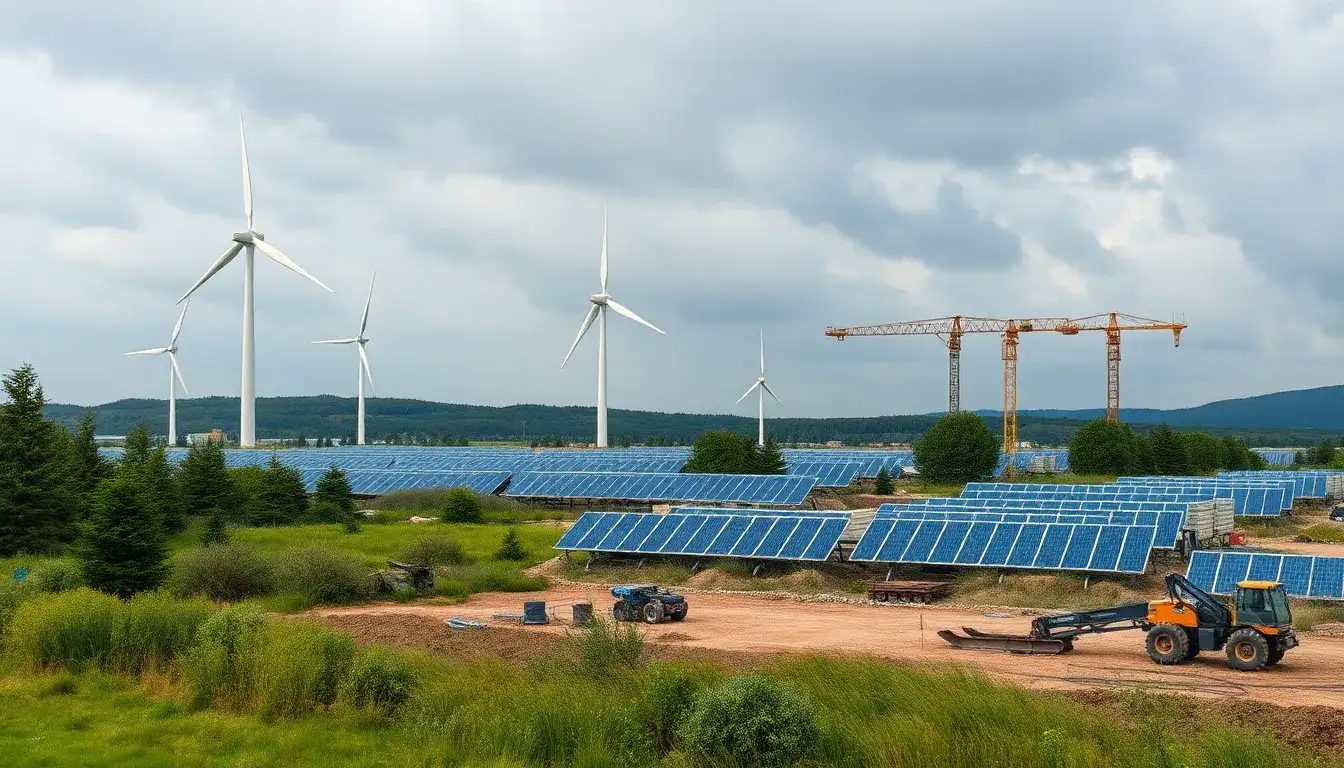
Over 90 GW of Wind and Solar Projects Abandoned: What Has Caused the Shift in New Energy Project Development?
Since the second half of 2024, state-owned enterprises have quietly begun selling off photovoltaic power stations. As we enter 2025, there has been a wave of project cancellations across various regions in the new energy sector. On May 12, the Shanxi Provincial Energy Bureau announced the first batch of wind and solar projects to be terminated in 2025, including 14 projects such as the integrated power generation project in Wangjiaya Village, Taichidian Township, which together have a total capacity of 591.947 MW. This comprises 10 photovoltaic projects with a total capacity of 487.95 MW, and 4 wind power projects with a total capacity of 104 MW. The main stakeholders involved are state-owned enterprises like Jinneng Holding Group, State Power Investment Corporation, and Datang Group.
This cancellation of projects is just the latest instance in a larger trend that has been observed throughout the year. Reports indicate that as of now, multiple regions including Fujian, Shaanxi, Inner Mongolia, Ningxia, and Shanxi have released lists of abandoned new energy projects, with the total installed capacity of these projects exceeding 50 GW.
So, what has triggered this surge in the cancellation of wind and solar projects? And what does the future hold for project development in this sector?
Rising Wave of Cancellations
The current wave of cancellations began in the southeastern coastal province of Fujian. On February 20, the Fujian Development and Reform Commission announced the termination of 10 photovoltaic projects, totaling approximately 1.143 GW, all of which were surface water photovoltaic projects. On March 8, the Ningxia Hui Autonomous Region Development and Reform Commission also issued a notice to clean up and terminate new energy projects that lack construction conditions. A month later, the Wuzhong City Development and Reform Commission in Ningxia announced the cancellation of four projects, totaling 117.3 MW, including two wind projects and two solar projects, with the solar projects accounting for 100 MW of the total.
On April 21, the Xianyang Development and Reform Commission in Shaanxi published a notice regarding the cancellation of certain guaranteed grid-connection projects from 2022, including the Datang Changwu 150 MW photovoltaic project and the Datang Yaochi Binzhou 100,000 kW hybrid photovoltaic project, totaling 250 MW. Additionally, from January to April 2025, various cities in Shaanxi have announced the cleanup of guaranteed wind and solar projects from 2021-2023, leading to the termination of a total of 1.83 GW of projects.
In this cancellation wave, Inner Mongolia has seen the largest scale of project terminations. The Inner Mongolia Energy Bureau has announced the cancellation of three batches of market-oriented grid-connected new energy projects, totaling 37 projects with a combined capacity of 1,265.293 MW. This includes 12 hydrogen production projects, 7 self-consumption projects, and 14 industrial park green power supply projects, among others.
The wave of cancellations has also affected the procurement stage for photovoltaic components. On April 9, China Power Construction Group announced the termination of its centralized procurement project for photovoltaic components for 2025, which was initially set to be 51 GW, the largest procurement plan in history. The company stated that the termination was due to changes in procurement needs caused by policy adjustments.
Increased Caution Among State-Owned Enterprises
This wave of project cancellations is not confined to the aforementioned five provinces. According to incomplete statistics, from 2024 to the present, 15 provinces have announced the cancellation, adjustment, or withdrawal of new energy project quotas, with a total scale exceeding 90 GW. The reasons for these cancellations vary widely, including projects not starting construction, some lacking conditions to continue implementation, delays in grid connection, approvals, and record-keeping, as well as the impact of national land policy adjustments on photovoltaic projects.
A significant factor influencing project cancellations is the willingness of the project owners to proceed. Many of these projects were initially sought after with great effort and received substantial support from local governments, making their cancellation surprising. However, the willingness to develop projects among state-owned enterprises has noticeably declined. Many of the nearly 90 GW of abandoned projects are linked to major state-owned enterprises like the Three Gorges Group, State Power Investment Corporation, Huaneng Group, and others.
The decision to relinquish these projects primarily stems from significant changes in the revenue environment for new energy. This year, investors have inquired about the internal rate of return for investments in photovoltaic power station projects, with many companies stating a minimum required return of 7% on capital. For example, China Power Investment Corporation announced the cancellation of a 40 MW household distributed photovoltaic project due to failing to meet the latest investment return requirements.
Transformations in Policy Environment
The hesitance of state-owned enterprises in investing in new energy stems from recent adjustments in national policies, particularly concerning photovoltaic projects. The recent issuance of the “Management Measures for the Development and Construction of Distributed Photovoltaic Power Generation” and Document No. 136 have had unprecedented impacts on the development of photovoltaic power stations. The new regulations have led to the cancellation of full grid connection for general commercial distributed photovoltaic projects, significantly affecting their viability.
The rationale behind these policy adjustments is to address the over-installation of photovoltaic systems that the power grid cannot fully absorb, leading to restrictions on power generation during peak periods. Reports indicate that more than 10 provinces have experienced difficulties in connecting distributed photovoltaic systems, resulting in power restrictions for over 400 counties in various regions.
In addition to restrictions on distributed systems, there has been an increase in power generation limitations for both centralized and distributed photovoltaic power stations, with reports of several hours of power curtailment during peak times.
The issuance of Document No. 136 has further impacted the new energy sector by abolishing previous guaranteed purchase policies for new energy, replacing them with a mechanism-based pricing structure. As the scale of new energy installations grows, the market’s confidence in the sustainability of these mechanisms remains uncertain.
This caution among investors reflects a shift towards a more rational approach to new energy project investments, with a focus on ensuring that new projects are viable and financially sound. The era of blindly pursuing projects is over, and a more calculated and thoughtful approach is now necessary for the long-term health of the new energy sector.
Original article by NenPower, If reposted, please credit the source: https://nenpower.com/blog/over-90-gw-of-renewable-energy-projects-canceled-whats-behind-the-shift-in-new-energy-development/

