

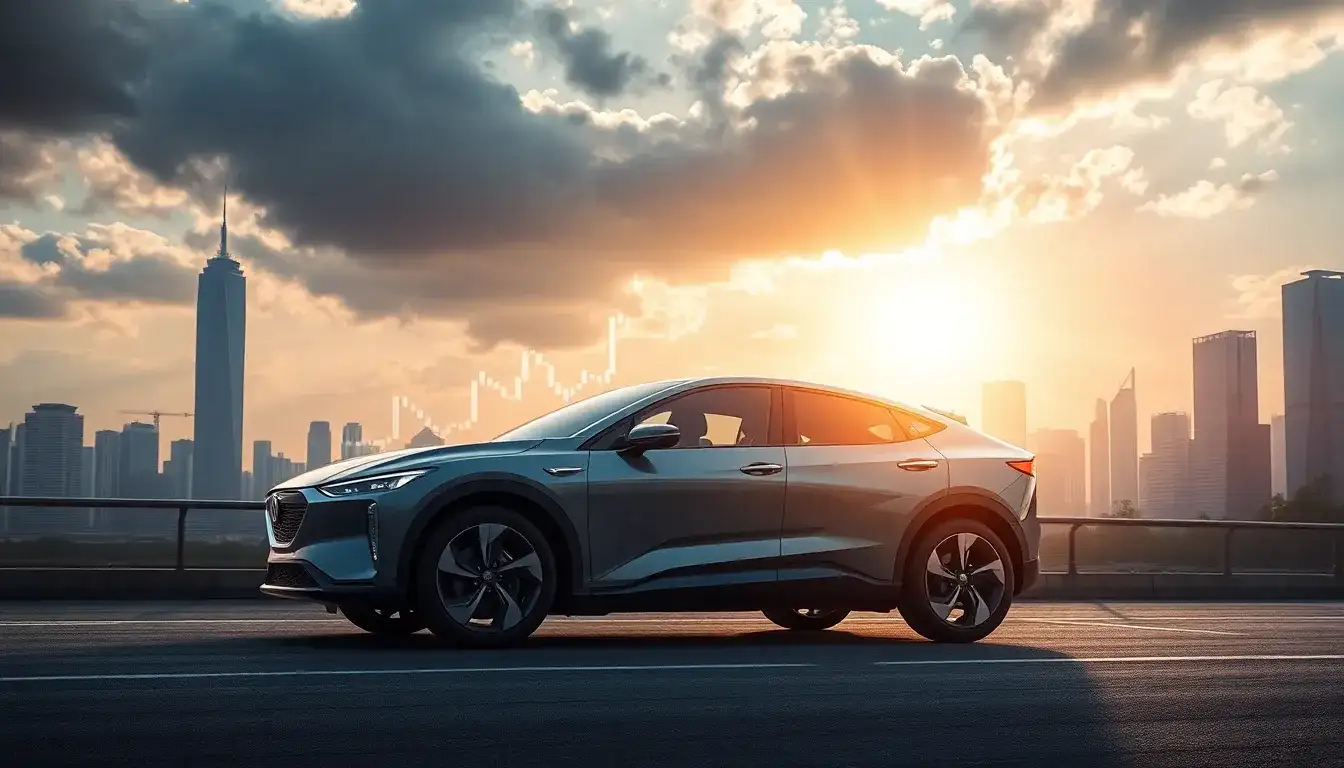
NIO’s Financial Struggles and Ambitious Plans for 2025: A High-Stakes Gamble?
NIO has been facing significant challenges recently. According to financial reports, the company’s losses for the entire year of 2024 expanded to 22.4 billion yuan, averaging a cash burn of over 60 million yuan per day. The capital market has reacted negatively, with stock prices falling below 30 Hong Kong dollars, resulting in a market value drop of over 70%. After 11 years of operation and accumulated losses of 80 billion yuan, the question of how NIO can achieve profitability has become a pressing concern. Despite the skepticism, NIO surprised everyone by delivering impressive results in 2025: monthly deliveries exceeded 30,000 vehicles, the ET9 sold out within 12 hours of its launch, and the company established over 1,000 battery swap stations across various regions. Is this a fleeting moment of success, or is NIO gearing up for a significant breakthrough?
The Struggle Between Sales and Losses: A Do-or-Die Gamble
In 2024, NIO demonstrated its market appeal with a 38.7% increase in sales, delivering 222,000 vehicles throughout the year and capturing over 57% of the high-end electric SUV market. However, behind this glossy exterior lies a harsh reality: the company’s net loss increased by 8.1% compared to the previous year, with a staggering quarterly loss of 7.112 billion yuan in the fourth quarter, far exceeding market expectations. The core issue lies in balancing NIO’s high-end positioning with the benefits of scale. While the pricing strategy above 300,000 yuan has allowed NIO to maintain its lead in the luxury electric market for 23 consecutive months, it has also capped potential sales. In contrast, XPeng, with its MONA M03 starting at 119,800 yuan, achieved monthly deliveries exceeding 15,000 vehicles, easily outpacing NIO.
However, NIO seems to have found a way to break through in 2025. The Le Dao brand achieved monthly deliveries surpassing 10,000 vehicles, and the first model from the Firefly brand commenced deliveries in April, covering a price range from 200,000 to 800,000 yuan. Li Bin, the CEO, has set an ambitious goal: to double sales to 440,000 vehicles in 2025 and achieve quarterly profitability in the fourth quarter. This means NIO needs to average around 47,000 vehicle sales per month over the next eight months—a formidable challenge. However, as of March, NIO had only managed to deliver 42,094 vehicles, achieving less than 10% of its target, and the Le Dao brand delivered only 4,400 vehicles in April, falling significantly short of its 20,000 vehicle monthly goal.
Technological Advantages: In-House Chips and Battery Swap Empire
NIO’s opportunities may lie within its decade-long investment in technology. The company has developed its own chip, the NX9031, which boasts a computing power of 508 TOPS. By replacing the NVIDIA Orin-X solution, NIO has reduced the cost per vehicle by 10,000 yuan. Coupled with the comprehensive operating system SkyOS, NIO has achieved end-to-end intelligent driving from “parking space to parking space,” relying solely on AI models for real-time navigation without the need for map scanning or route memorization. This technological edge allows the ET9 to remain in high demand even when competing with traditional luxury brands.
As of May 2025, NIO has established 3,302 battery swap stations, covering over 1,000 counties, with peak daily swaps reaching 134,000. The collaboration with CATL has enhanced its battery swap network, introducing a dual-network system that caters to high-end models specifically while also accommodating mid-range vehicles. The number of models served by each swap station has expanded from 12 to over 25. This monopolistic infrastructure is becoming NIO’s core competitive advantage against Tesla’s supercharging and BYD’s rapid charging.
NIO’s commitment to long-term battery technology is evident as its laboratory data indicate that its next-generation batteries maintain 85% health after simulating a 15-year usage cycle. Coupled with the BaaS battery leasing model, users no longer bear the risk of battery degradation, reducing the cost of vehicle ownership by over 30%. This “battery bank” business model is reshaping user perceptions of electric vehicle value.
Critical Challenges: Cash Flow and International Expansion
Despite its technological advancements, NIO faces two critical challenges: cash flow issues and international expansion. As of the end of 2024, NIO had cash reserves of 41.9 billion yuan, but its current liabilities amounted to 62.3 billion yuan, with a debt-to-asset ratio of 87%. Although Li Bin has emphasized the “health of cash flow,” the ongoing high R&D investments (13 billion yuan in 2024) and the construction of battery swap stations (each costing over 3 million yuan) are rapidly depleting funds. If the 2025 sales targets are not met, a trust crisis in the capital markets may arise.
As for international expansion, NIO plans to enter 25 countries and regions by 2025, but the localization challenges in the European market are greater than anticipated. The construction of battery swap stations in Germany can take between 10 months to a year, and the Norwegian team has struggled with service system compatibility due to cultural differences. Despite German users averaging 2.3 swaps per week, overseas sales currently account for only 8%, falling short of the 15% target.
Key to Success: The Four Major Battles of 2025
NIO’s ability to turn things around hinges on four critical battlegrounds:
- Sales Challenge: The Le Dao brand must contribute over 200,000 vehicles in sales in 2025, and new models like the L90 need to replicate the success of the L60.
- Cost Control: The 10% reduction in overall vehicle BOM costs in 2024 is just the beginning; the targets for 2025 are even more aggressive. Initiatives like platform-standardized seating structures and unified data interfaces are pushing costs to their limits. If the economies of scale from in-house chips and the battery swap network materialize, gross margins could rise from 12.3% to 20%.
- Battery Swap Alliance: Collaborations with companies such as CATL, Changan, and Geely are building the world’s largest battery swap network. If the “county-wide access” plan is successfully implemented, battery swap stations could transition from proprietary infrastructure to industry-wide resources, potentially transforming the electric vehicle charging landscape.
- Brand Value: NIO’s user community and service system have been key differentiators from Tesla. However, as Le Dao owners do not have access to NIO House services and wait times for battery swaps increase, user loyalty is being tested. Maintaining a high-end perception under a multi-brand strategy is a challenge that Li Bin must address.
Final Thoughts: Industry Insights and Predictions
In 2025, NIO stands at a crossroads after a decade of automotive manufacturing. Optimists see the transformation of technological barriers into product strength, a fortified battery swap network, and a multi-brand strategy covering all price segments, with policy support paving the way for the battery swap model. If sales targets are met and gross margins reach 20%, NIO could achieve profitability in the fourth quarter, ushering in a new era of sustainable growth.
Conversely, pessimists point to ongoing cash flow pressures, slow international progress, and the competitive threats posed by rivals like BYD and Huawei. If sales fall short of expectations, capital markets may lose patience, trapping NIO in a vicious cycle of escalating losses. The outcome of this high-stakes gamble may be revealed in the fourth quarter of 2025. Regardless of the result, NIO’s journey offers valuable lessons for the Chinese electric vehicle industry: long-term investment in technological research, bold innovations in business models, and an unwavering pursuit of user experience will ultimately drive industry advancement.
Original article by NenPower, If reposted, please credit the source: https://nenpower.com/blog/nios-high-stakes-gamble-for-2025-can-it-overcome-years-of-losses/

