

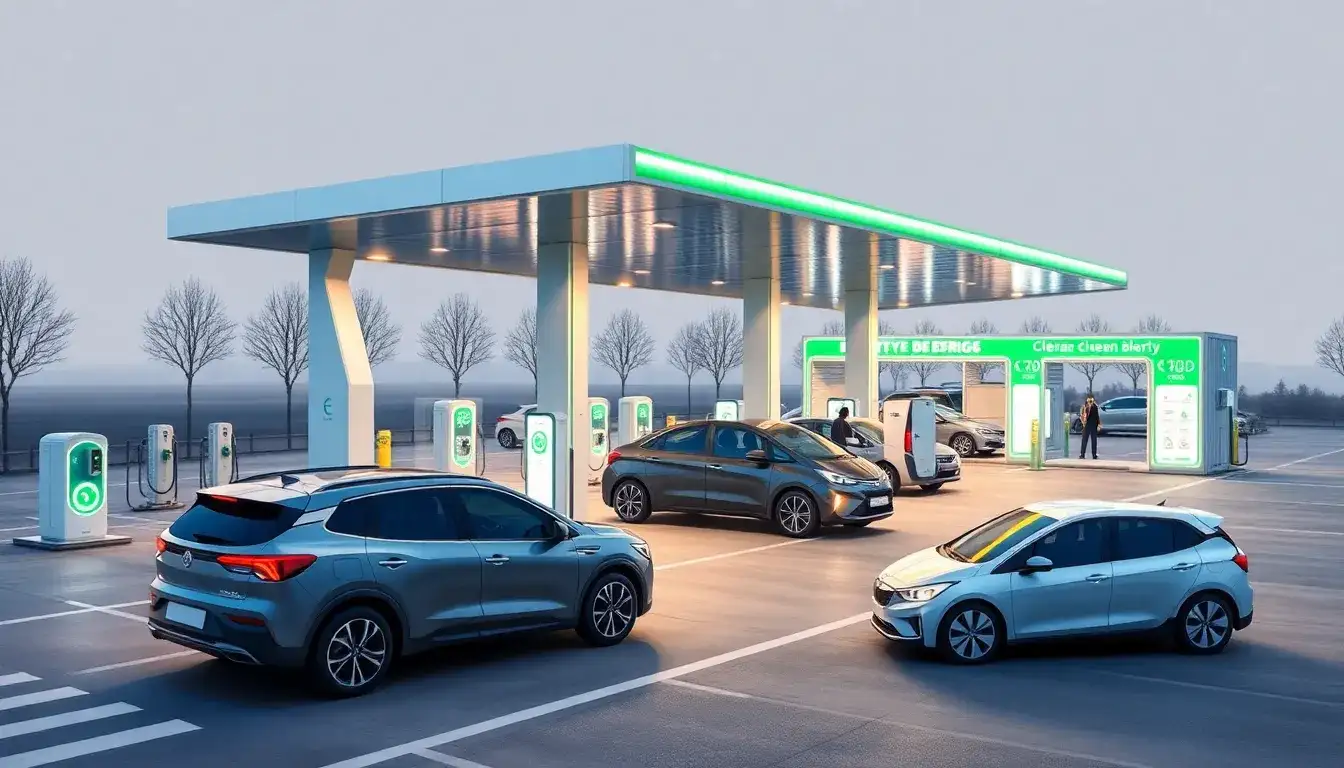
Ningde Times Makes a Strong Move! The battery swapping market is buzzing due to Ningde Times (300750) making significant investments. Over the past two months, Ningde Times has partnered with NIO and Sinopec to establish strategic collaborations for passenger vehicle battery swapping service networks and ecosystems. During the recent Shanghai Auto Show, the company also joined forces with multiple automakers to launch ten new battery-swapping models, thereby expanding its network.
Most industry insiders believe that improved policies, market cultivation, and intensified competition have clarified the commercial model for battery swapping. With Ningde Times entering the scene, various segments of the battery swapping process may find a balance of interests, potentially reshaping the market landscape.
However, the battery swapping industry is still in its early stages, facing numerous challenges in standardization, market operation, and supporting services. Only through collaboration across the entire supply chain can the industry achieve sustainable growth.
Industry Giants Enter the Battery Swapping Blue Ocean “This year, there is a noticeable shift in market attitudes towards battery swapping. Previously, Ningde Times was the one urging automakers to develop battery-swapping vehicles, but now automakers are actively seeking collaborations,” a source close to Ningde Times’s battery swapping business told reporters.
The shift in market sentiment is a result of the ongoing prosperity of Ningde Times’s battery swapping ecosystem. After announcing its battery swapping initiative at the end of last year, the company welcomed significant partners in the first half of this year, attracting considerable market attention.
On March 17, 2025, Ningde Times signed a strategic cooperation agreement with leading battery swapping company NIO, leveraging their respective technological, managerial, and branding strengths to create the world’s largest and most advanced passenger vehicle battery swapping service network. They also aim to jointly promote the establishment and standardization of battery swapping technologies across brands and vehicle models.
At the end of March, Ningde Times partnered with energy giant Sinopec to co-build a nationwide battery swapping ecosystem, planning to establish at least 500 battery swapping stations by 2025, with a long-term goal of 10,000 stations. On May 21, the first project of their collaboration, a battery swapping station for heavy-duty trucks, was officially signed.
In terms of automaker partnerships, Ningde Times announced ten battery swapping models in collaboration with major automakers like Changan, GAC, BAIC, Wuling, and FAW at the battery swapping conference last year. During the Shanghai Auto Show, they once again collaborated with FAW, Changan, BAIC, Chery, and GAC to launch ten new battery-swapping models. These new vehicles include sedans and SUVs, catering to diverse scenarios such as business travel, family outings, and youth mobility.
Apart from passenger vehicles, Ningde Times is heavily investing in the commercial vehicle battery swapping sector. On May 18, the company held an event focused on the next-generation heavy-duty truck battery swapping ecosystem, introducing the standardized 75# battery swapping block and an all-scenario chassis battery swapping solution. They announced a goal to establish a “green battery swapping network” covering 80% of national trunk transport by 2030.
“Unlike the past perception that battery swapping was limited to operational and high-end vehicles, Ningde Times is bringing battery swapping into a broader consumer market,” said Wang Feng, Chief Technology Officer of Hangzhou Hongtu Smart Energy Technology Co., Ltd. According to Ningde Times’s forecast, by 2030, battery swapping, home charging, and public charging stations will each capture one-third of the market, injecting significant confidence into the industry.
Many industry experts see Ningde Times’s bold entry into the battery swapping market as a positive endorsement for the industry, alleviating concerns about battery swapping’s viability. “Although the battery swapping market has been developing for years, currently, apart from NIO, mainstream automakers have very few models compatible with battery swapping. This is primarily due to the high initial investment costs of battery swapping stations and their lack of compatibility, leading to poor return on investment. Ningde Times’s direct investment and clear station construction goals, along with efforts to break down technical barriers among automakers, are making the battery swapping model more feasible,” stated a source from the East China region involved in battery swapping.
According to data from the China Electric Vehicle Charging Infrastructure Promotion Alliance, as of the end of April 2025, there are a total of 4,758 battery swapping stations in China, with NIO accounting for nearly 70% of that number. Ningde Times plans to establish 1,000 battery swapping stations by 2025, with a mid-term target of 10,000 stations, ultimately achieving a network of 30,000 stations. This ambitious plan would exceed the current market scale by six times based on the number of stations.
Policies Boost Market Growth “Ningde Times’s decision to ramp up investment in battery swapping at this time aligns perfectly with both policy and market conditions,” Wang Feng commented.
On the policy front, since “battery swapping stations” were first included in the Government Work Report in 2020, the battery swapping model has frequently been identified as a field for encouraged development, with ongoing improvements in top-level design. In 2021, China’s first basic national standard for battery swapping, “Safety Requirements for Electric Vehicle Battery Swapping,” was approved. The Ministry of Industry and Information Technology also launched pilot programs for electric vehicle battery swapping in 11 cities nationwide that same year. In June 2023, the Ministry of Finance, State Administration of Taxation, and Ministry of Industry and Information Technology jointly released a notice extending and optimizing tax exemption policies for electric vehicle purchases, clarifying the tax calculation method for vehicles under the “battery swapping model,” which marks the first clear guidance on the “separation of vehicle and battery” approach.
In January of this year, Zhang Yunming, Vice Minister of the Ministry of Industry and Information Technology, announced at a press conference that guidelines for promoting the development of the battery swapping model will be drafted to advance the electrification of public vehicles.
On the market side, after years of cultivation, the battery swapping model is no longer a novelty and has been gradually accepted and recognized by the public. For example, over 80% of new users at NIO choose the Battery as a Service (BaaS) model along with battery swapping.
“Given the rapid advancements in battery technology and intensified industry competition, having battery manufacturers lead the establishment of battery swapping networks will not only enhance charging efficiency but also reduce costs across various dimensions, helping to balance interests for all parties involved,” the aforementioned insider noted.
Analyzing the separation model, consumers benefit from reduced initial costs for purchasing electric vehicles and gain access to the latest battery technology, while also avoiding concerns about battery warranty issues. Battery manufacturers no longer need to customize batteries for each vehicle model, moving closer to standardization, which enhances their bargaining power while lowering research and development, production, and after-sales costs. They also gain better access to quality battery recycling channels, establishing a circular economy for battery reuse.
Automakers can separate battery costs from vehicle prices, achieving a price advantage while eliminating the costs associated with custom battery development, thus posing a competitive challenge to rival models. The insider predicts that the battery swapping market will gradually penetrate into A and A0 class vehicles, making it accessible to the general public. “For more economical models, the battery cost constitutes a higher proportion, making the overall advantages of the battery swapping model even more evident,” he stated.
Wang Feng believes that the new national standards for power batteries to be implemented in July next year will also push automakers towards the battery swapping model. “The new standards require that in the event of a single cell thermal runaway, the battery pack must not catch fire or explode within two hours, which is considered the ‘strictest battery regulation to date.’ Under these circumstances, automakers will face higher costs and risks in developing compliant battery packs. If there aren’t enough orders to support these developments, product competitiveness will weaken. However, by adopting the battery swapping model, they can transfer battery risk to specialized battery manufacturers, enabling more efficient resource management,” he explained.
Looking ahead, battery swapping has a natural advantage in vehicle-to-grid (V2G) interactions, potentially giving rise to new business models in this area. In April of this year, the National Development and Reform Commission and other ministries issued a notice on the first batch of vehicle-to-grid large-scale application pilot projects, confirming nine pilot cities and 30 pilot projects, marking a significant step towards the practical implementation of V2G.
“Compared to charging stations, battery swapping stations can pre-plan the charging and discharging times of backup batteries while maintaining real-time control over the battery status of the swapping vehicles. This allows for centralized management of battery assets, making vehicle-to-grid interactions more flexible and controllable, facilitating larger-scale applications,” Wang Feng remarked.
Integration of the Ecosystem Tests Strength As Ningde Times’s battery swapping vision unfolds, the industry is shifting from excitement to sober reflection. “The entry of major enterprises into the battery swapping sector is undoubtedly beneficial, but whether it can create economies of scale will depend on breaking current development barriers and achieving synergy across the supply chain,” said the aforementioned battery swapping industry insider.
For a long time, the lack of unified standards for battery swapping has made cross-brand services difficult, posing the biggest bottleneck for the large-scale promotion of the battery swapping model. “The battery sizes and specifications vary greatly between different vehicle models, and the communication protocols, battery management systems (BMS), and system algorithms are unique to each. Automakers typically set permissions for batteries at the factory and do not open them to external access, which means that previous battery swapping platforms could only provide customized services for single brands or even single models, preventing economies of scale and reducing the investment return ratio for battery swapping stations,” Wang Feng pointed out.
On a positive note, Ningde Times is already attempting to break down these standard barriers. Their battery swapping stations are equipped with two types of standardized battery blocks, the 20# and 25# models, with the 20# suitable for A0 class cars and the 25# for A/B class cars, applicable for various brands using the chocolate battery swapping model. In the heavy-duty truck battery swapping sector, the company has introduced the standardized 75# battery swapping block.
Looking at the strategic partnership between Ningde Times and NIO, the sharing of battery swapping networks and the unification of industry technical standards are also emphasized as key focus areas. NIO’s Firefly brand will timely adopt Ningde Times’s chocolate battery swapping standards and network.
Of course, whether standardized batteries will gain consumer acceptance remains to be tested in practice. The battery swapping industry insider believes that a blockbuster model must emerge from the standardized battery swapping vehicles to create a demonstration effect that attracts more automakers to join the standardization alliance. Additionally, the battery swapping market’s audience is diverse and dispersed, exhibiting significant regional differences, necessitating refined analysis and operations tailored to each regional market. Transitioning from a B2B to a B2C mindset is also a major challenge that operators must face.
Aside from battery swapping standards, the supporting financial services for the battery swapping model also need improvement. Wang Feng told reporters that for electric vehicles purchased under the battery separation model, the current “Commercial Insurance Exclusive Clauses for New Energy Vehicles (Trial)” still adopts an integrated model for the vehicle and battery. Insurance companies base their pricing on this model, which, when risk and insurance pricing cannot be accurately matched, somewhat suppresses the comprehensive cost advantages of flexible battery selection under the battery swapping model. Reports from NIO’s sales outlets indicate that the insurance prices for electric vehicles purchased under a battery rental model are nearly the same as those for outright purchase of the battery. This means consumers bear additional insurance costs for battery assets they do not own.
This issue has garnered attention from relevant government departments. In January of this year, the Financial Regulatory Authority, Ministry of Industry and Information Technology, Ministry of Transport, and Ministry of Commerce issued guidelines to promote high-quality development of new energy vehicle insurance, clearly stating that they will explore “vehicle-battery separation” model insurance products.
“In practice, the ownership and use of batteries do not always align, making risk assessment complex. Innovations in systems and technology are needed to clarify responsibilities and establish a closed-loop for new energy resource recycling,” Wang Feng remarked.
It is reported that Ningde Times has started incorporating battery insurance into its battery swapping ecosystem. Insurance companies such as China Life Insurance, China Pacific Insurance, and China United Property Insurance are offering specialized battery insurance, reducing battery premiums from 2,000 yuan to 500 yuan.
“Currently, the battery swapping model is in its early stages of development, with the market primarily focused on front-end elements like station construction, vehicle promotion, and operational services. As the market expands, back-end aspects such as battery maintenance and detection, recycling and reuse, and used vehicle transactions will increasingly test operators’ resource coordination capabilities. The competitive landscape of the battery swapping industry continues to evolve,” concluded the industry insider.
Original article by NenPower, If reposted, please credit the source: https://nenpower.com/blog/ningde-times-strengthens-investment-in-battery-swapping-market-sparking-new-dynamics/

