

Ningde Times and BYD are “strangling” Sunlight Power
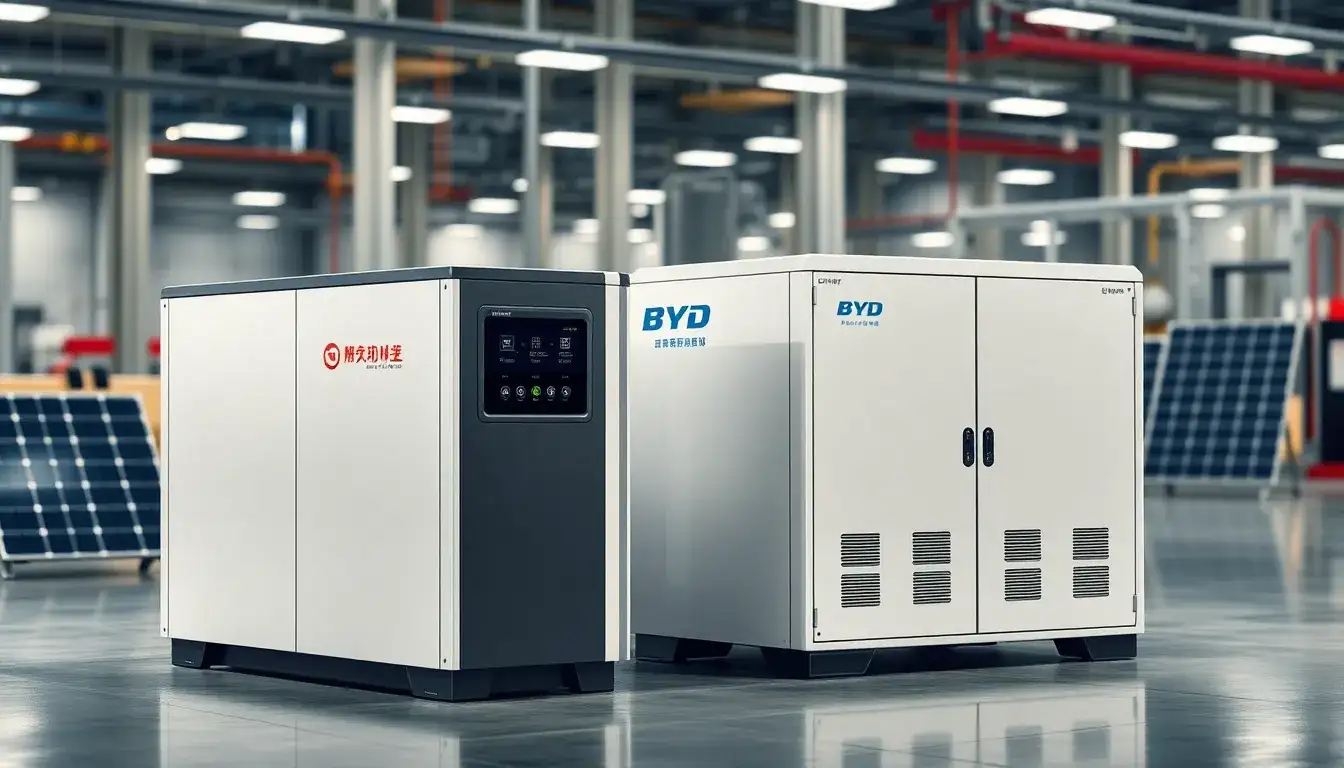
On May 15, 2025, it was reported that the system capacity of the newly introduced TENER Stack energy storage system reaches an impressive 9 MWh, enough to power an average Chinese household for over two years. This is currently the largest energy storage system globally, showcased at the recently concluded Inter Solar, a significant conference for the solar power industry held in Munich, Germany. As a leading name in the lithium battery sector, Ningde Times’ choice to unveil this groundbreaking product at the exhibition highlights its ambition in the energy storage market.
In contrast, Sunlight Power, the world’s largest energy storage system integrator, had a relatively low profile at the event, with its two commercial application products failing to capture significant attention. This year, while Ningde Times and BYD have secured major contracts, Sunlight Power has struggled to achieve comparable success.
On January 19, Ningde Times announced its selection as the preferred battery storage system supplier for RTC in the UAE, promising a total capacity of 19 GWh, thus setting a new record for the largest energy storage order in the Middle East. Just days before this, BYD had signed a contract for a massive 12.5 GWh energy storage project with Saudi Electricity Company (SEC), bringing their total collaboration to 15.1 GWh when combined with a previously delivered 2.6 GWh project. These substantial contracts overshadow the 7.8 GWh SEC Phase II project that Sunlight Power secured last July, which was once celebrated as the largest energy storage project globally but has now been surpassed.
According to incomplete statistics from the CESA Energy Storage Application Association, Chinese companies secured 20 energy storage orders in the first two months of this year, totaling 68.51 GWh, primarily involving Ningde Times, BYD, and other players like LONGi Green Energy, Haitian Energy, and Oriental Sunrise Energy. Sunlight Power did not appear in the winning bids list.
Data from Xingluo Energy indicates that in the first quarter of 2025, overseas orders for Chinese energy storage companies exceeded 72 GWh, with expectations to surpass 200 GWh for the year. Ningde Times, BYD, and Yiwei Lithium Energy are predicted to account for over 80% of these orders, while Sunlight Power reported only a 500 MWh overseas order in Japan during the same quarter. The loss of numerous overseas contracts has raised questions within the industry: what has happened to Sunlight Power, which became the global leader just last year?
“The quotes from the Middle East were unexpectedly low,” remarked an insider from Sunlight Power regarding the aforementioned Middle Eastern contract. He suggested that some manufacturers are willing to sacrifice quality to reduce costs, which could lead to safety issues in the future. Another market participant noted that BYD and Ningde Times could secure these contracts due to their in-house battery cell production, allowing them to offer lower prices. Even if Sunlight Power sourced cheaper battery cells, it would still struggle to compete.
Sunlight Power primarily relies on external suppliers for its energy storage system’s battery cells, which include companies like Ningde Times, Samsung SDI, Penghui Energy, Ruipu Lanjun, and China Innovation Aviation. Battery cells constitute about 50% of the total cost of energy storage integrated systems. With cell manufacturers now entering the energy storage integration field, Sunlight Power is facing direct competition.
“Unless specified by the customer, Sunlight Power generally does not purchase battery cells from Ningde Times anymore,” stated an industry analyst. Since last year, these former partners have become rivals. Currently, the gross margins for energy storage battery cells are generally lower than for energy storage systems. In 2024, Sunlight Power’s energy storage business gross margin is projected at 36.69%, while Ningde Times, focused on battery cells, is expected to have a margin of 26.84%.
“Some project owners only recognize battery cells from Ningde Times. So why don’t they produce their own energy storage systems?” the analyst added. Ningde Times has strategically positioned itself in the energy storage sector. In addition to its own bidding efforts, its subsidiary Xinneng An is also advancing in the energy storage market, accelerating its entry into the commercial sector this year. Established in 2023, Pengcheng Unlimited is the first domestic company to have both technical and after-sales service authorization from Ningde Times.
It is reported that some low-priced contracts, which are inconvenient for Ningde Times to pursue directly, are being handled by Pengcheng Unlimited. Sunlight Power’s disadvantage of lacking its own battery cells is particularly highlighted in the price-sensitive Middle Eastern market. The industry often describes this market as “wealthy and shrewd.” From previous photovoltaic module purchases to now energy storage systems, Middle Eastern projects tend to be large-scale and are often priced lower than domestic projects.
Sunlight Power originated from its inverter business, which emphasizes research and development over manufacturing. In the energy storage field, the company prefers to bind its downstream projects to manage battery suppliers. Excluding battery cost factors, Sunlight Power’s reputation and its self-promotion emphasize a commitment to not engaging in price wars or participating in destructive competition.
Overseas markets represent the primary battleground for Sunlight Power’s energy storage business, accounting for approximately 60% of its shipments. A few years back, Sunlight Power was able to secure substantial orders in Europe and North America despite quoting higher prices. This was largely due to the lack of comprehensive solutions from competitors, as Sunlight Power has extensive experience with AC-side solutions. A market participant noted that the demand for energy storage surged following the Russia-Ukraine conflict, with investors initially lacking understanding and needing solution-driven guidance.
However, as European subsidies have declined and investment return periods have extended, clients are now demanding higher product quality and reliable long-term performance, requiring suppliers to offer complete customized solutions, including specifying brands for key components like battery cells and inverters (PCS). The market participant believes that the trend toward standardized processes and services will dilute the premium previously commanded by unique solutions offered by companies like Sunlight Power.
Sunlight Power’s early success in the European market was significantly attributed to its early entry, supported by its established brand through previous inverter exports and a deeper understanding of the grid compared to its peers. In 2003, Sunlight Power developed China’s first photovoltaic inverter with complete independent intellectual property rights, breaking the monopoly of foreign companies like SMA. Subsequently, the company capitalized on the boom in China’s renewable energy sector, becoming the world’s leading photovoltaic inverter manufacturer with a market share that once exceeded 40%. To this day, photovoltaic inverters remain a crucial revenue source for the company.
When initially developing its inverter business, Sunlight Power placed great emphasis on expanding into overseas markets, particularly in developed countries like Europe and North America. In 2006, the company officially entered the energy storage sector, aiming to make energy storage system integration its second growth curve. According to the China Zhongguancun Energy Storage Industry Technology Alliance, last year, Sunlight Power’s energy storage system global shipment reached 10.5 GWh, maintaining its position as the leading Chinese company for nine consecutive years. The report by S&P Global released in 2024 also indicated that Sunlight Power ranked first globally in terms of cumulative installed capacity and cumulative order volume.
Li Hua (a pseudonym), who has worked in the renewable energy sector in Germany for 11 years, shared with industry news outlets that Sunlight Power’s products performed exceptionally well in Europe early on, enjoying high brand recognition. Their PCS and other components, developed in-house, provide flexibility. According to Li, the European energy storage market generally adopts traditional distributor models, making it easier for well-regarded companies like Sunlight Power to gain customer trust.
“However, as the emerging Middle Eastern market sees several major battery cell manufacturers engaging in price wars, the ‘storage value’ Sunlight Power emphasizes may not manifest quickly,” Li stated. In addition to Ningde Times and BYD, Sunlight Power now faces competition from other emerging domestic energy storage system integrators. The Gaogong Energy Storage report notes that the overseas market is witnessing a trend of established firms leading alongside rising new players. Companies like Ningde Times and Envision Energy leverage their technological, brand, and cost advantages to capture significant shares in the overseas market while establishing deep cooperative relationships with quality international clients.
Meanwhile, emerging competitors like Haibo Innovation, Trina Storage, and Jingkong Energy are also rapidly growing their overseas orders. The competition is not only among Chinese companies; “We also view Tesla as a major competitor,” a company representative shared. In 2022, Wood Mackenzie reported that Sunlight Power surpassed Tesla to become the first Chinese company to claim the title of global energy storage system leader. However, just a year later, Tesla reclaimed its position with a 15% market share, pushing Sunlight Power to second place. Tesla holds a technological edge in system integration and enjoys a natural brand advantage as a US company, along with comprehensive after-sales service.
On February 11, the Tesla energy storage super factory located in Shanghai Lingang officially commenced production. This is viewed by the industry as the arrival of a “catfish” in the energy storage sector, as this facility is expected to significantly reduce Tesla’s production costs. This is also Tesla’s first overseas energy storage production base outside its California facility, dedicated to manufacturing the third-generation energy storage product, Megapack, with an initial production capacity projected at 10,000 units annually, equating to an energy storage installation scale of 40 GWh—nearly 40% of China’s new energy storage capacity added last year.
Sunlight Power has noted that the profitability of energy storage varies significantly across different markets. The primary factors affecting profitability include value contribution, as investment returns are better in markets like Europe and North America, where customers have higher expectations for energy storage systems regarding timely grid connection and long-term stable operation, resulting in higher barriers to entry. Additionally, the market landscape in Europe and North America is relatively stable, which may support better profitability in the future.
However, in the context of increasingly stringent global trade barriers, Sunlight Power’s traditional advantage markets are also facing challenges. The US market accounts for 10%-20% of Sunlight Power’s overall revenue. According to a report from Wood Mackenzie last year, Sunlight Power ranks second in market share in North America, just behind Tesla. In April, the US initiated what it termed “reciprocal tariffs,” temporarily halting Sunlight Power’s energy storage system shipments to the US market. This situation has led to doubts regarding the company’s earlier target of achieving 40-50 GWh in global shipments this year. “If high tariff policies continue in the US, it could potentially impact our annual shipment by 4-5 GWh compared to our initial targets,” Sunlight Power stated.
Domestic markets are not the primary battlefield for Sunlight Power’s energy storage business, but they still account for 40% of its shipments. An industry insider revealed that Sunlight Power has its own power station development team, and its inverters have high penetration rates in large power stations. Developers recognize the company, yet the current domestic energy storage investment return mechanisms remain inadequate, often evaluating solely based on price and lacking consideration for overall value contribution. This has allowed CRRC Zhuzhou, known as a “price butcher,” to increasingly pressure Sunlight Power.
Data from the Zhongguancun Energy Storage Industry Technology Alliance indicates that Sunlight Power ranked third in the domestic market’s energy storage system grid-connected installation scale last year, trailing behind CRRC Zhuzhou and Haibo Innovation. In response to the domestic market, Sunlight Power has noted that customers are relatively sensitive to energy storage product pricing, making competition very fierce, resulting in lower market prices and reduced profitability.
From a financial standpoint, as of the end of the first quarter of this year, Sunlight Power remains the best-performing company in the entire photovoltaic and energy storage sector. Over the past 15 months, the company has earned nearly 15 billion yuan, averaging 1 billion yuan per month, thanks to its core businesses of inverters and energy storage. However, the growth rate of Sunlight Power’s energy storage business has begun to slow. In 2023, the revenue from its energy storage systems reached 17.8 billion yuan, a year-on-year increase of 75.79%. In comparison, the growth rate for this sector’s performance fell to 40.21% last year. Additionally, revenue recognition for energy storage orders has a lagging nature, meaning the current profit situation primarily reflects the contracts signed in 2023-2024.
Sunlight Power is known for its “stability” in the industry. In the past two years, a time of cooling in the new energy capital market, Sunlight Power has been one of the most resilient companies, surpassing LONGi Green Energy in market value in March 2024 and maintaining its status as the highest-valued photovoltaic company in A-shares, at one point being the only photovoltaic company with a market value exceeding 100 billion yuan. From 2008 to 2024, Sunlight Power has consistently maintained revenue growth; although its net profit has experienced fluctuations, the overall trend has been upward.
In the industry, when discussing Sunlight Power’s founder Cao Renxian, he is often affectionately referred to as “Teacher Cao.” He was indeed once a university instructor. In an industry filled with frequent headlines, he is rarely seen giving media interviews and makes few public appearances at industry events. A close associate described Cao as a “typical engineering-oriented individual” who does not prioritize external company publicity but focuses heavily on investment in technological research and development.
As Sunlight Power’s previously dominant position in the energy storage sector gradually diminishes, it has yet to reveal new strategies outwardly. It remains uncertain how long this stable company can withstand the enduring challenges in the new energy market.
Original article by NenPower, If reposted, please credit the source: https://nenpower.com/blog/ningde-times-and-byd-challenge-sungrow-in-energy-storage-market/

