

Ni Huan, an alumnus of Southwestern University of Finance and Economics, is illuminating the future through sustainable development education. On March 30, which is recognized as International Zero Waste Day, Ni Huan, a graduate from the class of 1995 in Economics, announced that all the old panels from her copper indium gallium selenide solar power station, operational for nearly 11 years, had been completely recycled, including the broken inverters, achieving a zero-waste disassembly of the photovoltaic station.
The Community Laboratory Initiated by Solar Panels In 2014, Ni Huan, serving as a senior advisor for green finance on the Taihu project with the World Wildlife Fund, learned about a government initiative supporting home solar energy. She decided to undertake an astonishing project that left her neighbors in awe—she constructed the first copper indium gallium selenide thin-film photovoltaic power station for residential use in less than 20 square meters of her own yard. This $3,100 “sunshade” could withstand a level 10 typhoon and an 8-level earthquake and was capable of generating electricity even in low light on rainy days, with a capacity of 2400 watts. Within two months of connecting to the grid, she successfully received distributed photovoltaic power generation subsidies from both the central and Shanghai municipal governments, prompting curious neighbors to wonder, “Are you starting a power plant at home?”
Her small yard quickly transformed into a popular community attraction, featuring several innovative additions:
- Shanghai’s first self-designed household outdoor aquaponics system, which achieves a 95% reduction in water usage;
- Seven anaerobic composting buckets that digest household wet waste, effectively realizing zero emissions from kitchen waste;
- A vertical micro-farm utilizing compost for organic vegetable cultivation, along with solar-powered insect traps and eco-friendly enzyme solutions for pest control;
- The first shared electric vehicle charging station in Minhang District of Shanghai, which was installed free of charge after the company saw media coverage.
“Our home has essentially become a small environmental museum, gradually attracting a group of volunteers passionate about spreading science education,” Ni Huan remarked. “If there were an organization that could collaborate with communities, schools, and businesses to provide diverse public environmental education and promote a low-carbon, green lifestyle, perhaps the concept of sustainable development could truly take root in people’s hearts.”
Despite facing skepticism about her “offbeat” pursuits, she initiated an environmental education experiment rooted in the community. By the end of March 2016, the Jiangchuan Green Light Environmental Service Center was officially established in Minhang District, Shanghai.
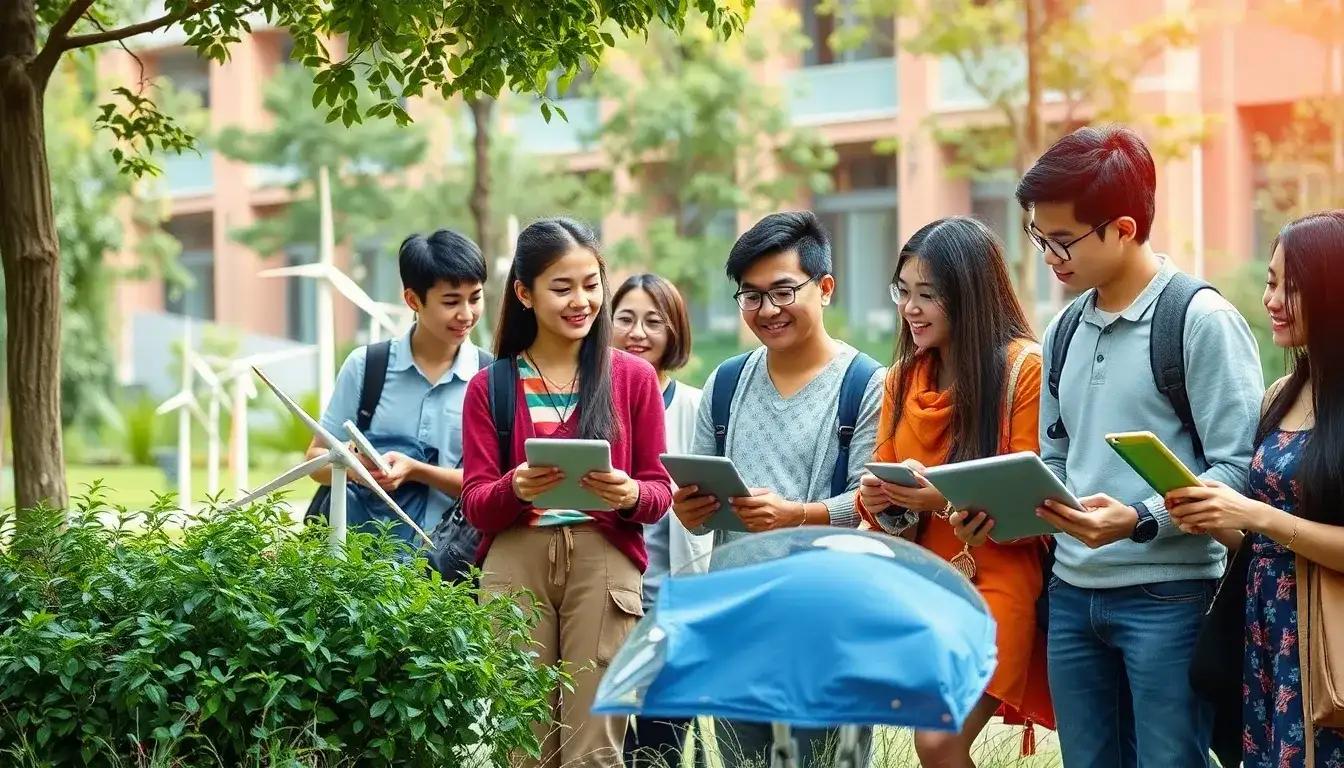
Green Light: Pioneering Community and Campus Low-Carbon Science Education Green Light developed China’s first “community + campus” low-carbon science education tour route. Starting from the ecological yard in the community, passing through the electric vehicle charging station, and concluding at the green energy building at Shanghai Jiao Tong University’s Minhang campus, participants could experience rooftop solar power generation and solar barbecues, culminating in a visit to an energy-independent ecological house and a low-carbon electric racing car research team. This engaging and interactive route has welcomed nearly 14,000 visitors over two years.
As Green Light evolved, it connected more stakeholders, facilitating community explorations for primary and secondary schools, low-carbon science tours, sustainable development youth leadership training in higher education, corporate science course design, public welfare project consulting, and community planning for governments. Green Light has become a bridge, translating national climate change policies into everyday practices for the public.
In January 2018, Green Light expanded its brand by establishing a science service center in Suzhou Industrial Park. With the launch of a series of low-carbon education projects, Green Light has gradually grown into a professional organization for sustainable development education in China, guiding Chinese youth to understand the United Nations Sustainable Development Goals (SDGs) through cognitive, emotional, and behavioral changes.
“I want to make environmental protection and low carbon living visible, tangible, experiential, and shareable in everyone’s life,” Ni Huan explained her motivation.
From Campus Journalism to Cambridge Lectures These unconventional choices stem from seeds planted during her student years. Thirty years ago, as an undergraduate in Economics, Ni Huan entered Southwestern University of Finance and Economics, beginning her journey of grappling with and dreaming about the future. She believed that university life should be about engaging in enjoyable and meaningful activities, thus she joined the campus newspaper team in her freshman year. Through numerous interviews and writing experiences, she progressed from a novice to the team leader, acquiring essential skills for her future career, such as how to approach significant topics, identify interviewees, and engage with unfamiliar subjects, as well as how to think independently and creatively solve problems.
During her four years with the campus newspaper, Ni Huan broadened her horizons, gained new perspectives, and enhanced her soft skills, while recognizing the importance of teamwork. As she graduated, reluctantly leaving the newspaper team, she carried a portfolio of published articles, including two English commentaries in 21st Century, which she wrote during her spare time while practicing English. This opened doors for her at the Economic News Department of the Western China Metropolitan Daily. She immersed herself in her three-month internship, cycling through the streets in summer heat to observe society and uncover newsworthy stories. As an intern, she independently completed numerous front-page and key news economic reports, which were directly published by editors. After a year of work, she was accepted into the “State-Owned Enterprise Reform and Corporate Development Project (SOERED),” the largest Sino-foreign bilateral cooperation project managed by PwC London on behalf of the UK Department for International Development (DFID).
Once again, she spent four years working long hours but gained immense experience and clarity about her future. In 2000, she first learned about “CSR” (Corporate Social Responsibility) and “sustainable development.” Even amidst rapid double-digit economic growth, she sensed that limited resources could constrain economic expansion. “I desperately needed to delve deeper into these cutting-edge concepts,” she realized.
For the first time in her life, she began to consider long-term development issues beyond economics. In 2004, she applied for a master’s degree in Development Studies at Cambridge University, receiving a full scholarship. Upon enrolling at Cambridge, Ni Huan joined a bustling student organization fair and was drawn to a relatively quiet booth of a charity group named CONTACT, which organized volunteers to visit elderly residents in Cambridgeshire. She committed to visiting one elderly person each week until her graduation. Her experiences at Cambridge, both academically and in charitable service, profoundly impacted her life and career trajectory, providing her with deeper insights into the world and herself while laying the groundwork for her lifelong commitment to public service.
Empowering Every Child to Be a Spark for the Future After graduating with her master’s, Ni Huan continued to focus on development studies, engaging with international organizations, fostering cross-sectoral thinking, and mobilizing diverse resources to tackle complex issues. In the first half of her career, she accumulated nearly 20 years of experience working with the UK Department for International Development (DFID), the United Nations Development Programme (UNDP), the International Finance Corporation (IFC) of the World Bank Group, and the United Nations Environment Programme (UNEP) on international cooperation projects.
Ni Huan increasingly recognized China’s growing leadership on the international stage and the need for more young Chinese individuals to embrace integration and innovation during the internationalization process with a mature, inclusive mindset. The emergence of Green Light, a project born by chance, prompted her to reevaluate her future.
In 2017, Ni Huan completely resigned from her position in international organizations to dedicate herself to sustainable development education. While this move might be seen as a “downgrade” in her career, she transitioned from the “high-profile” field of green finance to grassroots community environmental education, shifting her focus from dealing with government officials and top financial institutions to serving children of all ages. She found this transition both intriguing and rewarding. “Sustainable development education is a relatively new educational concept, requiring self-driven exploration, design, and iteration of many projects. The setbacks along the way were numerous, but the meaningful and touching moments left a profound impact,” she reflected.
On a particular Friday, Ni Huan hosted a science lecture for third-grade students at a nearby elementary school, focusing on her solar power station. The next morning, just before dawn, her doorbell rang. When she opened the door, she found a child from the same neighborhood who had come to verify her lecture content: “Teacher Ni, you said the solar power station can generate power in low light. I want to see if it generates power when the sun just rises.” The child’s curiosity and initiative left Ni Huan in awe.
This small incident made her acutely aware of the far-reaching impact of education on children. Ni Huan expressed that her greatest enjoyment in her work comes from playing with children in educational projects and witnessing how sustainable development education transforms their thinking and learning patterns, bringing her a deep sense of accomplishment.
Having traversed from Guanghua Garden to the campus of Cambridge and various places around the world, Ni Huan has transitioned from a frequent visitor at United Nations events and a policy advisor in green finance to a practitioner of sustainable education in local communities. Today, her WeChat signature reads, “Love to travel, love to cook,” and she frequently shares snippets of low-carbon living and sustainable education in her social media. On the homepage of the Green Light website, she writes, “Immersive learning, returning to one’s true self, walking with the future.”
This individual, who once recorded moments in Guanghua Garden through writing and calculated carbon benefits using Excel, is finally beginning to grasp the future she has contemplated and aspired to since her student days. She is reshaping people’s understanding of development in the gentlest way—within the sustainable education ecosystem she has created, each child represents a spark for the future.
Original article by NenPower, If reposted, please credit the source: https://nenpower.com/blog/ni-huan-empowering-the-future-through-sustainable-development-education-at-southwestern-university-of-finance-and-economics/

