

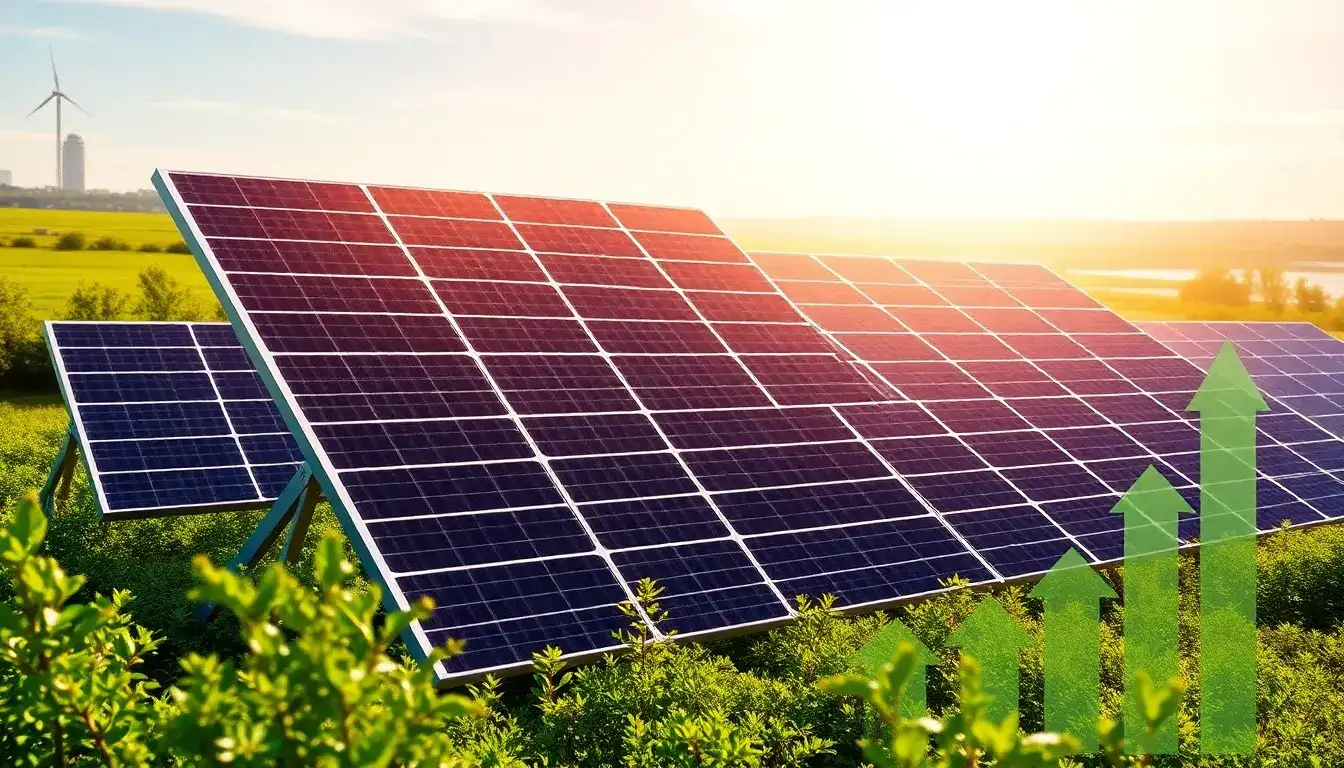
Next-Generation Solar Cell Market to Reach USD 14.11 Billion by 2032, Driven by Growing Demand for Efficient and Sustainable Energy Solutions Globally
The Next-Generation Solar Cell Market is witnessing significant growth, fueled by advancements in perovskite and tandem technologies, supportive government policies, and an increasing demand for high-efficiency renewable energy solutions.
### Market Size & Growth Insights
According to the SNS Insider Report, the Next-Generation Solar Cell Market was valued at USD 3.31 billion in 2024 and is projected to expand to USD 14.11 billion by 2032, reflecting a compound annual growth rate (CAGR) of 19.94% from 2025 to 2032. The surge in demand for clean energy, technological innovations, and supportive policies are the primary drivers of this market growth.
### Drivers of Market Growth
The Next-Generation Solar Cell Market is evolving rapidly due to the increasing need for clean, sustainable energy and advancements in solar technologies, particularly perovskite and tandem cells. These technologies offer superior efficiency and integration into buildings, making them appealing to both residential and commercial users. Laboratory yields exceeding 30% for tandem perovskite-silicon cells show promise beyond traditional silicon cells. In the U.S., the market is expected to reach USD 0.64 billion by 2024, with a CAGR of 19.38%, driven by trends such as urbanization, the rise of smart home solar systems, corporate sustainability initiatives, and supportive state policies. Additionally, the Inflation Reduction Act’s USD 369 billion clean energy investment package is expected to stimulate innovation and deployment in this sector worldwide.
### Regional Market Insights
In 2024, the Asia Pacific region accounted for the largest revenue share of 41.2% in the next-generation solar cell market and is anticipated to grow at the fastest CAGR from 2025 to 2032. This growth is propelled by rapid urbanization, increasing industrialization, and robust government support through subsidies and tax benefits. China, with its ambitious renewable energy targets and substantial investments in solar manufacturing, leads the region.
North America, particularly the U.S., also holds a significant market share, driven by clean energy demand, government incentives, and advanced solar research and development. Europe, led by Germany, maintains a solid market presence thanks to sustainability targets and policy support. Meanwhile, Latin America and the Middle East & Africa are poised for rapid growth due to their vast solar potential, increasing energy demands, and rising renewable investments.
### Market Report Scope
– **Market Size in 2023:** USD 3.31 Billion
– **Market Size by 2032:** USD 14.11 Billion
– **CAGR:** 19.94% from 2024 to 2032
### Key Segments
– **By Material Type:** Transceivers, Cadmium Telluride (CdTe), Copper Indium Gallium Selenide (CIGS), Amorphous Silicon (a-Si), Gallium-Arsenide (GaAs), Torsion Cables
– **By Installation:** On-Grid, Off-Grid
– **By End User Industry:** Residential, Commercial & Industrial, Utilities, Others
### Material Type Segment Leadership
In 2024, Cadmium Telluride (CdTe) held the largest market share at 33.8%, attributed to its low cost, ease of fabrication, and high efficiency, especially in utility-scale photovoltaic systems. It continues to dominate the market due to consistent efficiency improvements and low production costs. The Copper Indium Gallium Selenide (CIGS) segment is expected to register the highest CAGR from 2025 to 2032, driven by its cost-effectiveness, flexibility, and superior energy conversion efficiency, allowing for broader applications in the residential and commercial sectors.
### Installation Trends
The on-grid segment led the market in 2024, capturing 74.1% of the share, favored for its connection to the main power grid and the ability to sell excess energy back to utilities, making it both cost-effective and reliable. On-grid systems are increasingly adopted across residential, commercial, and industrial sectors due to the global shift towards renewable energy. Conversely, off-grid systems, essential for energy independence in remote areas, are expected to experience the highest CAGR from 2025 to 2032, driven by increasing demand in developing regions and advancements in battery storage technology.
### End User Industry Insights
The utility sector led the Next-Generation Solar Cell Market in 2024, holding a 46.5% share, thanks to economic viability, sustainable goals, and government financial support for large solar farms. Utilities rely on solar energy to meet rising demand and reduce emissions. From 2025 to 2032, the residential sector is projected to grow the fastest, driven by rising energy costs, climate concerns, ongoing efficiency improvements, reduced installation costs, increased competition in energy storage, and enhanced governmental incentives promoting homeowner energy independence.
### Leading Market Players
Key players in the market include:
– Hanwha Q CELLS
– Oxford Photovoltaics
– Heliatek
– LONGi Green Energy
– JinkoSolar
– JA Solar
– Trina Solar
– First Solar
– SunPower Corporation
– Hanergy
### Recent Developments
In May 2025, Hanwha Q Cells announced its objective to mass-produce tandem solar cells by 2027, becoming the first company to surpass Chinese competitors in this next generation of solar technology. In September 2024, Oxford PV commenced the commercial rollout of its record-holding perovskite-on-silicon tandem solar panels, which are up to 20% more efficient than traditional panels, representing a significant advancement in solar efficiency that could accelerate global decarbonization efforts.
Original article by NenPower, If reposted, please credit the source: https://nenpower.com/blog/next-generation-solar-cell-market-projected-to-surge-to-usd-14-11-billion-by-2032-fueled-by-technological-advancements-and-increased-clean-energy-demand/

