

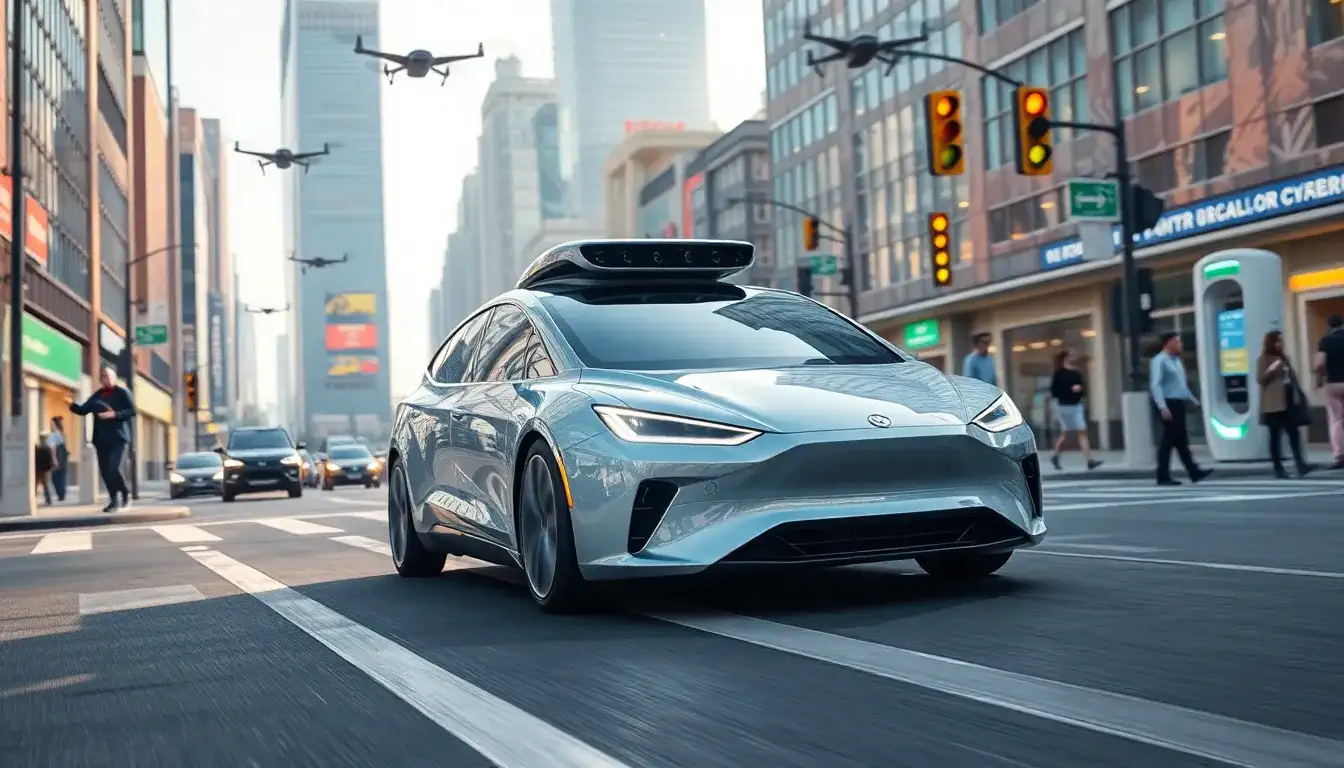
New Wave Autonomous Driving Hotspot Report – January 23, 2026, 08:00 AM: Today, we reported on the rapid development of autonomous driving technology.
The topic of autonomous vehicles has become increasingly relevant. Discussions surrounding the timeline for fully autonomous vehicles, commonly referred to as Level 5, have sparked interest among industry experts. The general consensus suggests that major advancements in self-driving technology will require an additional 10 to 15 years, encompassing various factors such as technology maturity, regulatory frameworks, and market acceptance.
As of now, the development of autonomous driving technology is primarily in the L2 (partial automation) to L3 (conditional automation) stages. By 2025, many automotive manufacturers anticipate producing L3-rated vehicles capable of high-speed driving under certain conditions. Progressing to Level 5 requires overcoming significant challenges such as complex decision-making, environmental adaptability, and the ability to interact with human drivers.
For instance, adverse weather conditions, such as heavy rain or snow, may hinder sensor performance, affecting vehicle perception. The current debate revolves around the ultimate goal of achieving a robust Level 5 autonomous system while ensuring safety and reliability.
Regarding future levels of automation, Level 4 technology is expected to surpass Level 3, with intelligent vehicles becoming more integrated into daily traffic. In the near future, will manufacturers leap directly from L3 to L4? Experts suggest that ongoing advancements in autonomous systems will shape this transition.
As for the market, a recent survey indicated that Chinese consumers spend an average of 2.3 hours weekly searching for parking spots. This highlights the increasing demand for intelligent driving technologies as they simplify everyday tasks.
In 2026, major Chinese auto manufacturers are expected to unveil significant advancements in autonomous vehicle technology. This includes the introduction of new models and features that enhance user experience and vehicle connectivity.
Automakers are prioritizing the development of advanced driver-assistance systems (ADAS) and fully autonomous vehicles. The continuous investment in electric vehicle infrastructure, such as charging stations, is also crucial for the future of autonomous driving.
SAE International outlines six levels of automation from L0 (no automation) to L5 (full automation). The higher the level, the more capable the vehicle is of performing driving tasks without human intervention. Currently, most vehicles operate at L2, with features like adaptive cruise control (ACC) and lane-keeping assistance.
Upcoming regulations will likely support the rapid adoption of autonomous vehicles, as showcased by the release of national standards in early 2026. These standards will aim to ensure the safety and reliability of intelligent driving technologies.
In conclusion, the future of autonomous driving remains bright, with significant advancements expected in the coming years. As technology continues to evolve, the integration of intelligent systems into daily driving experiences will reshape how we interact with our vehicles.
Original article by NenPower, If reposted, please credit the source: https://nenpower.com/blog/new-wave-autonomous-driving-insights-on-the-future-of-self-driving-cars-by-january-2026/

