

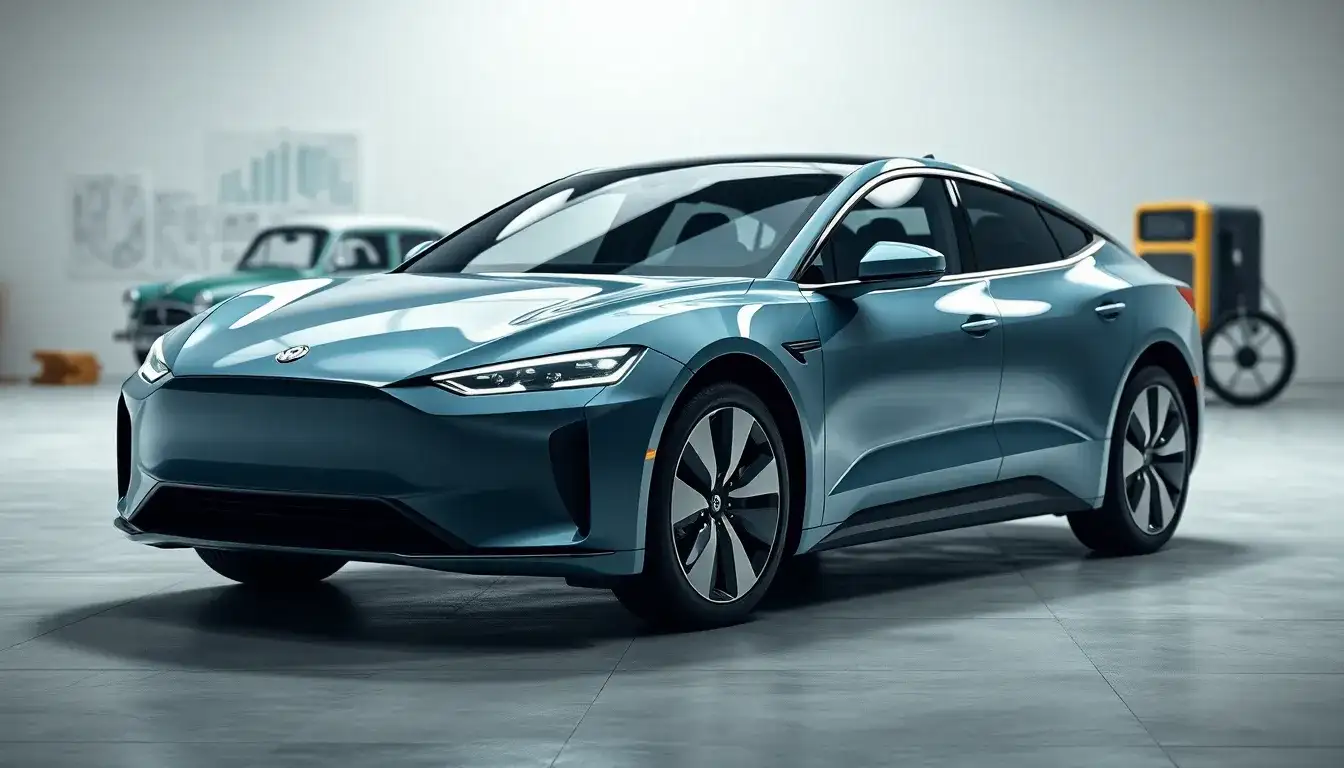
Starting next year, new regulations will be implemented concerning the vehicle purchase tax exemption for new energy vehicles (NEVs). The Ministry of Industry and Information Technology, alongside two other departments, has issued an announcement regarding the technical requirements for the exemption of vehicle purchase tax for NEVs from 2026 to 2027.
The announcement outlines significant adjustments to the technical requirements for pure electric passenger vehicles and plug-in hybrid vehicles (including range-extended hybrids). Notably, the requirement for the pure electric range of plug-in hybrids has been increased from 43 kilometers to 100 kilometers.
According to Cui Dongshu, Secretary-General of the Passenger Car Market Information Association, this adjustment aims to align with the rapid advancements in battery technology and range capabilities of new energy vehicles. It is also designed to encourage companies to invest more in research and development, eliminate outdated products, and shift the industry from expansion to high-quality development. This will help stabilize companies’ long-term expectations regarding policies.
The announcement specifies that from January 1, 2026, vehicles included in the list of NEVs eligible for tax exemption must comply with the new technical requirements. This move is intended to enhance energy-saving and carbon reduction efforts, emphasizing a shift from quantity to quality in vehicle production, and underscoring the importance of technological innovation.
Yang Weibin, an expert in new energy vehicles and power batteries, advised that car manufacturers should promptly update their vehicle specifications to meet the new energy consumption and range standards, ensuring they are ready for sales. He stressed that simply increasing battery capacity will not suffice; instead, efforts should focus on enhancing research and development to improve the efficiency of the “three electrics” system (battery, motor, and electronic control) and the integration of the vehicle as a whole.
The announcement further details the specific requirements for pure electric passenger vehicles, stating that their energy consumption per 100 kilometers must not exceed the limits set by the National Standard for Energy Consumption Limits of Electric Vehicles Part 1: Passenger Vehicles (GB 36980.1—2025). This standard is mandatory and will be enforced starting January 1, 2026.
As per the standard, the energy consumption limits for conventional vehicles have been adjusted, with the weight thresholds changing from 750 kg and 2510 kg to 1090 kg and 2710 kg. The overall energy consumption limit at a standard vehicle weight of 1780 kg will be tightened by approximately 11% compared to the previous phase.
Cui Dongshu noted that energy consumption is a critical indicator for pure electric vehicles, reflecting the comprehensive design capabilities of manufacturers and a key performance target. He explained that heavier vehicles generally consume more energy. The new requirements also include a maximum design total weight for passenger vehicles exceeding 3500 kg, which will follow the energy consumption limits applicable to vehicles of 3500 kg.
The Ministry of Industry and Information Technology indicated that these new standards would accelerate technological upgrades in battery capacity and hybrid systems, enhance driving experiences, and improve product safety and competitiveness. Stricter regulations will push companies to develop higher-performance models that meet consumer demands for longer range and lower energy consumption, benefiting both market expansion and green, low-carbon development.
Additionally, the announcement establishes higher technical requirements for plug-in hybrid vehicles, raising the electric-only range threshold significantly compared to previous standards. This increase is expected to lower consumers’ daily travel costs and enhance their overall travel experience.
According to Yang Weibin, around 40% of currently available plug-in hybrid vehicles have an electric-only range of less than 100 kilometers. These vehicles are anticipated to be withdrawn from the market before January 1, 2026, which could lead to a surge in clearance sales by manufacturers in the short term.
Cui Dongshu added that the continuous improvement in the electric range of plug-in hybrids reflects consumer preferences. Currently, many models on the market have electric ranges concentrated between 100 and 200 kilometers, with several models exceeding 250 kilometers, providing consumers with a superior electric driving experience.
Examples of mainstream plug-in hybrid vehicles available include the Wenjie M5 with a pure electric range of 230 kilometers, the BYD Tang DM-i with 175 kilometers, and the Li Auto L8 boasting over 225 kilometers.
Cui Dongshu believes that the announcement does not merely extend the current exemption policy but signals the countdown to its phase-out. The new policy for a 50% reduction in the vehicle purchase tax on NEVs, effective next year, requires new technical standards to support it. He suggests that the likelihood of continued exemption for NEVs is low, predicting a return to a standard 5% purchase tax.
In June 2023, the Ministry of Finance, the State Administration of Taxation, and the Ministry of Industry and Information Technology announced a 50% reduction in vehicle purchase tax for NEVs purchased between January 1, 2026, and December 31, 2027, with the current tax rate being 10%.
Professor Ji Xuehong stated that the new technical requirements were developed in response to the latest advancements in NEV technology and that vehicles qualifying for the 50% tax reduction starting in 2026 will need to meet these evolving standards. He believes that manufacturers should have anticipated these new requirements.
Original article by NenPower, If reposted, please credit the source: https://nenpower.com/blog/new-tax-incentives-for-electric-vehicles-stricter-standards-to-boost-rd-and-phase-out-outdated-models-starting-next-year/

