

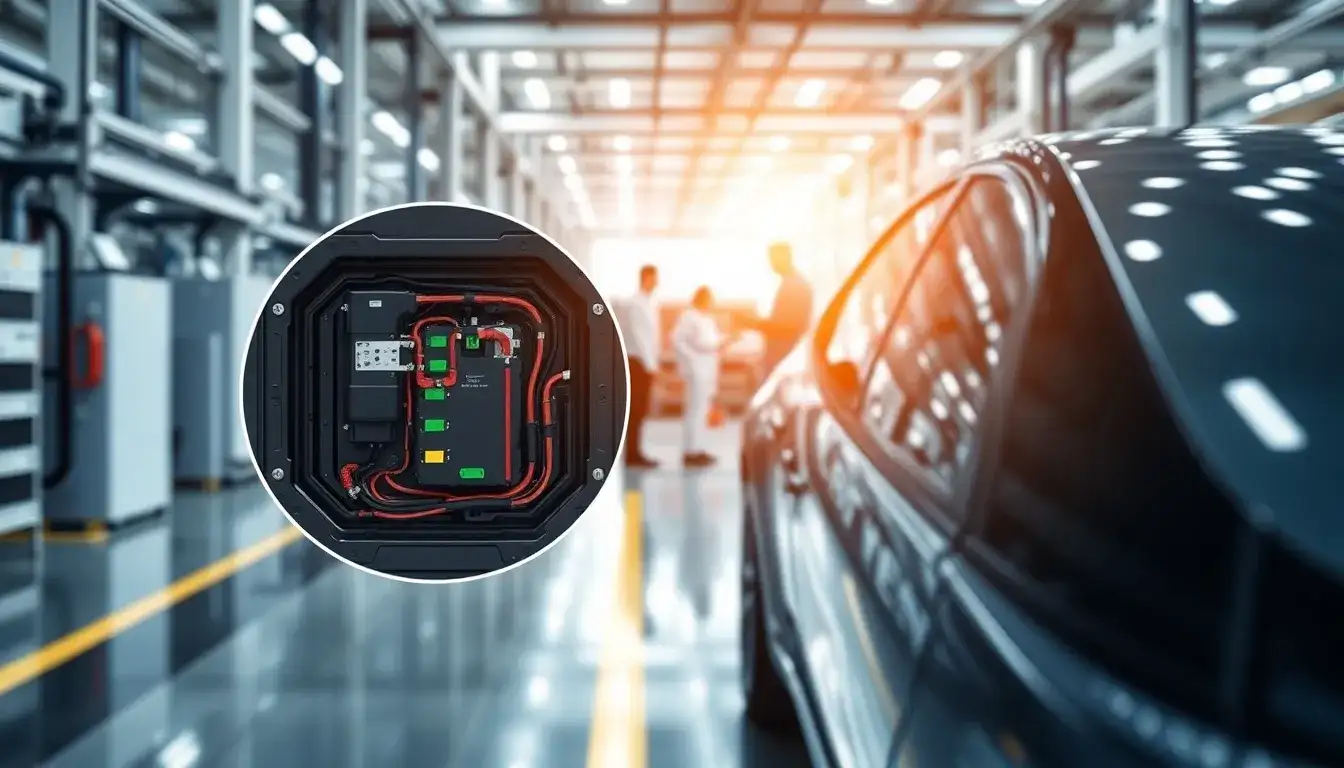
The recent announcement of the “most stringent battery safety regulations in history” has garnered significant attention as the popularity of electric vehicles continues to rise. The Ministry of Industry and Information Technology has issued a mandatory national standard titled “Safety Requirements for Power Batteries Used in Electric Vehicles,” which will take effect on July 1, 2025. This new standard transforms the expectation that power batteries should “not catch fire or explode” into a compulsory requirement, leading many to label it as the strictest battery safety regulation to date. This article explores how the new standards differ from the previous regulations, their core requirements, methods for achieving these requirements, and their implications for the industry and consumer experience.
Core Requirements of the New Standards
The new standards cover “7 individual tests and 17 battery pack or system tests,” expanding on the 2020 version. It introduces additional testing protocols, including bottom impact tests, safety tests after fast charging cycles, and thermal diffusion tests, imposing stricter safety criteria on power batteries. Clear requirements are established regarding mechanical safety, electrical safety, and thermal safety, with specific performance expectations under extreme conditions such as collisions, compression, and high temperatures.
The core aim of these new regulations is to comprehensively enhance the safety performance of batteries, thereby providing consumers with a higher level of safety assurance. The introduction of three rigorous tests not only strengthens the safety requirements concerning thermal diffusion but also adds multiple safety testing items to ensure the protection of power batteries.
Thermal diffusion refers to the phenomenon where thermal runaway in one battery cell can trigger a chain reaction in adjacent cells, potentially leading to fire or explosion. The new standard specifies that testing can be conducted through puncture simulation or internal and external heating methods.
During a puncture test, a 5 mm steel needle is driven into a target cell at a speed of 1 mm per second. After approximately 50 seconds, the target cell is breached, resulting in visible smoke and a rapid temperature increase in the monitored cell. Generally, the temperature of the punctured battery can reach around 300°C, while internal temperatures may soar to approximately 1000°C. Throughout this process, it is crucial that the entire battery system does not catch fire or explode.
Recognizing that bottom scrapes are unavoidable during vehicle operation, the new standard has also introduced a stringent bottom impact test. This test involves a 30 mm steel impact head striking designated risk points on the battery pack with an energy of 150 joules. These points are sensitive areas on the bottom of the battery pack, and the test evaluates the protective capabilities after such impacts.
Moreover, with the rapid adoption of fast charging for electric vehicles, the new standards have added safety tests for batteries after fast-charge cycles. These tests focus on battery cells charged within 15 minutes, which undergo external short circuit testing after 300 cycles, ensuring that they do not catch fire or explode.
Additional Extreme Tests for Battery Safety
Beyond thermal diffusion protection, bottom impact, and fast charging tests, electric vehicle power batteries must pass multiple extreme tests to be deemed safe for deployment. For instance, in crash simulation tests, fully charged battery packs are secured to a test vehicle and subjected to collisions from two directions, with requirements that the battery pack shows no leakage or shell rupture.
In fire tests, the battery pack is exposed to flames for 70 seconds and then subjected to indirect combustion for an additional 60 seconds, all while still meeting the criteria of not catching fire or exploding. In water immersion tests, battery packs are submerged in 1 meter of water for 30 minutes, followed by a 2-hour observation period, with the requirement that there is no water ingress, leakage, or loss of insulation performance. Furthermore, a compression test involves using a semi-cylindrical weight with a 75 mm radius to apply 100 kilonewtons of force from two directions, with the expectation that the battery pack remains leak-free, and does not catch fire or explode.
Stricter Requirements for “No Fire, No Explosion”
Compared to the 2020 standards, the new regulations impose stricter safety requirements on power batteries. The thermal diffusion testing requirement has been elevated from providing an alarm signal five minutes before a fire or explosion to ensuring that batteries do not catch fire or explode at all. Can this be realistically achieved? According to data from the Ministry of Industry and Information Technology, by February of last year, 78% of the 36 surveyed vehicle and battery companies had the technical capabilities to ensure their power batteries do not catch fire or explode, while an additional 14% anticipated achieving this technology by 2026-2027. The timing of the new regulations, introduced in March, raises questions about whether this means relevant technology has already matured, and if so, why it is only now being mandated.
Wang Fang, Chief Scientist at the China Automotive Technology and Research Center, emphasizes that each test item in the safety standards has corresponding safety boundaries. Actual usage scenarios may vary based on consumer habits and vehicle operating conditions, which could lead to different outcomes. It is not accurate to assume that batteries will never catch fire in any extreme situation. Consumers are strongly advised to adhere strictly to the product manuals and traffic safety regulations when operating their vehicles.
According to Zhang Hong, a new energy expert at the China Automotive Circulation Association, the requirement for manufacturers to comply with the new standards within one year does not necessarily indicate that the technology is fully mature. Early implementation of standards can foster a fair competitive environment in the market, weeding out non-compliant smaller enterprises while allowing capable, innovative companies to thrive. Additionally, even if the technology is not completely mature, setting such standards can incentivize companies to increase R&D investments and progress toward compliance.
Automakers Strengthening Battery Safety Technology
Currently, many automakers are intensifying their innovation efforts to fortify battery safety measures. A comprehensive technology upgrade across the supply chain is reshaping power battery safety standards. A representative from one automaker indicated that they are actively conducting tests that exceed the new standards, such as increasing the impact force in bottom tests or extending monitoring times for thermal diffusion to better validate battery safety. Additionally, they are employing innovative management techniques that blend avoidance and containment strategies for battery structures.
Another company representative mentioned that battery packs typically consist of hundreds of individual cells, and by effectively managing each cell, the overall safety of the battery pack can be ensured. Furthermore, some companies are opting for more stable material systems to enhance battery safety. For instance, using high-safety cathodes, flame-retardant electrolytes, and high-heat-resistant separators significantly minimizes the risk of thermal runaway. Additionally, employing cloud-based big data approaches allows for real-time diagnostics of battery health, enabling early identification of potential failures.
Accelerating Technological Innovation and Market Dynamics
With the new power battery standards set to take effect on July 1, 2025, the safety level of power batteries is expected to undergo systemic enhancements, significantly improving the safety of electric vehicles. What implications will these new standards have for the industry and consumer experiences? Zhang Hong from the China Automotive Circulation Association notes that these new regulations require battery systems to ensure they do not catch fire or explode under extreme conditions. This shift mandates a redesign of battery pack structures and thermal management systems, accelerating the industry’s transition toward higher quality. The market may develop a “stronger gets stronger” dynamic as a result. Furthermore, improved battery safety could lead insurers to lower premiums for related policies, thereby reducing costs for consumers in terms of vehicle purchase and usage.
The current national standards guarantee the basic safety of vehicles, with new requirements set to take effect on July 1, 2026, for newly approved vehicle models, while existing models will have until July 1, 2027, to comply. This transition period allows for adjustments, but all models must either be modified or phased out before this deadline. Some consumers may wonder if they should wait for the new standards to purchase an electric vehicle. Industry experts affirm that the existing national standards already ensure vehicle safety, and most manufacturers have proactively completed necessary technical preparations, allowing consumers to confidently choose models that comply with the current regulations.
Experts assert that both the new and existing standards maintain high safety levels. According to Hao Weijian, a senior engineer at the China Automotive Technology and Research Center, both standards have undergone extensive industry discussions and possess considerable technical integrity. Vehicles currently on the road meet the mandatory national standard requirements, making them generally safe to operate. During interviews, it was noted that some companies had already prepared technologically ahead of the new standards, utilizing higher safety batteries in their vehicles.
Based on preliminary research, over 80% of new energy vehicle companies currently have the technical capability to prevent fires or explosions following thermal diffusion tests, indicating a high overall level of safety technology in the industry. Thus, consumers need not be overly concerned.
Original article by NenPower, If reposted, please credit the source: https://nenpower.com/blog/new-stringent-battery-safety-regulations-set-to-transform-the-electric-vehicle-industry/

