

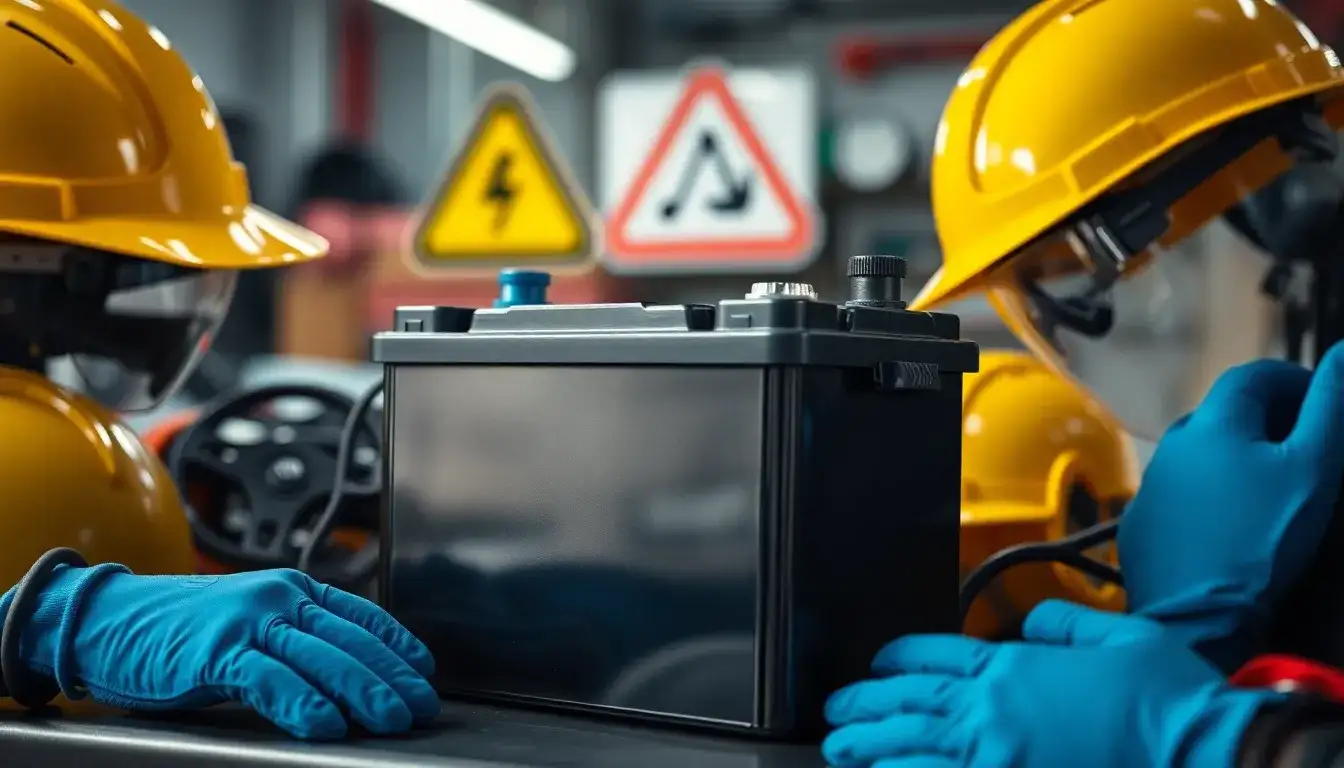
New Electric Vehicle Safety Regulations: The Strictest Battery Safety Standard Ever Released
On April 22, 2025, the Ministry of Industry and Information Technology officially released the “Safety Requirements for Power Storage Batteries Used in Electric Vehicles” (hereinafter referred to as the “New National Standard”), which will take effect on July 1, 2026. Compared to the 2020 national standards, the new regulations have changed the requirement for power batteries to be “non-flammable and non-explosive” into a mandatory requirement, earning the title of “the strictest battery safety order in history.” The purpose of this new regulation is to enhance the safety of electric vehicles and alleviate public concerns regarding the risk of spontaneous combustion in new energy vehicles.
Core Requirements of the New Standard
The core of the new standard lies in its stricter safety performance requirements for batteries. According to the new regulations, batteries must ensure that they do not catch fire or explode in the event of thermal runaway, and they must provide an alarm signal for thermal events, ensuring that smoke does not harm occupants. This heightened level of scrutiny has garnered widespread attention within the industry, with experts believing it will significantly improve the overall safety of electric vehicles.
As per the Ministry’s preparation notes, by February of last year, among 36 surveyed vehicle and battery companies, 78% already possessed the technical capability to prevent battery fires and explosions, while an additional 14% expect to acquire this technology by 2026-2027. This data indicates that the widespread availability of technical resources within the industry supports the implementation of the new national standard.
Responses from Battery Manufacturers
In light of the new regulations, several battery manufacturers have taken measures to enhance battery safety. GAC Aion has introduced a modular battery technology that improves safety through innovative “compartment isolation” designs and efficient thermal insulation layers. BYD’s blade battery has improved the stability and safety of battery packs by changing the shape and arrangement of the cells, demonstrating excellent performance in puncture tests. Additionally, CATL’s Kirin battery employs liquid cooling technology to effectively prevent thermal runaway and enhances the overall safety of battery packs through modular design. These technological innovations not only respond to the new national standard but also lay the groundwork for future development within the electric vehicle sector. As technology continues to advance, battery safety will be further enhanced, thereby increasing consumer confidence in electric vehicles.
Industry Restructuring and Market Impact
The implementation of the new standard will have profound effects on the electric vehicle industry. According to the regulations, the relevant requirements for new model type approvals will be implemented on July 1, 2026, while existing approved models will have until July 1, 2027, to comply. This means that approved models will have a one-year transition period, but they must either be modified or withdrawn from the market before 2027. It is anticipated that a price clearance for older models will occur in the latter half of 2026.
Industry analysts point out that to enhance battery safety, numerous improvements in the design and manufacturing of battery cells and packs will be necessary, significantly increasing research and development costs. This rise in costs will directly translate to higher prices for electric vehicles, leading to further industry restructuring. As market competition intensifies, only companies with technological advantages and safety assurances will be able to maintain their positions in the future market.
Original article by NenPower, If reposted, please credit the source: https://nenpower.com/blog/new-stricter-safety-regulations-for-electric-vehicle-batteries-officially-announced/

