

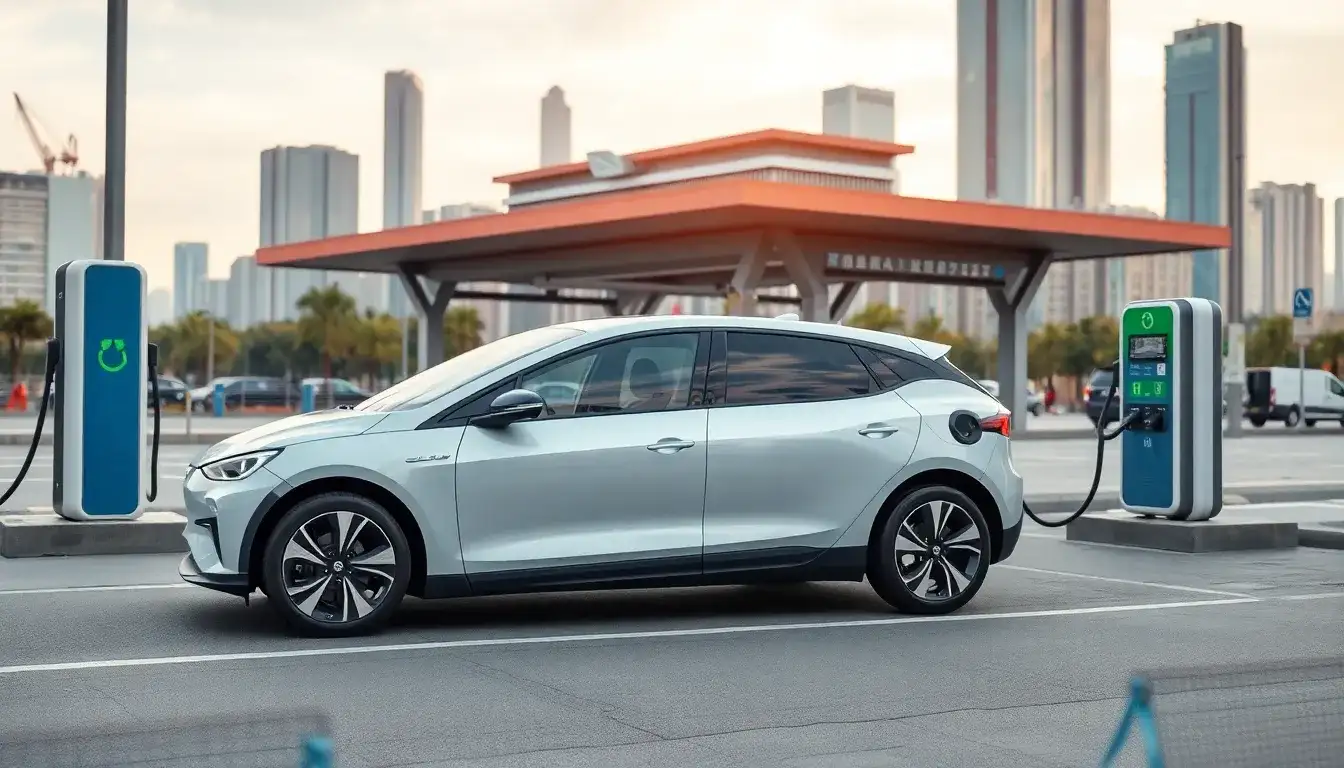
In recent years, the new energy vehicle (NEV) industry has experienced explosive growth driven by policy support and market demand, with advanced driver-assistance systems (ADAS) and battery technology becoming the focal points of competition. However, the rapid technological advancements have also led to a rise in accidents and controversies. Recently, several serious incidents involving ADAS have heightened consumer distrust in these new technologies. Additionally, incidents of battery fires have sparked renewed public concerns regarding safety.
On the evening of April 16, the Ministry of Industry and Information Technology (MIIT) of China released an announcement titled “Meeting on Management of Intelligent Connected Vehicle Product Access and Software Online Upgrade.” This announcement emphasized that automobile manufacturers must clearly define the boundaries of system functionality and safety response measures, prohibit exaggeration and false advertising, strictly fulfill their obligation to inform consumers, and take responsibility for production consistency and quality safety, thereby enhancing the safety levels of intelligent connected vehicle products.
On April 17, the MIIT announced the formal publication of the mandatory national standard GB 38031-2025 titled “Safety Requirements for Power Batteries of Electric Vehicles.” In terms of technical requirements, the heat diffusion test was revised from requiring a warning signal five minutes before ignition or explosion to a new standard of “no ignition, no explosion (still requiring a warning), and no harmful smoke to occupants.” The announcement and new national standard address two major pain points in the industry: marketing chaos and technological shortcomings, aiming to reshape industry order through regulatory upgrades and end the era of “trial and error at the cost of lives.”
Since the beginning of 2025, over 20 mainstream automotive companies in China have unveiled their next-generation ADAS strategic plans and technical roadmaps. Everbright Securities predicts that the penetration rate of L2+ urban ADAS in China is expected to approach 10% by 2025, with significant growth anticipated in 2026 and beyond, particularly in the 100,000-200,000 yuan product category, which may become a key driver for volume growth.
Although the internationally recognized SAE standard clearly defines L2 as “combined driving assistance,” some automakers have deliberately blurred the lines in their marketing, potentially misleading consumers regarding the capabilities of their systems. In February 2025, the MIIT and the State Administration for Market Regulation jointly released a notice to further strengthen the management of product access, recalls, and online software upgrades for intelligent connected vehicles, systematically standardizing access and advertising guidelines for the first time.
Notably, following the MIIT’s announcement, a document believed to be a summary of a meeting circulated online, covering three aspects: tightening advertising for intelligent driving capabilities, regulating the use of these capabilities, and strictly managing the deployment and risks associated with intelligent driving functions. The document specifies that public testing of vehicles is prohibited, requiring announcements for testing groups of 1,000 and 10,000 participants. It emphasizes the need for thorough validation without testing on users and notes that L2 standards will consider equivalent conditions, forbidding terms like “takeover.” There are also instructions to avoid excessive promotion and use terms like autonomous, intelligent driving, or high-level driving assists, instead recommending “combined driving assistance.” Applications that only fill out parameters without verification will be rejected, and companies must manage version risks and validate thoroughly before deployment.
For companies engaging in frequent over-the-air (OTA) updates, stricter examinations will be conducted. Emergency OTAs will proceed through recall and suspension, requiring approval from the State Administration for Market Regulation before implementation. Furthermore, the policy mandates that companies establish a full lifecycle data monitoring system to ensure accident traceability, with lifetime bans for companies found to have falsified data. These new regulations are compelling automotive companies to shift from a “marketing-driven” approach to a “technically pragmatic” one.
Although some companies have indicated an absence of official responses to the closed-door meeting’s content, industry insiders believe this is an inevitable trend. The official account of the Ministry of Public Security’s Road Traffic Safety Research Center recently highlighted traffic accidents caused by improper use of ADAS, revealing that some drivers mistakenly equate “driver assistance” with “autonomous driving.” The article pointed out that certain drivers engage in dangerous activities such as using their phones, sleeping, chatting, or eating while using ADAS, which not only violates traffic safety laws but also poses significant threats to other road users.
The safety of power batteries is another critical concern for new energy vehicles. Previously, the industry adhered to the GB 38031-2020 standard, which only required that batteries not catch fire within five minutes of thermal runaway, providing passengers with “escape time.” In April of this year, the MIIT released the GB 38031-2025 standard, upgrading the requirement to a strict “no ignition, no explosion.” The new standard’s severity is reflected in three main dimensions: it extends the thermal runaway observation period to two hours and requires that all monitored temperatures not exceed 60°C, compelling manufacturers to employ multi-layer protections such as flame-retardant battery cells, thermal insulation modules, and system-level intelligent monitoring; it introduces a bottom impact test simulating vehicle bottoming scenarios, ensuring battery packs can withstand impacts from a 30mm steel ball at 150 joules without leakage or open flames; and it addresses the risks associated with fast-charging technology, requiring batteries to pass external short-circuit tests after 300 fast charge cycles, targeting the industry pain point of lithium dendrite growth leading to internal short circuits. These tests have been referred to by industry experts as “torture tests,” designed to more accurately simulate short-circuit scenarios.
Experts believe that the new standards will reshape industry competition rules, with leading companies able to respond quickly due to their technological reserves, while smaller firms may face survival crises. Compliance costs for battery system modifications are expected to increase by 15%-20%, leading to the potential exit of some low-end models that cannot absorb these costs. By 2027, it is estimated that 30% of production capacity may be eliminated. The technological roadmap is also shifting: lithium iron phosphate batteries, due to their thermal stability advantages, are projected to capture an 80% market share, while ternary lithium batteries are expected to retreat to the high-end market, and solid-state batteries are seen as the future direction due to their non-flammable electrolytes.
The MIIT’s dual policies may appear to target specific technical issues, but they reflect a deeper transformation within the new energy vehicle industry: transitioning from a “speed first” approach to a “safety first” philosophy. Policies will no longer tolerate “technical trial and error” at the expense of public safety but instead enforce stringent standards to compel companies to maintain safety baselines. An industry insider, observing developments in the new energy vehicle sector, remarked that companies labeled as “intelligent driving” participating in this year’s Shanghai Auto Show may need to make significant adjustments, particularly as the event approaches and the safety of power batteries becomes a comprehensive battle spanning materials to entire vehicles.
Original article by NenPower, If reposted, please credit the source: https://nenpower.com/blog/new-regulations-transform-chinas-electric-vehicle-market-from-advanced-driver-assistance-to-battery-safety/

