

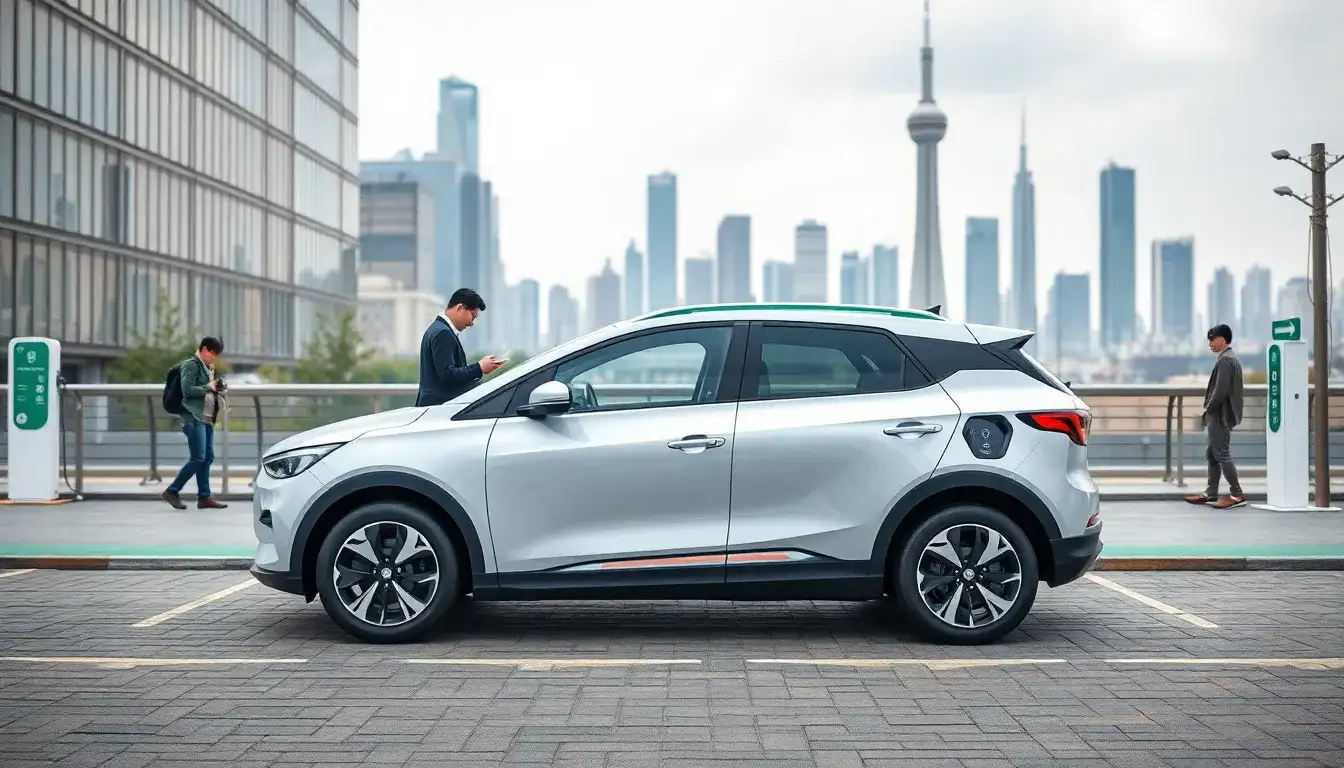
Reconstructing Safety Standards: The Strictest Regulations for New Energy Vehicles
In the spring of 2025, a regulatory storm quietly swept through the new energy vehicle industry. From the “cleansing” of intelligent driving narratives to the “life-and-death line” for power batteries, and from stringent regulations on car door handles to the “tightening spell” on OTA upgrades, various departments including the Ministry of Industry and Information Technology and the Ministry of Transport rapidly introduced numerous policies and opinions within a short span of days, tightening the industry’s “safety valve.” This corrective movement, which began in an era of technological frenzy, could reshape the future landscape of China’s new energy vehicles.
Power Batteries: No Fires, No Explosions! From “5-Minute Safety” to “Lifetime Assurance”
On March 28, 2025, the Ministry of Industry and Information Technology released the “Safety Requirements for Power Batteries Used in Electric Vehicles” (GB38031-2025), regarded in the industry as the “strictest battery safety regulation ever,” set to come into effect on July 1, 2026. According to these requirements, the safety buffer period for thermal runaway of power batteries has been eliminated, with a commitment of “no fires, no explosions (still requires an alarm)” now being a lifetime assurance, and any smoke produced must not harm passengers.
This means that many leading companies’ proud “nail penetration tests” are no longer sufficient; batteries must withstand three strikes from a 30mm steel ball with 150 joules of energy. Moreover, after 300 fast charging cycles, the batteries must remain safe, with no leaks, no shell ruptures, and no fires or explosions, while meeting insulation resistance requirements. A battery engineer revealed that “in the past, automakers could rely on thermal insulation materials to delay thermal runaway, but now they must address fundamental safety at the cell level.” This technological revolution is accelerating the industry’s reshuffling, with reports of car manufacturers delaying model launches due to product testing failures.
Intelligent Driving: Prohibiting Exaggerated Claims to Ensure “Human-Machine Co-Driving”
On April 16, 2025, a meeting announcement from the Equipment Industry Department of the Ministry of Industry and Information Technology stirred the automotive community. The meeting emphasized that automotive manufacturers must fully understand the requirements of the “Notice,” conduct thorough testing and validation of combined driving assistance systems, clarify system functionality boundaries, and implement safety response measures. Manufacturers are prohibited from making exaggerated or false claims and must uphold their obligations to inform consumers, taking on primary responsibility for production consistency and quality safety.
More stringent constraints come from the technological aspect. Automakers are required to refrain from declaring high-risk features such as valet parking and one-button summon, and driver status monitoring systems must employ facial ID recognition and seat posture sensors to ensure “human-machine co-driving.” Many automotive brands hastily replaced promotional materials featuring “advanced intelligent driving” and “hands-free” content. Industry insiders noted that “previously, we relied on algorithms to break through hardware limitations, but now regulations have changed the game, and everyone must focus on solid hardware.”
OTA Upgrades: From “Monthly Updates” to “Registration Tightening”
Firms frequently using OTA (Over-The-Air) technology for software and firmware updates are now required to manage risks associated with version updates. The same “Notice” mandates that companies reduce the frequency of OTA updates and thoroughly validate versions before implementation. Enterprises engaging in frequent OTA updates will undergo stringent reviews. Emergency OTAs will be treated as recalls, requiring market regulatory approval before proceeding.
This change not only marks the end of the “release first, fix later” development model but also ties the software iteration capabilities of car manufacturers directly to compliance risks, forcing the industry to shift from a “speed competition” to a “quality marathon.” According to the “2024 Top 100 New Energy Vehicles Report,” OTA frequencies vary widely among manufacturers, with some updating monthly or even weekly, while others may go a year and a half without an update. Almost 1,000 functions have been upgraded through OTA, primarily focusing on driving assistance features.
As of April 17, models known to have undergone OTA updates include the Tank 500 Hi4-Z (April 27, 2025), Xiaomi SU7 Ultra (early May 2025), Xpeng MONA (beginning May 7, 2025), and Chery Jietu Shanhai T2 (phased updates from May 9 to June 20). Notably, Xpeng MONA’s seventh OTA (version v1.8.3) introduced “remote control for linear parking” and “full-scene intelligent parking,” allowing users to control the vehicle from outside the cabin. Conversely, Xiaomi SU7 Ultra’s OTA, despite enhancing features like overspeed reminders, was paused due to widespread controversy among users.
Regardless, the previous reliance on frequent OTA updates to fix bugs, enhance performance, and maintain market interest has now been constrained. The industry may gradually move away from the romantic notion of “software-defined vehicles” to a more rigorous competition focused on “safety-defined survival.”
Car Door Handles: Mandatory National Standards to Be Established
From May 8 to June 7, 2025, the Ministry of Industry and Information Technology’s Science and Technology Department publicly solicited opinions on the mandatory national standard revision project for “Safety Technical Requirements for Car Door Handles.” The document outlines requirements for the installation of emergency inner door handles, marking requirements for hidden and emergency inner door handles, anti-pinch requirements and testing methods for electric outer door handles, and strength requirements and testing methods for both inner and outer door handles.
The “Technical Requirements” indicate that existing car door handles pose risks during emergencies, such as power failures in collisions or fires, leading to the failure of electric door handles and complicating rescue and escape efforts. The absence of clear, unified markings also adds to operational difficulties in emergencies.
Different automotive manufacturers have varied design philosophies regarding door handles. A representative from Great Wall Motors publicly criticized hidden door handles, stating their only benefit is a negligible reduction in wind resistance. During the National People’s Congress this year, Xpeng CEO He Xiaopeng also mentioned that they are working on better door handles that are easier to operate in all situations.
Designing simple door handles could require significant modifications for manufacturers. In July 2023, FAW Toyota recalled 12,205 bZ3 vehicles over safety issues with their “inward-folding” door handles, with industry insiders estimating the cost of losses could exceed 200 million yuan. This “millimeter-level game” regarding door handle design may shift the narrative of “innovation is always correct,” prompting Chinese manufacturers to reevaluate the balance between technological romanticism and safety.
A Revolution in Safety Awareness: Redefining the Survival Logic of Car Manufacturers
Under increasingly stringent regulatory pressure, the survival logic of car manufacturers is being rewritten. Leading companies like BYD have already invested over 50 billion yuan in electrification and intelligent technology (including blade batteries, fifth-generation DM hybrid systems, and Tian Shen Eye intelligent driving systems) for 2024. Huawei’s Qian Kun Intelligent Driving integrates cloud AI-generated extreme scenario data with onboard lidar and high-definition maps, opting for a comprehensive approach. These firms are set to distance themselves from rivals relying on promotional language to attract “intelligent traffic.”
The market landscape is also shifting. Cars priced under 100,000 yuan may struggle to pursue advanced driver assistance systems due to the prohibitive costs of hardware like lidar and 4D millimeter-wave radar. Data indicating increasing lidar installation volumes in Q1 2025 supports this observation.
Many industry insiders view this as not just a policy intensification but a revolution in safety awareness. As the safety standards for power batteries shift to a lifetime assurance of “no fires, no explosions,” and as manufacturers can no longer rely on frequent OTA updates to patch vulnerabilities, alongside battery recycling rates tied to corporate credit, the new energy vehicle industry is transitioning from “parameter competition” to a new era of “safety competition.” After this storm, only those companies that embed safety into their core values will survive and thrive in the future.
Original article by NenPower, If reposted, please credit the source: https://nenpower.com/blog/new-regulations-reshape-the-future-of-chinas-electric-vehicle-industry/

