

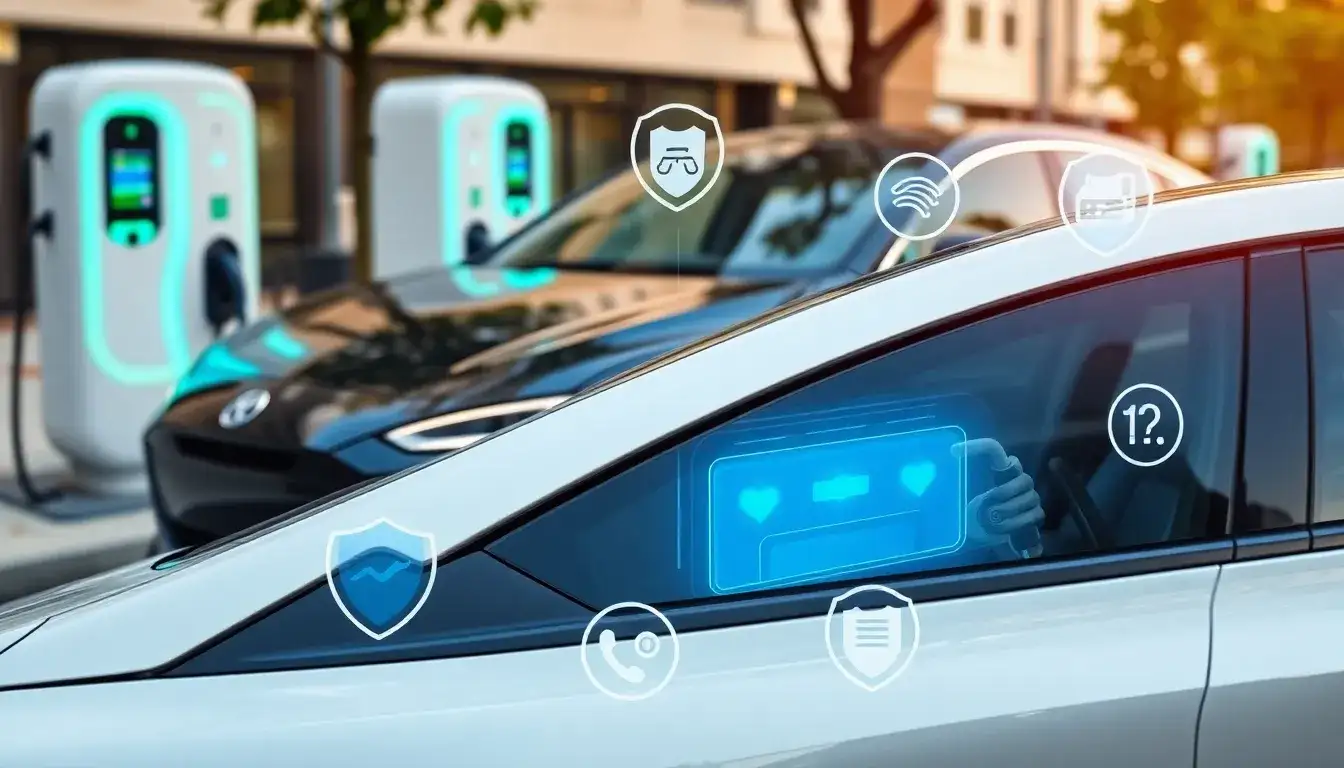
Recently, the Ministry of Industry and Information Technology officially released the GB38031-2025 “Safety Requirements for Power Storage Batteries Used in Electric Vehicles,” which will come into effect on July 1, 2026. This new regulation mandates that power batteries must be “non-flammable and non-explosive,” earning it the title of the “strictest battery safety regulation in history.” The updated national standard significantly raises the safety thresholds for power batteries, enhancing the previous requirement that batteries should not catch fire or explode within five minutes after thermal runaway. The new standards explicitly state that batteries must not ignite or explode (an alarm is still required), and smoke emissions must not harm occupants; monitoring points must not exceed 60°C.
Additionally, the testing standards have been comprehensively upgraded. The new regulations introduce a bottom impact test that assesses the protective capability of the battery after being struck from below. This includes requirements for no leakage, outer casing rupture, fire, or explosion, and compliance with insulation resistance standards. All passenger vehicle battery packs will be subject to these standards, broadening their applicability.

In response to the rapidly developing ultra-fast charging technology, the new standards impose stricter requirements: after completing <b>300</b> fast charging cycles (SOC <b>20%-80%</b>), the battery must still pass an external short circuit test to ensure that long-term fast charging does not lead to performance degradation or safety hazards. It is understood that for new models seeking type approval, the new regulations will be enforced starting <b>July 1, 2026</b>; for already approved models, the regulations will apply from <b>July 1, 2027</b>.

The upgrade of these standards enhances the safety and reliability of power batteries, completely eliminating the industry's complacency regarding the risks of thermal runaway. This marks the beginning of a "zero tolerance" era for battery safety.

Impact on Industry Development: In September of last year, <b>曾毓群</b> pointed out that the current safety factors of the majority of batteries on the market are far from sufficient. He emphasized the need to prioritize consumer interests, particularly safety, and to establish absolute safety standards. The new regulations will compel automotive manufacturers to redesign battery pack structures, reinforcing bottom protection and thermal management systems to further enhance battery safety. For instance, the bottom of the battery pack must integrate high-strength anti-collision beams, and the thermal runaway protection materials must meet high-temperature resistance and flame-retardant characteristics. Industry estimates suggest that compliance with the new regulations will increase the cost of battery systems by approximately <b>15%-20%</b>.

For battery manufacturers, outdated capacities and products will face accelerated elimination. Second and third-tier battery companies with weaker technological capabilities and insufficient product safety redundancies will experience immense pressure to transform or risk survival, while leading companies will solidify their competitive advantages. Notably, companies like <b>CATL</b> and <b>BYD</b> are already well-prepared with technological advancements. CATL's <b>CTP 3.0 Kirin battery</b> features a reinforced structure that improves compression resistance by <b>30%</b>, while BYD's blade battery integrates a self-developed "smart eye" system that can provide a <b>10-minute</b> early warning for thermal runaway.

Furthermore, <b>2025</b> is anticipated to be a pivotal year for the commercialization of ultra-fast charging technology in power batteries. The <b>Huawei</b> and <b>Jianghuai</b> collaboration has launched the <b>尊界 S800</b> range extender with peak charging rates reaching <b>6C</b>; BYD's Super e-platform based on its second-generation blade battery technology claims peak rates of up to <b>10C</b>, with an average of <b>6C</b>. <b>Xpeng Motors</b> has announced that its <b>2025</b> models, the G6 and G9, will come standard with <b>5C fast charging</b>. As ultra-fast charging technology expands into the mainstream market below <b>200,000</b>, it is projected that by <b>2025</b>, the penetration rate of models supporting high-voltage fast charging may exceed <b>30%</b>.

With the imminent implementation of the new standards, the future safety of power batteries and high-voltage charging is expected to improve significantly, which may lead to a decrease in insurance payout ratios and amounts, subsequently lowering insurance premiums for new energy vehicles.

In light of recent incidents, such as the fire involving the <b>Xiaomi SU7</b> on the highway that resulted in three fatalities, the safety risks of new energy vehicles have come under scrutiny once again. Although the cause of the accident is still under investigation, it underscores the importance of evaluating the safety of core technologies in smart and electric vehicles, both of which are interrelated. A strong signal is being conveyed: as any new technology approaches large-scale application, its potential safety risks will face increasingly rigorous scrutiny from public opinion.

The <b>Xiaomi SU7</b> had only been on the market for a year, and it has been just four years since <b>Lei Jun</b> announced the venture into automotive manufacturing. In contrast, the typical research and development cycle for fuel vehicles usually spans <b>5 to 6 years</b>. The shorter development cycle for new energy vehicles can be attributed to the integration of resources in critical hardware like batteries and motors, which accelerates the R&D process. Additionally, the rapid pace of competition in the new energy vehicle market necessitates constant innovation; failing to introduce new models can lead to being surpassed by competitors. This dynamic compels manufacturers to secure their ecological positions first and then address product shortcomings, often referred to as <b>OTA</b> (Over-the-Air updates).

As evidenced by past reports, fires in new energy vehicles often spread rapidly, making them challenging to extinguish and sometimes accompanied by explosions. The chemical properties of lithium batteries inherently pose risks. Data from the <b>National Fire Rescue Administration</b> in <b>2024</b> shows that the self-ignition rate for new energy vehicles (0.044%) is slightly lower than that of fuel vehicles (0.058%), but the speed and destructiveness of new energy vehicle fires far exceed that of their fuel counterparts. The <b>Xiaomi SU7</b> incident illustrates this, as the fire spread quickly after a collision, ultimately preventing occupants from escaping.

Accordingly, under the guidance of the new standards, battery manufacturers and vehicle manufacturers must clarify their safety objectives for power batteries. They need to ensure that batteries remain stable under various extreme conditions during the design phase to avoid safety issues like thermal runaway. The implementation of the new national standard will inevitably intensify industry challenges in the short term and contribute to market reshuffling. However, in the long term, it will drive the entire industry to focus on "absolute safety" rather than other concerns, such as an excessive focus on range. This will compel companies to achieve competitive upgrades through technological innovation, steering the industry towards a path of "refined cultivation."
Original article by NenPower, If reposted, please credit the source: https://nenpower.com/blog/new-regulations-mandate-safety-standards-for-power-batteries-a-major-shift-in-the-electric-vehicle-market/

