

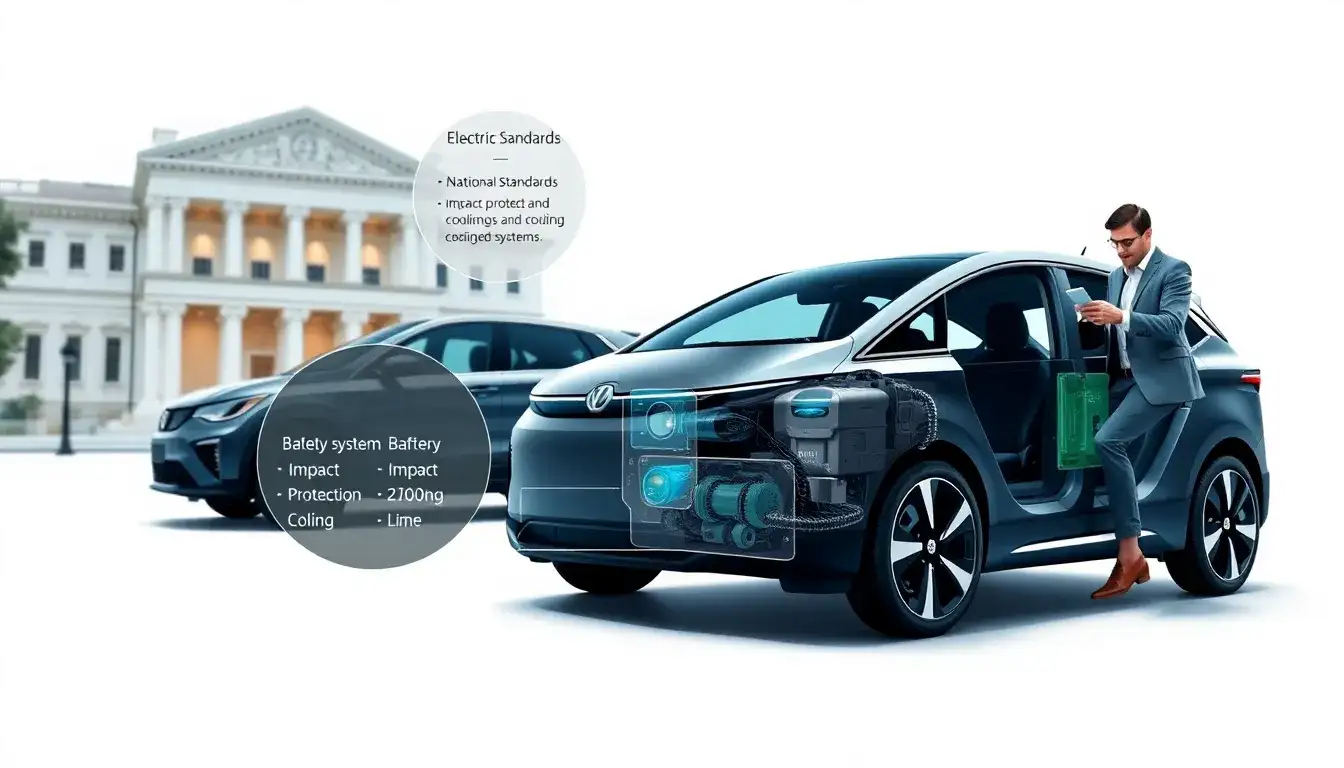
“The Strictest Electric Vehicle Safety Regulations Ever Released” raises questions about the impact on the new energy vehicle industry. The Ministry of Industry and Information Technology has introduced national standards for electric vehicle battery safety, set to take effect on July 1, 2025.
Recently, the Ministry of Industry and Information Technology published the “Mandatory National Standard for Safety Requirements of Electric Vehicle Power Batteries,” which will be enforced starting July 1, 2025. This standard is widely regarded as the strictest electric vehicle safety regulation to date. Many experts have evaluated it as “the strictest electric vehicle battery safety regulation ever released.” Compared to previous national standards, the new requirements for batteries are significantly more rigorous.
So, what are the core requirements of the new standards? How will these core requirements affect the future of the automotive industry, particularly in terms of cost and usability?
The new standards outline seven performance tests and 17 battery system tests. Compared to the 2020 version, the new regulations have increased the severity of safety tests, including tests for thermal runaway, short circuits, and high-voltage resistance.
The core requirement is that batteries must not catch fire or explode under extreme conditions. This has led to increased scrutiny from many in the industry, who believe this new standard sets a precedent for electric vehicle safety.
The new national standard clearly defines the safety requirements for battery mechanics, electrical safety, and thermal management, focusing on battery performance during impacts, crushing, and high-temperature conditions.
These stringent requirements primarily focus on the safety characteristics of the batteries that supply power to electric vehicles, especially concerning their thermal stability. The goal is to provide higher safety protection for users.
Moreover, the newly issued standards highlight the need for batteries to remain stable and safe without igniting or exploding under testing conditions. In the new standards, the requirements for thermal stability and battery integrity are more clearly defined to ensure safety during high-demand situations.
In addition to thermal performance, the new standards also require batteries to withstand various tests, such as submersion, where batteries are immersed in water for 30 minutes and then checked for leaks.
This thorough testing regime aims to ensure that electric vehicle batteries can handle extreme conditions while maintaining their integrity. The new standards are a significant step forward, providing a framework to enhance battery safety across the industry.
Overall, the new national standards represent a comprehensive approach to electric vehicle battery safety, focusing on minimizing risks associated with battery performance and ensuring user safety.
As these standards come into effect, the automotive industry will need to adapt to these stringent requirements, which may lead to higher production costs but ultimately aim to enhance consumer safety.
Original article by NenPower, If reposted, please credit the source: https://nenpower.com/blog/new-national-standards-for-electric-vehicle-battery-safety-implications-for-the-industry-and-consumer-use/

