

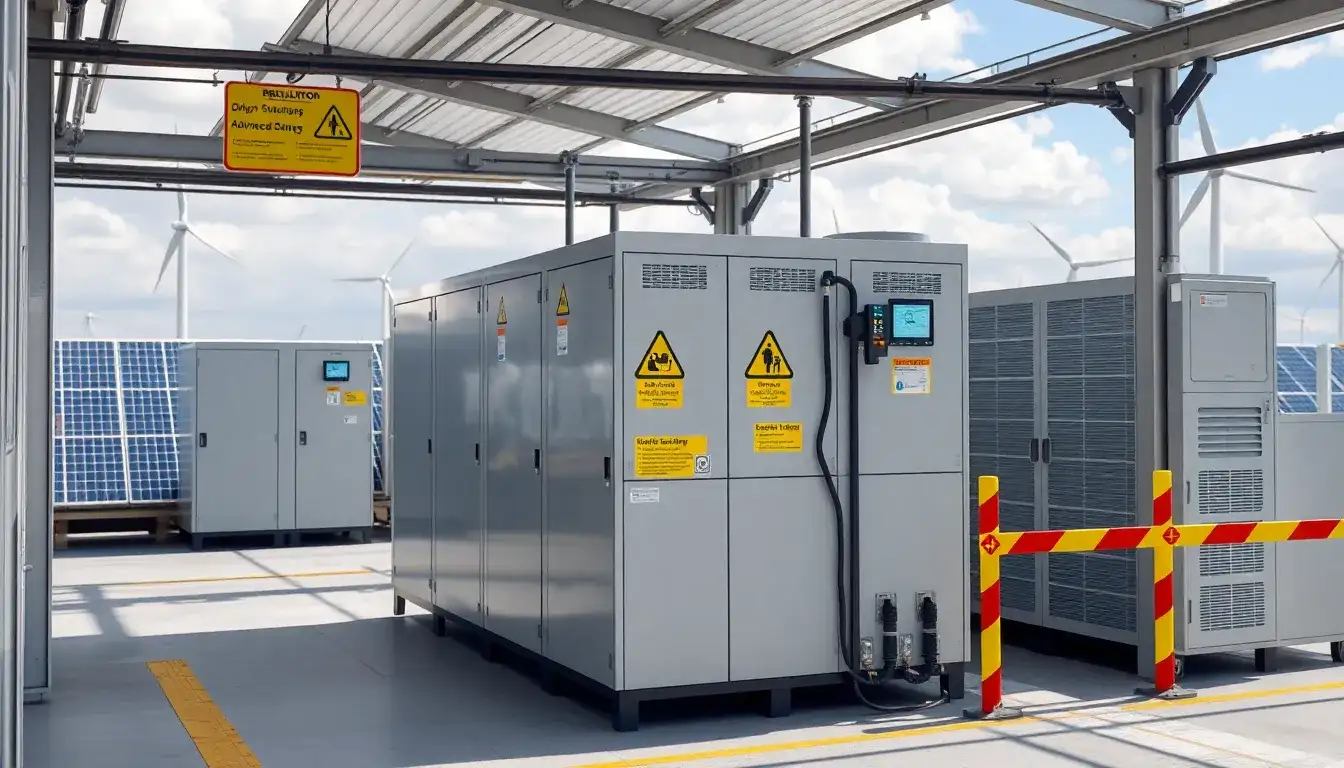
A parliamentary debate today has highlighted the urgent need for regulatory reform to establish national safety standards for battery energy storage systems (BESS). Liberal Democrat MP John Milne is spearheading the discussion, emphasizing that relying solely on local regulations is obstructing the transition to green energy and putting communities at risk.
A significant concern among community members when developers propose BESS projects is the perceived fire risk, which they believe outweighs the advantages of these technologies in facilitating the energy transition. Milne argues that a clear national fire safety standard for BESS would “accelerate, not hinder” the development of this technology. The UK aims to achieve its Clean Power 2030 goals, which necessitate up to 27GW of BESS to support the anticipated increase in renewable energy capacity.
Milne stated, “We need these battery storage facilities to make renewable energy work—they’re essential for storing wind and solar power. With government projections indicating a growing demand for grid energy storage, we must address regulatory gaps now to ensure these facilities are constructed safely from the outset.”
### Battery Storage Fire Risk
Lithium-ion (Li-ion) batteries, known for their high energy density, efficiency, and long lifecycle, dominate the BESS market. However, safety concerns related to the potential for thermal runaway within these batteries pose challenges to their deployment. The Faraday Institution, referenced in a government research briefing before the debate, estimates that lithium-iron-phosphate batteries constituted approximately 60% of the lithium-ion BESS market in the UK in 2022, owing to their lower costs and greater efficiency.
Large-scale BESS facilities contain millions of battery cells, which, if not adequately shielded or insulated, can facilitate rapid fire spread. Li-ion batteries can experience thermal runaway when a part of the battery is damaged or has a manufacturing defect, leading to a decomposition of internal components that generates heat. Without adequate external cooling, this process can result in a fire. Although BESS fires are rare, with only one recorded incident in the UK last year and a previous fire in Liverpool in 2020, the storage industry is committed to maintaining high safety standards.
In a blog post for Energy Storage News, Dr. Judy Jeevarajan of UL Research Institutes stressed that proactive risk management and mitigation strategies are essential for reducing the likelihood of fires and other catastrophic events. Milne is advocating for local fire services to be statutory consultees for all industrial-scale battery storage projects, along with the implementation of mandatory safety measures.
In August 2023, the UK government issued planning guidance to encourage developers and local planning authorities (LPAs) to consult fire and rescue services regarding BESS applications; however, this remains a non-statutory recommendation. The National Fire Chiefs Council has developed a best practice guide for fire safety in grid-scale BESS, which the government directs developers and LPAs to follow.
### Frameworks for Battery Fire Safety
The UK government asserts that a “robust regulatory framework” governs the components of battery storage systems, requiring manufacturers to ensure product safety before market introduction and proper installation. Any safety issues that arise post-market must also be addressed. Energy storage trade associations advocate for safety standards, and the lack of a uniform standard is often attributed to the relative novelty of energy storage technologies rather than hesitance from the industry.
The European Association for Storage of Energy (EASE) has been actively promoting the adoption of safety standards across Europe. Additionally, in April of this year, the American Clean Power Association (ACP) released a BESS safety framework outlining critical actions and policy recommendations for the industry. In the United States, legal requirements are already in place to ensure that developers effectively mitigate fire risks, with New York leading the way. The New York State Inter-Agency Fire Safety Working Group was established by Governor Kathy Hochul in response to concerns about BESS safety, resulting in updates to the fire code aimed at balancing safety improvements with the need for efficient storage deployment.
If a similar regulatory standard were enacted across the UK, it would help ensure consistent safety measures are met and alleviate the safety concerns that currently delay decisions by local planning authorities.
Original article by NenPower, If reposted, please credit the source: https://nenpower.com/blog/new-national-safety-standards-for-battery-storage-systems-to-boost-uk-deployment/

