

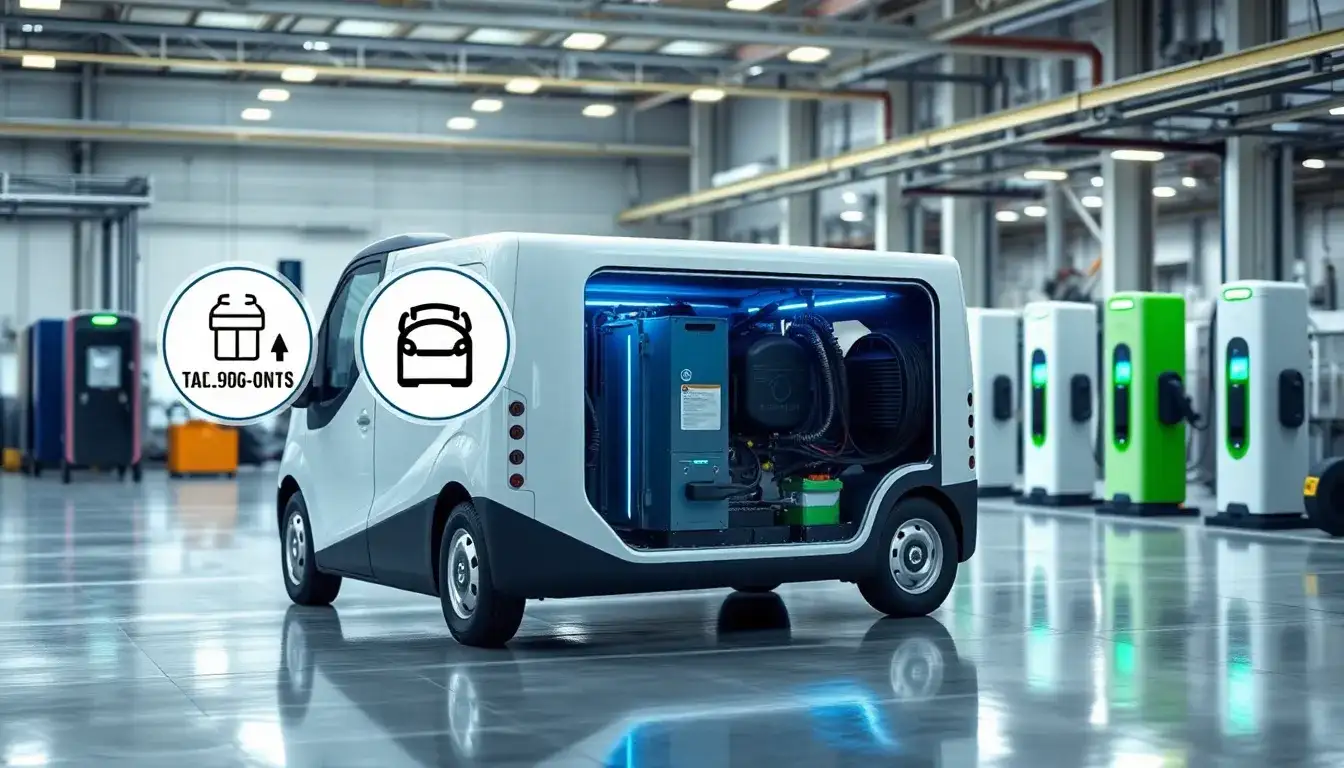
New National Battery Standards: No Fire, No Explosion!
The recently released GB38031-2025 standard for electric vehicle power batteries introduces mandatory clauses stating that batteries must not catch fire or explode. This significant upgrade in safety standards exposes the longstanding reliance of China’s commercial vehicle industry on low-cost competition while neglecting fundamental technological innovation.
The new regulations mandate that battery systems must not exhibit open flames or explosions within two hours following thermal runaway, and that monitoring point temperatures must not exceed 60℃. Additionally, new tests for bottom impact and safety after 300 fast charge cycles have been introduced. This not only raises the technical threshold but also initiates a major industry overhaul prioritizing safety, fundamentally reshaping the competitive landscape of new energy commercial vehicles.
Redefining Safety Standards
The previous standard allowed for a “5-minute escape time” after a fire or explosion, essentially providing a survival window for passengers. In contrast, the new regulations push safety requirements towards the goal of “permanent safety.” This shift reflects the harsh reality in the commercial vehicle sector, where 37% of electric vehicle fire incidents in 2024 were triggered by chassis impacts, and 21% were related to thermal runaway from fast charging. Given the high load and operational intensity of commercial vehicles, battery packs often face harsher physical impacts and electrochemical degradation compared to passenger vehicles.
The rigor of the new regulations is further emphasized by its innovative testing methods. Companies can choose from three triggering methods: puncture, external heating, or internal heating elements. If none trigger thermal runaway, the battery is deemed compliant. This unconventional testing logic compels manufacturers to abandon “exam-oriented” technology approaches and develop multi-tiered protective systems ranging from flame-retardant materials at the cell level to intelligent monitoring at the system level.
Cost Challenges
The impact of the new standards on the commercial vehicle sector is far more significant than on passenger vehicles. Estimates indicate that to comply with these new requirements, battery systems will need to incorporate high-strength crash beams and intelligent thermal management systems, which will inevitably raise costs for the entire vehicle. The New Energy Vehicle Promotion Association predicts that vehicles meeting the new standards may see insurance premiums reduced by 15%-20%, and lifetime battery warranties could exclude thermal runaway liability. However, whether these benefits can offset the costs of technological upgrades remains uncertain.
For heavy-duty trucks, battery costs currently account for over 40% of total vehicle costs. If new safety configurations increase the cost by 30,000-50,000 RMB per vehicle, and considering that commercial vehicles typically cover 200,000 kilometers per year with a cost reduction of 0.3 RMB per kilometer, it would take at least five years to recoup this investment. While sales of new energy commercial vehicles in China are projected to grow by 28.9% in 2024, the penetration rate remains low at 17.9%, significantly below the nearly 50% rate for passenger vehicles. This disparity creates a cautious approach towards investments in safety technology.
Technological Shifts
As the lithium battery industry grapples with technological anxieties due to the new standards, sodium-ion batteries are unexpectedly finding opportunities. China Science and Technology has introduced commercial vehicle solutions leveraging sodium resources, which are 400 times more abundant than lithium, aiming to carve a niche in the commercial vehicle sector. However, despite a higher energy density of 165Wh/kg compared to the industry average, it still falls short of the 300Wh/kg offered by lithium iron phosphate batteries and struggles with performance degradation in low temperatures.
This “cost-performance priority” technology is better suited for short-distance logistics rather than the demanding range requirements of long-haul heavy-duty trucks. Solid-state batteries, which companies like Ningde Times and Yiyuan New Materials are rapidly developing, may present a true breakthrough. Their non-flammable nature aligns perfectly with the new safety standards. However, the high production costs—currently 3-5 times that of liquid batteries—pose a significant barrier to widespread adoption. Even with plans to reach 60GWh of production capacity by 2026, large-scale implementation will depend on government subsidies and collaborative research with vehicle manufacturers.
Industry Restructuring
The introduction of these new standards is not merely a technical upgrade; it represents a strategic shift in China’s new energy vehicle industry from “wild growth” to “meticulous cultivation.” As Western markets raise trade protectionist barriers through carbon tariffs and technical barriers, China is fortifying its technological defenses with the “strictest battery standards ever,” compelling companies to transform safety standards into competitive advantages for international markets. The establishment of factories in Europe by Ningde Times and the expansion of BYD’s blade batteries into Southeast Asia exemplify this strategy. However, the flip side is that the new standards may exacerbate the “Matthew Effect” in the industry. Leading companies, with their technological and financial advantages, will likely accelerate the elimination of outdated capacities, while smaller firms face a dilemma of either upgrading or facing extinction. Estimates suggest that by 2025, only 78% of vehicle manufacturers will possess the necessary technology reserves, with 30% of outdated capacities potentially being forced out of the market. This brutal market cleansing may enhance overall industry safety but could also temporarily slow the transition to new energy commercial vehicles.
Conclusion
Safety is no longer a mere choice; it is a matter of survival. As the mandate of “no fire, no explosion” transitions from marketing rhetoric to legal necessity, the Chinese commercial vehicle industry finds itself at a crossroads of technological revolution. This industry reshaping, driven by safety, is both a definitive test of companies’ technological strength and a crucial battle for breaking through the “large but weak” dilemma facing China’s new energy vehicle sector. For commercial vehicle users, the elevation of safety standards translates to lower operational risks and higher asset retention values; for the industry, it is a confrontation with the “safety Darwinism” evolution—only by embedding safety into every aspect of technological innovation can companies secure their future in the global new energy commercial vehicle arena.
Original article by NenPower, If reposted, please credit the source: https://nenpower.com/blog/new-national-battery-standards-introduced-to-enhance-safety-in-electric-commercial-vehicles/

