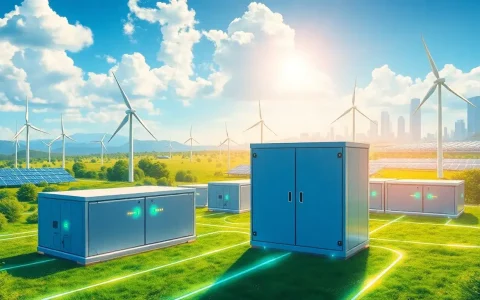
New Energy Storage Advancements
As the capacity of installed energy storage systems continues to grow, technological innovations are making significant breakthroughs, and the electricity market framework is becoming more refined, the role of operational entities is becoming clearer. New energy storage is making substantial strides toward large-scale deployment.
Currently, to achieve large-scale, industrialized, and market-oriented development in new energy storage, it must overcome three major challenges: technology, cost, and quality.
Exploring and improving the market participation mechanisms for new energy storage and establishing viable business models is crucial for addressing the challenges of scaling, industrialization, and market integration. This is essential for facilitating high-quality development in the sector.
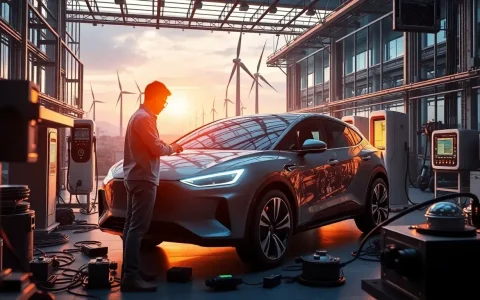
As the wind energy from the Gobi Desert in Qinghai lights up cities like Jinan in Shandong through the "West-to-East Power Transmission" project, and as virtual power plants in Hainan provide relief during sweltering summers, new energy storage is evolving beyond mere technical terminology. It is becoming a driver of green transformation and a cornerstone for energy security.

New energy storage refers to energy storage technologies, excluding pumped hydro storage, that primarily output electricity and provide services. This includes advanced lithium-ion batteries, flow batteries, compressed air storage, and flywheel energy storage. The role of energy storage can be simply understood as a "super power bank," smoothing out the volatility of solar and wind power, increasing the share of renewable energy, and enhancing the flexibility of conventional thermal and nuclear power sources.

New energy storage is a crucial technology and foundational equipment for constructing a modern power system. It supports the goals of carbon peaking and carbon neutrality and is vital for fostering new domestic energy business formats and securing strategic advantages in the international arena.

In 2022, the National Development and Reform Commission and the National Energy Administration issued the "14th Five-Year Plan for New Energy Storage Development," which outlines the goal for new energy storage to transition from its initial commercialization phase to large-scale development by 2025, thereby meeting the conditions for widespread commercial application.

This year marks the final year of the 14th Five-Year Plan and represents a pivotal year for the development of the new energy storage industry. With the dual drivers of policy encouragement and market demand, new energy storage is shifting from pilot demonstrations to large-scale commercial use, entering a golden period of rapid development. By the end of 2024, the cumulative installed capacity of new energy storage projects in the country is expected to reach 73.76 million kilowatts (168 million kilowatt-hours), approximately twenty times the capacity at the end of the 13th Five-Year Plan, with a growth exceeding 130% compared to the end of 2023. The average storage duration has increased to 2.3 hours, an improvement of about 0.2 hours since the end of 2023.

According to interviews with reporters from <b>Outlook</b> magazine, new energy storage still faces challenges on its path to scaled development, including uneven technological advancements, low utilization rates of storage stations, long payback periods, and intense price competition. Improving the market mechanisms for new energy storage using market-oriented approaches is crucial for achieving high-quality development.

Entering a rapid development phase, by 2024, the role and positioning of new energy storage will undergo fundamental changes, significantly enhancing its importance and value. China's new energy storage industry is developing rapidly, with expanding installation capacities, continuous technological breakthroughs, and a more refined electricity market framework, solidifying the role of operational entities and propelling new energy storage towards large-scale deployment.

The cumulative installed capacity of new energy storage has now surpassed that of pumped hydro storage, making it the second-largest flexible adjustment resource in the power system, following thermal power. An example is the Chengxuan Energy Storage Station, built by China Nuclear Huineng (Shanxi) Energy Co., Ltd. in Yuncheng, Shanxi. This is the first and currently the largest energy storage station in Yuncheng, with a construction scale of 200MW/400MWh, meaning it can charge and discharge at a maximum power of 200MW, with a storage capacity of 400MWh. This translates to the potential to supply electricity for approximately 130 households for a year based on an average annual household consumption of 3,000 kWh.

According to Zhao Peng, the director of the company’s power marketing center, the station aims to achieve a target of 28 million kWh in grid-connected electricity by the first quarter. Once operational, it will provide various services such as peak shaving, frequency regulation, black start, and demand response, enhancing the grid's peak shaving capability, overall utilization of renewable resources, and stability of operations in the Yuncheng region. The scale of the Chengxuan Energy Storage Station reflects the trend of centralized and large-scale energy storage stations in China.

Looking at the scale of individual installations, as of the end of 2024, projects with capacities of 100,000 kilowatts or more account for 62.3%, a 10 percentage point increase from 2023, while projects between 10,000 and 100,000 kilowatts represent 32.8%, and those below 10,000 kilowatts make up 4.9%. This trend coincides with the continuous rise in renewable energy installations in China. By the end of 2024, the installed capacity of renewable energy is expected to reach 1.889 billion kilowatts, a 25% year-on-year increase, accounting for approximately 56% of the total installed capacity in the country.

Industry experts emphasize that the supply and consumption of renewable energy must be balanced; increasing supply capability to ensure generation is crucial, as is accelerating the construction of modern power systems to ensure that energy can be effectively utilized. New energy storage plays a vital role in peak supply assurance and in maintaining the safe and stable operation of power systems.

According to predictions from the Zhongguancun Energy Storage Industry Technology Alliance, it is estimated that by 2025, new energy storage installations will add between 40.8GW and 51.9GW, leading to cumulative installed capacity exceeding 100 million kilowatts.

Technological innovations are continuously making progress. Various new energy storage technologies, including electrochemical, mechanical, chemical, and electromagnetic storage, are flourishing. These advancements will effectively promote energy production and consumption, achieving multi-energy collaboration and further facilitating the scalable development of new energy storage.

For example, the 110kV Dinglun Energy Flywheel Storage Station in Tunliu District, Changzhi, officially connected to the grid on September 4, 2024. This flywheel storage station features millisecond-level response adjustment capabilities, making it one of the high-quality adjustment resources for the grid. The project fills a gap in the engineering application of large-capacity flywheel energy storage in China.

According to Wang Xin, the deputy commander of the Dinglun Energy Flywheel Storage Station project, the station will promote the scaling of flywheel storage technology into commercial demonstration applications. Since the 14th Five-Year Plan period, various technological breakthroughs have allowed a diverse range of new energy storage technologies to flourish. Lithium-ion batteries dominate the market due to their high energy density and relatively low costs, accounting for 97.4% of the installed capacity by the end of 2023. Additionally, compressed air storage, flow battery storage, and flywheel storage technologies have also developed rapidly.

Since 2023, multiple projects involving 300 megawatts of compressed air storage, 100 megawatts of flow battery storage, and megawatt-level flywheel storage have begun construction, showcasing a trend towards multi-faceted development that includes gravity energy storage, liquid air storage, and carbon dioxide storage.

The electricity market framework is also continuously being refined. Since the start of the new round of electricity system reforms in 2015, China has established a multi-layered, unified electricity market framework that efficiently coordinates provincial, regional, and inter-provincial operations, integrating long-term, spot, and ancillary services.

In November 2024, Guangdong, Guangxi, Yunnan, Guizhou, and Hainan provinces completed a trial run for full-month spot settlement. This trial attracted 315 generating entities and 1,800 generating units, marking a historic breakthrough in the market coverage, types of participants, and transaction entities.

This trial represents a microcosm of the accelerated entry of operational entities into the market. Over the past decade of the new round of electricity reforms, the number of electricity operating entities in China has increased from 42,000 to 816,000, nearly a 20-fold growth. With the rapid entry of new operating entities such as distributed energy resources, virtual power plants, and load aggregators, enhancing the development level of China’s new energy storage industry is becoming an important task.

Industry experts suggest that there should be greater synergy and connection between the development plans for energy storage and distribution networks, renewable energy, and electric vehicles. Relevant departments should lead efforts to adjust demand, grid structure, and load characteristics based on the characteristics of renewable resources, and regularly predict and publicly release demand for energy storage capacity to guide investment through market-oriented means.

The Executive Vice President of the Zhongguancun Energy Storage Industry Technology Alliance, Yu Zhenhua, noted that all segments of the energy storage industry, including raw materials, core technologies, integration, and application, are developing rapidly and are in a state of healthy competition. Currently, China accounts for 70% of global battery production capacity and 75% of electrochemical storage, with 90% of production for cathodes and electrolytes, indicating significant advantages and established scale.

However, to achieve large-scale, industrialized, and market-oriented development, new energy storage must overcome the three major hurdles of technology, cost, and quality. Key core technologies still require breakthroughs. Current storage products, particularly large-scale storage, have not yet fully validated their cycle life and overall lifecycle performance, necessitating enhanced technological innovation and research.

Zhao Peng points out that some new energy storage technologies are still immature. For instance, most manufacturers claim that lithium-ion batteries can last for "6000 full charge and discharge cycles," with a lifespan of about 10 years. However, this figure is based on experimental data, and the industry has not been around for a full decade, making it challenging to validate the reliability of industrialized products in the short term.

On February 17, the Ministry of Industry and Information Technology and seven other departments issued the "Action Plan for the High-Quality Development of the New Energy Storage Manufacturing Industry," which encourages the development of diverse energy storage technologies and emphasizes breakthroughs in efficient integration and intelligent control technologies, focusing on multi-dimensional safety across the entire lifecycle.

Different scenarios have varying safety requirements, and the safety characteristics of different technological routes also differ. Overall, safety can be ensured across three dimensions: energy storage technology routes, systems, and firefighting. For example, advancements in solid-state lithium battery safety technologies can enhance system operation and maintenance safety monitoring systems, while also considering extreme scenarios throughout the entire project lifecycle to ensure safety standards.

Mandatory storage requirements hinder market adjustments. The mechanisms for market participation in new energy storage are not yet fully developed. The imposition of mandatory storage requirements has resulted in storage stations being underutilized, with low operating rates and long payback periods, preventing the full realization of storage value. According to data from the China Electricity Council, the average equivalent utilization coefficient for energy storage paired with renewable energy was only 6.1% in 2022; by June 2024, the daily operating time for paired energy storage was just 3.74 hours, with an annual utilization index of 31%. The actual operational efficiency of paired energy storage is low, limiting its regulatory role within the power system.

Industry experts believe that while the wind-solar-storage model has accelerated rapid growth in the storage industry, previous mandatory storage policies have led to disorderly competition. In February of this year, the National Development and Reform Commission and the National Energy Administration issued a notice clarifying that "mandatory storage configuration cannot be a prerequisite for the approval, grid connection, or online access of new renewable energy projects." The discontinuation of mandatory storage requirements will pave the way for a new development landscape for new energy storage.

In Wang Xin’s view, this policy sends a positive signal that the construction of energy storage projects must follow market principles, transitioning from "mandatory configuration" to "demand-based configuration," which will accelerate the utilization rate of new energy storage projects and diversify their revenue models, promoting healthy industry growth.

While exploring market adjustment mechanisms, it is essential not to overlook the formation of sustainable business models. Currently, the primary profit model for new energy storage relies on capacity pricing, price differences, and ancillary services, with construction and operating costs significantly impacting profitability. Many industry insiders suggest that the investment return for storage stations should seek diverse revenue sources and not be confined solely to fixed capacity pricing. They advocate for exploring value in various application scenarios based on storage's flexibility and seeking more diversified business models.

Quality concerns pose safety risks. Quality is crucial for sustainable development, yet intense price competition in the new energy storage sector has led some companies to compromise quality for short-term market shares. Some firms have expanded production and reduced prices to gain market presence, causing storage battery prices to plummet from 1.5 yuan/Wh to around 0.5 yuan/Wh over just one year. There are concerns that such drastic price drops could lead to declines in product quality and pose safety risks.

Beyond the manufacturing end of storage batteries, there is also chaotic competition among storage station owners. Several renewable energy companies opt for low-cost equipment to successfully connect to the grid, often overlooking the effectiveness of paired energy storage. Wang Xin believes that promoting healthy development in the new energy storage industry requires manufacturers to focus on increasing R&D efforts and technological innovation to continuously enhance the performance of storage products, while regulatory agencies must strengthen oversight to prevent "bad money from driving out good."

Enhancing the market will foster maturity. Despite allowing storage to participate in various electricity markets as independent entities, the market mechanisms necessary for fully realizing the value of new energy storage and achieving high-level utilization have yet to be established, especially in comparison to supportive policies for pumped hydro storage. Exploring and refining market participation mechanisms for new energy storage and establishing robust business models are essential for addressing the challenges of scaling, industrializing, and integrating into the market. This is also the pathway to achieving high-quality development.

From the perspective of pricing mechanisms, widening the price gap between peak and off-peak hours is crucial. Based on the current pricing mechanism, expanding the floating range of electricity prices in medium- and long-term and spot market transactions will allow prices to effectively reflect the supply-demand relationship of electricity. In January, the National Development and Reform Commission and the National Energy Administration issued the "Implementation Plan for Optimizing Power System Regulation Capabilities (2025-2027)" which proposed improving the peak and off-peak pricing mechanism. In regions with electricity spot markets, scientific setting of price limits through market competition will facilitate reasonable price gaps, encouraging various adjustment resources to participate in the spot market.

Under favorable policies, there are new operational requirements for companies. "In light of the peak and off-peak price differences, developing effective trading strategies for the electricity spot market is crucial, requiring us to enhance our operational capabilities and closely monitor local electricity trading markets and grid operations to develop targeted trading strategies for better revenue generation," Zhao Peng stated.

From the cost allocation mechanism perspective, it is important to diversify auxiliary service transaction varieties suitable for new energy storage and promote the allocation of ancillary service costs to electricity users, allowing for reasonable cost distribution of energy storage. Industry insiders believe that by increasing services that align with the characteristics of new energy storage technology, such as ramp rates and system inertia, necessary adjustment capabilities can be provided for the safe and stable operation of the power system. Additionally, as a public good, electricity ancillary services should adhere to the "beneficiary pays" principle, promoting shared cost responsibility among all beneficiaries.

Moreover, ensuring a certain return on investment through pricing mechanisms and enhancing the utilization level of new energy storage will support the healthy development of storage stations. In the early stages, varying local requirements for market entry rules and settlement methods led to significant discrepancies in the evaluation standards for station operations and settlements. Companies that entered the market earlier faced relatively high construction and operational costs. Zhao Peng suggests optimizing the capacity settlement mechanism and providing targeted policy support for different types of storage stations.

From the capacity compensation mechanism perspective, it is essential to accelerate the establishment of norms and implementation guidelines for determining capacity pricing for new energy storage. In the short term, new energy storage can refer to the mechanisms for pumped hydro and coal-fired power to improve capacity pricing and eliminate unfair competition among flexible resources. Industry insiders suggest setting capacity pricing for new energy storage on the generation side, allowing large-scale storage to provide better capacity services and address issues such as peak shaving, frequency regulation, and overvoltage in distributed photovoltaics.

In the long term, establishing a capacity market to effectively reflect the scarcity of capacity through market pricing mechanisms is crucial. Relevant departments should coordinate various capacity resources and establish a pricing mechanism that ensures "equal pay for equal work and equal quality," further researching the capacity pricing mechanism for new energy storage. By reasonably distributing costs, capacity costs for new energy storage can be compensated, promoting sustainable development in the industry.

Currently, the new energy storage industry is transitioning from scale expansion to prioritizing quality and efficiency, and from policy-driven growth to market-led development. While the industry faces growing pains, it also presents new opportunities for growth. In the long run, as electricity market reforms deepen, the market will accelerate the elimination of inefficient capacities, pushing companies towards technology-driven approaches and value creation, while innovations in market mechanisms will better support the high-quality development of the new energy storage industry.
Original article by NenPower, If reposted, please credit the source: https://nenpower.com/blog/new-frontiers-in-energy-storage-advancements-and-challenges-ahead/